

Non-Residents and Capital Gains Tax on UK Residential Property: Your 2026 Guide
Ditching the tax system isn’t enough to avoid UK Capital Gains Tax (CGT) when selling from abroad. Once upon a time, becoming a non-resident was a good way to avoid UK Capital Gains Tax (CGT). This opportunity ended in April 2015, and the rules have become even tougher. Non-residents remain liable to CGT on UK residential property, and HMRC requires the disposal to be reported within 60 days of completion, even if no tax is payable or the sale results in a loss.

The tax rate isn’t the only problem. It’s the method of calculating the gain, the need to keep good evidence for valuations and timely filing of the return. The key part of the bill is set by what happens before the contracts are drawn up, particularly the April 2015 rebasing, valuations and reliefs that are sometimes available, sometimes not.
This article explains what you need to know in 2026, including the 2026 rates, your three options for calculating the gain, and the dates you need to be aware of, in simple English.
What the Rules Look Like in 2026
Capital gains tax (CGT) applies to non-resident individuals selling UK residential property. It’s at the same rates as for residents. In the 2025/26 and 2026/27 tax years, you will need to pay 18% on the part of the gain within the basic rate band, and 24% on the part above.
It’s important to note the 24% higher rate. It was 28% on residential property, then changed to 24% on 30 October 2024 with the Autumn Budget changes. That means that if you checked this a couple of years ago, the higher rate is now lower, but the basic rate is higher.
You also have an exemption from the £3,000 charge for both 2025/26 and 2026/27. That’s a lot lower than the 2022/23 allowance of £12,300, sellers may recall. If you’re married or in a civil partnership, you each have an allowance, so £6,000 between you if you have a jointly owned property.
There is no special relief built in for non-residents beyond Private Residence Relief, which only helps if the property genuinely was your main home for part of the time you owned it. Understanding how UK tax residency status is determined under the Statutory Residence Test is the essential first step before working out what CGT obligations apply to you.
How to Work Out Your Gain
This is where most people get stuck. You have three different ways to calculate the gain on a property you owned before April 2015, and the right choice can save you a serious chunk of tax.
Option One, Rebase to April 2015
This is the default. The property is revalued as at 5 April 2015, and only the growth in value from that date to the date you sell is taxed. For most owners who bought well before 2015 and saw strong price growth, this is the most generous option.
The catch is that you need a credible 2015 valuation. If you have not commissioned one yet and the sale is years away, memories and market data fade. A surveyor’s retrospective valuation is harder to defend the longer you wait.
Option Two, Time Apportionment
You work out the whole gain from the original purchase price, the same way a UK resident would. Then you split it across the days you owned the property before and after 5 April 2015. Only the portion linked to ownership after April 2015 is taxed.
No valuation is needed for this method, which makes it appealing if you cannot get a reliable 2015 figure. It tends to favour sellers whose property values grew steadily rather than sharply after 2015.
Option Three, Tax the Whole Gain
You elect to be taxed on the full gain over the entire ownership period, with no rebasing or splitting. On the face of it, this sounds painful. The only time it makes sense is when you are sitting on a loss, because that loss can then be used against other gains. No valuation needed here either.
You can model all three before submitting your return, but once you make the election, it usually sticks. Running the numbers properly before you sell is well worth the effort.
Why Property Valuations Trip People Up
One of the biggest areas of dispute with HMRC is property valuations. This is how they play out.
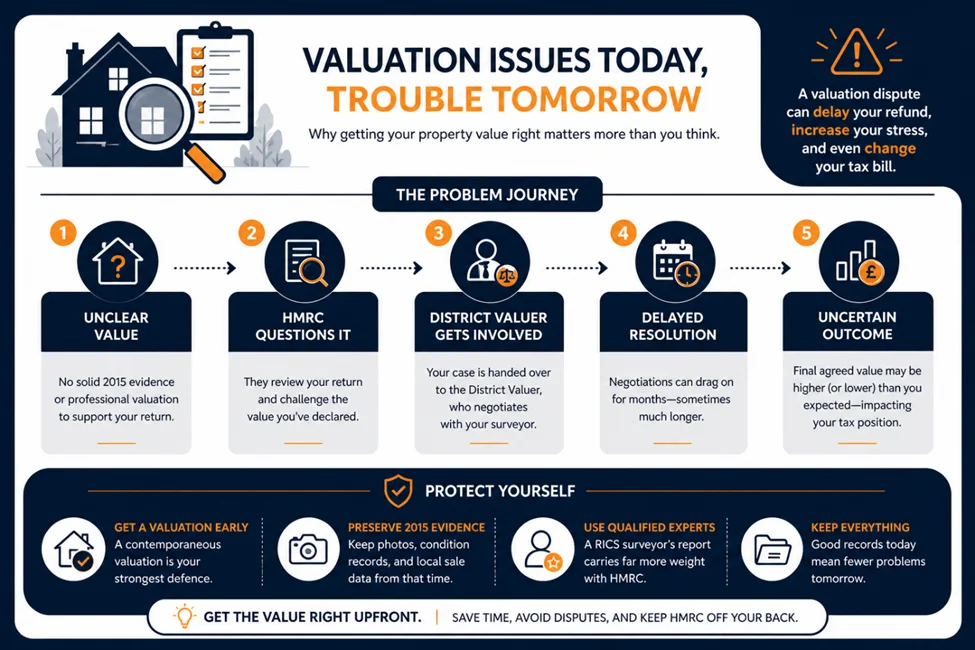
One of the most common HMRC enquiries on a property sale is a dispute over the value entered on the tax return. It happens even when you have paid for a professional valuation.
When HMRC pushes back, the District Valuer steps in and starts negotiating with your surveyor. Meanwhile, you and your tax adviser sit on the sidelines waiting for them to land on a figure. These cases can drag on for months, sometimes longer.
If you’ve never had a formal valuation, life gets harder. HMRC takes the view that valuing the property correctly is your job. They have suggested keeping photographs of the property in its 2015 condition and retaining records of nearby sales from around that time as supporting evidence.
In practice, most non-resident owners do not have any of that. By the time they sell, the 2015 picture is hazy. This is why a contemporaneous valuation, done close to the rebasing date or as soon as possible afterwards, pays for itself many times over.
Get a Value Agreed Before You File
There is a useful HMRC service called Post Transaction Valuation Check. It lets you agree a property value with HMRC after the sale has happened, but before you file the return reporting it.
For non-residents already inside Self-Assessment, this can be a sensible move. You sell, submit the CG34 form, wait for HMRC to either accept your figure or come back with a different one, and then file your return to know where you stand.
A heads-up, though. ICAEW and others have flagged that processing times for these checks can be slow, sometimes several months. If you plan to use this route, build up that delay so it does not conflict with your filing deadline.
The 60-Day Reporting Rule
This is the part that catches most non-residents off guard. The old 30-day deadline you may have read about is gone. Since 27 October 2021, you have 60 days from the sale completion date to report the disposal and pay any CGT due.
That deadline applies whether you are in Self-Assessment and whether there is tax to pay. Non-residents must report every disposal of UK land and property, even when the gain is zero or there is a loss. UK residents only need to report if there is tax to pay. For a detailed breakdown of how Private Residence Relief interacts with the 60-day reporting requirement when you have previously lived in the property, the rules are worth understanding carefully before you file.
You file through HMRC’s online UK Property Disposal Return service. The clock starts ticking on the completion date, not the exchange date, so make sure you know which is which on your sale paperwork.
What Happens If You Miss the Deadline
Late filing penalties start at £100 if you are up to six months late. After six months, that climbs to £300 or 5% of the tax due, whichever is higher. In the past 12 months, you’ve been hit again with another £300, or 5%. Interest also runs on any unpaid tax from the original due date at HMRC’s late payment rate.
These are automatic, so even an honest mix-up over date can land you with a bill. If you are selling from abroad and dealing with time zones and post delays, getting your adviser involved early is the safest play.
What Non-Residents Outside Self-Assessment Should Do
If you are not already inside Self-Assessment, you still must file the 60-day return. Beyond that, you need to be ready for the possibility of an enquiry, which can run for years and rack up significant professional fees. Our specialist accounting services for immigrants and expatriates cover exactly these cross-border compliance situations, including HMRC registration and navigating UK tax obligations from abroad.
The absence of a contemporaneous valuation makes this much worse. You may face an unexpected tax bill on top of everything else simply because you cannot evidence the property’s 2015 value or its condition over time.
Getting a professional valuer involved early is a small cost compared to the certainty it buys you later. Keep records of everything, including improvement costs (extensions, structural work), legal fees for purchases and sales, and estate agent fees. All of these can reduce the gain.
Quick Planning Points Before You Sell
There are some decisions that you can make before completion that can make a big difference.

Planning now is not for tax avoidance, but tax efficiency. Spending time before the sale reviewing your position will allow for enhanced structuring, maximisation of reliefs and minimal reporting and payment surprises.
Where This Leaves You
It’s no longer a clear run for non-residents selling their UK home, but it can be managed. The risks are not the tax rules, but rather timing, value and reporting issues.
It’s all about pre-completion planning. The choice of calculation method, evidence for your numbers and the 60-day reporting deadline will significantly reduce the risk of enquiry or penalties. If these are addressed early in the process, then everything is easy and under control.
The rules are complex, and the consequences of incorrect reporting are serious, this is a matter that you shouldn’t take lightly. If you are also selling property held overseas, our overseas property sale tax guide covers how UK CGT rules interact with international disposals. At Lanop, our Chartered Accountants and Tax Advisors regularly deal with non-resident clients regarding CGT calculations, rebasing, valuations, and 60-day returns. Serving clients across the globe from our offices in Putney, Harley Street and Battersea, we can offer you practical support and guidance anywhere you need it, be it in person, by phone or via Zoom.
If you are considering selling or are close to completion, it is important to consult our team now to avoid the risk of missing the deadline. If you would like to discuss your position, please get in touch with Lanop so we can ensure it is dealt with correctly, promptly, and in accordance with HMRC’s requirements.
FAQ’s
What is temporary non-residence, and can it affect a UK property sale?
If you leave the UK and return within a certain period, some gains made while abroad may still become taxable when you regain UK residency.
What costs can I deduct when working out the gain?
You can usually deduct purchase and sale legal fees, estate agent fees, and qualifying capital improvements, but not routine repairs or maintenance.
What records should I keep in case HMRC asks questions later?
Keep purchase and sale documents, valuation evidence, and invoices for improvements and costs to support your calculations if reviewed.
Can spouses transfer UK property shares before sale to reduce CGT?
Yes, transfers between spouses are generally tax-free and can help use both allowances and lower tax bands before sale.
What would happen if I had already missed the 60-day reporting deadline?
You should file as soon as possible, as penalties and interest may apply, but early action can limit further charges.