Why the L&Q Judgement Matters
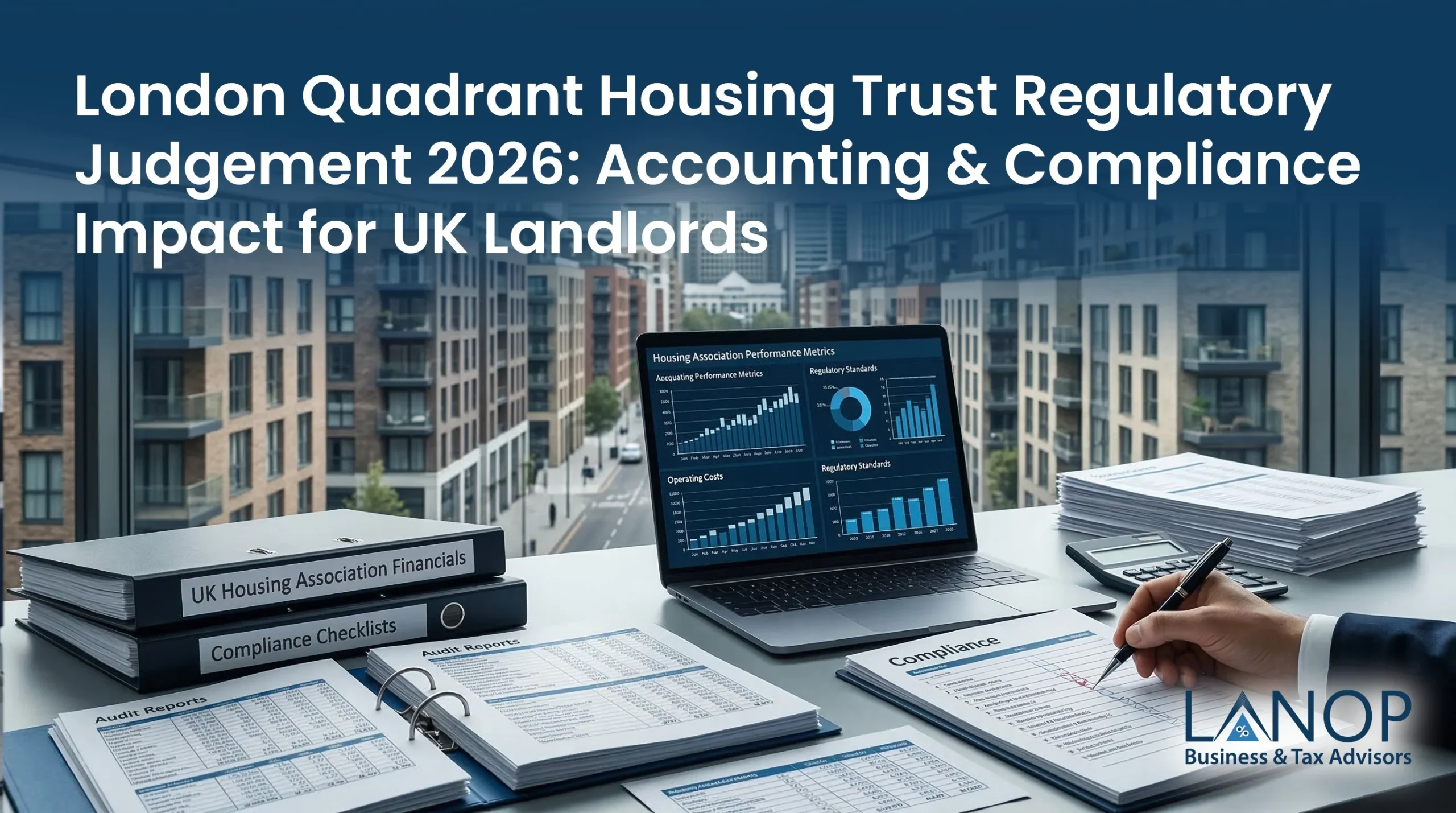
London & Quadrant Housing Trust (L&Q) received its new regulatory judgement in 2026. The timing is key.
The Social Housing (Regulation) Act 2023 changed UK housing regulation. The RSH used to react to problems. Now it checks landlords on a set schedule.
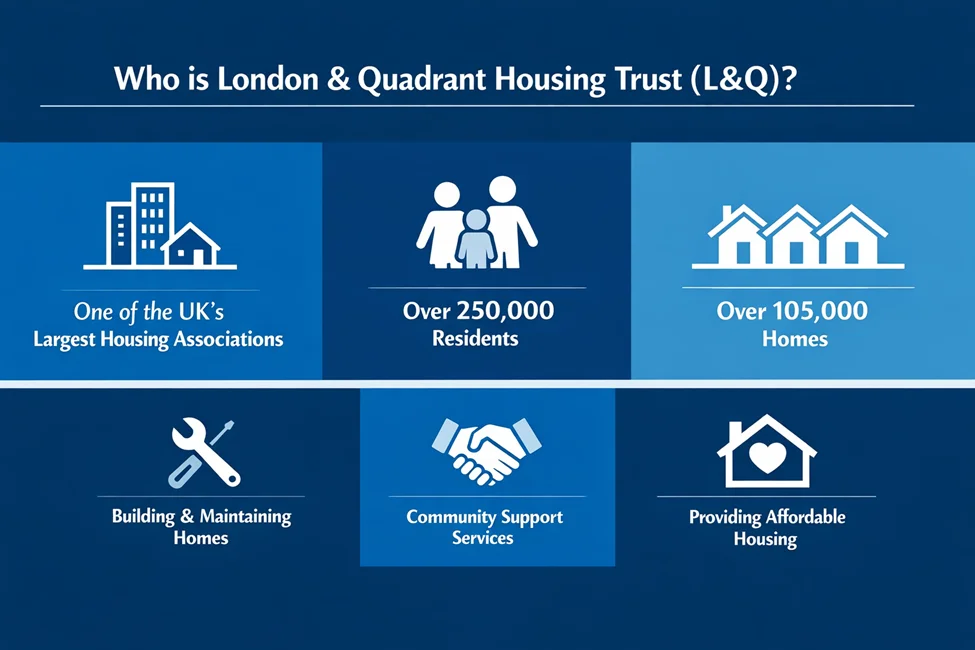
L&Q is one of the UK’s biggest housing providers. It owns or manages over 110,000 homes. What happens to L&Q affects the whole sector.
Private landlords and investors need to pay attention. Many hold leasehold agreements with L&Q. Others work as joint-venture partners. Some manage L&Q properties as agents. If any of this applies to you, specialist landlord accounting support is more important than ever in 2026.
A drop in governance grades can trigger clauses in finance deals. It can change how your auditor views your risk. You may need to update your financial controls.
The 2026 judgement also lands alongside major UK accounting changes. New FRS 102 rules push for more clarity and better reporting.
Who Is London & Quadrant Housing Trust?
L&Q is a massive organisation. It owns or manages 110,527 homes as of late 2025. That number keeps growing. But L&Q has changed its strategy. It now puts more money into existing homes instead of just building new ones.
Where Does L&Q Operate?
L&Q works mainly in Greater London and the South East. It also has a base in Greater Manchester.
The main office is at 29-35 West Ham Lane, Stratford, London (E15 4PH). L&Q also runs from its Manchester Nexus office.
In 2026, L&Q is focusing on its core areas. It moved 3,500 homes in South Buckinghamshire to Settle Paradigm in early 2026. This lets it focus where housing density is highest.
L&Q projects a surplus of £340m to £360m for 2026. It continues to build new social and affordable homes each year.
What Is a Regulatory Judgement?
A regulatory judgement shows if a housing provider meets the rules. These are not simple pass or fail results. They show the health of an organisation across three areas:
- Governance (G)
- Financial Viability (V)
- Consumer Standards (C)
Each area gets its own grade from 1 to 4. Grade 1 is the best. Grade 4 means serious problems.
| Grade | Governance (G) | Viability (V) | Consumer (C) |
|---|---|---|---|
| 1 | Fully meets all rules | Fully meets all rules. High capacity for risk. | Delivering outcomes. Fixes issues fast. |
| 2 | Meets rules but needs work in some areas | Meets rules. Manages risks well. | Some weak points. Needs improvements. |
| 3 | Not compliant. Serious concern. | Not compliant. Issues need fixing. | Serious failings. Major work required. |
| 4 | Not compliant. Subject to enforcement. | Not compliant. Subject to intervention. | Serious failings. Fundamental changes required. |
Key point: A G2 or V2 grade is not a crisis. It means improvements are needed. But it confirms that the provider is still compliant and viable.
Common causes of a downgrade include:
- Gaps in health and safety data
- Poor board oversight of repairs
- Weak financial headroom due to high debt or investment costs
What Did the 2026 L&Q Judgement Find?
The 2026 judgment confirms that L&Q is still compliant. It meets the standards for governance, financial health, and consumer outcomes.
But the grades tell a story. L&Q received:
- G2 for Governance
- V2 for Financial Viability
- C2 for Consumer Standards
These grades show real pressure on the organisation.
Why Did L&Q Get G2 for Governance?
The RSH changed L&Q’s governance grade from G1 to G2 in late 2025. The regulator said the board has the right skills. But board-level reporting on service quality needs work. It must match the board’s risk targets more closely.
What Does V2 Mean for Financial Health?
L&Q kept its V2 rating. The regulator noted L&Q has a solid plan. It holds around £1 billion in cash. But L&Q must manage two key risks:
- It runs a large home-building and sales programme
- It is working through a £3 billion, 15-year Major Works Investment Programme
How Did L&Q Score on Consumer Standards?
This was L&Q’s first check under the new consumer rules. It received a C2 grade.
The RSH found L&Q delivers most consumer outcomes. But there are weak points in safety, quality, and community standards.
The good news: L&Q runs the UK’s largest building safety programme. It has checked over 2,000 buildings and installed 19,000 humidity sensors to fight damp and mould.
The challenge: L&Q needs to speed up non-emergency repairs and improve how it handles anti-social behaviour complaints.
Questions Landlords Are Asking
Why Did L&Q Get This Judgement Now?
This is part of the RSH’s new inspection cycle. It now covers all large landlords on a regular basis. L&Q was among the first to go through this deep check under the 2024 standards. These judgements are now normal. They are not a sign of crisis.
Is This Judgement Serious or Routine?
The grades show L&Q is compliant. But a G2/V2/C2 profile is a clear call for change. L&Q will ask partners for more data to meet the regulator’s demands.
Does This Affect Tenants or Services?
Day-to-day services continue as normal. Residents can call L&Q on 0300 456 9996 for non-emergency issues. The judgement drives long-term improvements. L&Q has committed to better repair priorities and faster responses.
How Does This Impact Private Landlords?
The RSH does not regulate private landlords directly. But if you hold head-leases with L&Q, this matters. If you are a joint venture partner, this matters too.
If L&Q must improve its data and reporting, it will pass those requirements to you. You will need to provide:
- Detailed health and safety records
- Better financial reports
This is exactly why proactive landlord accounting services are no longer optional for anyone working with a housing association.
What Are the Accounting Implications?
The biggest change in 2026 comes from two things meeting: the L&Q judgement and new FRS 102 rules. Both focus on financial transparency. Property investors should also review how these changes affect their wider portfolios. Our real estate accounting services can help.
On-Balance Sheet Lease Accounting
Under revised FRS 102, all leases must now appear on the balance sheet. You record them as a right-of-use asset with a matching lease liability. This changes how your finances look:
| Metric | Impact | Result |
|---|---|---|
| EBITDA | Increases | Rental costs move from expenses to depreciation and interest. |
| Reported Debt | Increases | Future lease costs now show as liabilities. |
| Gearing Ratio | Weakens | Liabilities rise faster than assets. |
| Interest Cover | May fall | Higher finance costs appear earlier in the lease. |
If you lease blocks of flats to housing associations on long-term leases, handle these changes with care. They can trigger breaches in lender covenants even when your cash flow is stable.
Revenue Recognition Changes
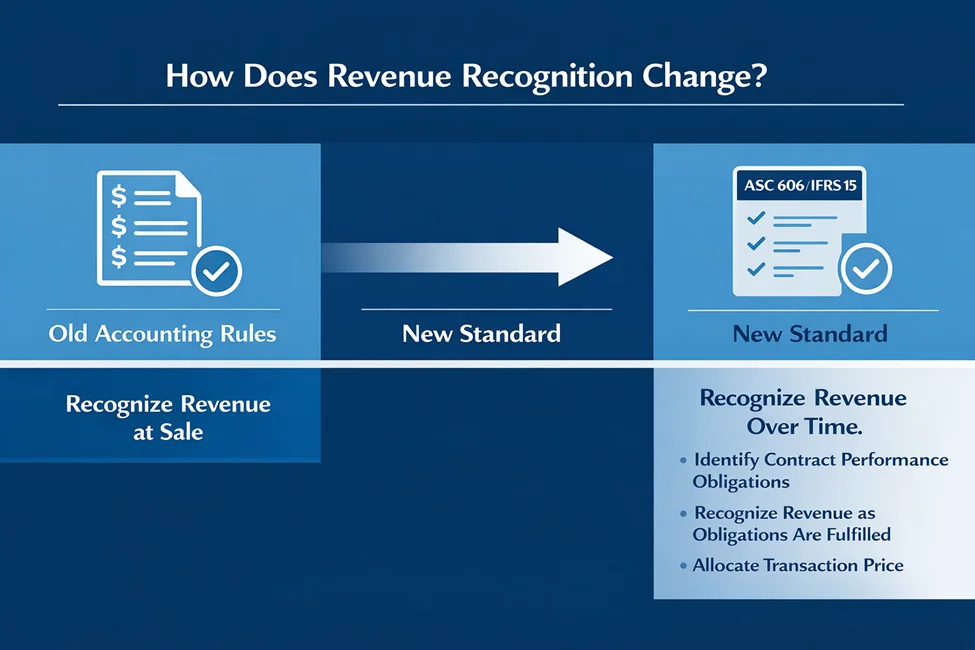
Landlords must now use a new five-step model for revenue recognition. If your contract includes bundled services, you must split them. For example, if a contract covers rent plus maintenance, unbundle these in your accounts. Revenue for maintenance must be recognised over time as you do the work.
What About Compliance and Governance?
Internal financial controls matter more in 2026. The RSH criticised L&Q’s reporting. This means housing associations will audit their landlord partners more often. You must have clean audit trails for all service charge spending and health and safety records.
HMRC, Tax, and Audit Risks
VAT and Service Charges
VAT on residential service charges is under close court review in 2026. The Places for People Homes Ltd v HMRC case confirmed a key point. Maintenance firms often make taxable supplies to landlords. This means VAT cannot always be absorbed into an exempt residential lease.
Your service charge invoicing must be fully compliant. Getting your VAT returns right is essential to avoid being flagged in an HMRC audit.
Corporation Tax and Incorporation
Many landlords are looking at incorporating in 2026. The 25% corporation tax rate looks good compared to personal property income tax, which can reach 47%.
But from April 2026, Incorporation Relief under Section 162 changed. You must now actively claim it. It is no longer automatic. A structured approach to tax planning for property businesses can help you claim correctly and avoid HMRC scrutiny. HMRC can use this change to check whether you run a real business or a passive investment. If you receive an HMRC enquiry, our HMRC tax investigation support is available to help you respond.
Making Tax Digital (MTD)
New rules for sole-trader landlords start on April 6, 2026. Digital record-keeping is required if your gross rental income exceeds £50,000. You must file quarterly updates with HMRC using MTD-ready software.
If you are not yet set up for MTD, our team can help you through self-assessment and digital tax filing to ensure you meet every deadline.
Landlords who fail to go digital face heavy fines and audit triggers.
Repairs, Operations, and Common Myths
What Is Awaab’s Law?
Awaab’s Law came into force in 2026. It sets strict, fixed deadlines for hazard repairs — including damp and mould. L&Q’s Healthy Homes policy uses data from 19,000 humidity sensors to fix the highest-risk homes first.
Will Services Continue?
Yes. A G2 or C2 grade does not mean repairs stop. L&Q is speeding up its repair response. The repairs line is 0300 456 9996, open Monday to Friday, 8 am to 6 pm, with an emergency line outside these hours.
Is L&Q an Outlier?
No. Many large housing associations are in a similar position.
| Association | G | V | C | Key Issue |
| L&Q | G2 | V2 | C2 | Reporting and repairs backlog |
| Clarion | G1 | V1 | C2 | Resident services and condition data |
| Peabody | G1 | V2 | N/A | Stock investment headroom |
| Broadacres | G2 | V2 | C2 | Market risk in development |
G2/V2/C2 is becoming the new normal for large associations. They are moving money from new builds to fix existing homes. Lenders see housing associations as higher-risk. Not due to insolvency risk. But because regulation may disrupt planned capital spending.
Case Study: Navigating the Governance Gap
The Client: A property group holding 15 units in East London, all leased to L&Q under a long-term corporate lease.
The Challenge: After the 2025/2026 regulatory shift, L&Q ran a compliance review. They requested cladding safety data and revised service charge payments going back two years. The group faced a potential £45,000 catch-up bill and a tax audit.
The Solution: Lanop Accountants reconciled the service charge statements against the lease terms. We found that £12,000 of the requested repairs were capital improvements. This changed the tax treatment and saved the client £3,000 in corporation tax. We also supplied the governance documents L&Q required. Our landlord accounting team handled everything from the lease review to the HMRC documentation.
“The L&Q judgement made our simple lease feel like a full-time compliance job. Without Lanop, we would have just paid the bill and missed the tax relief these new rules created.” — Director, East London Property Holdings
Key Myths to Avoid
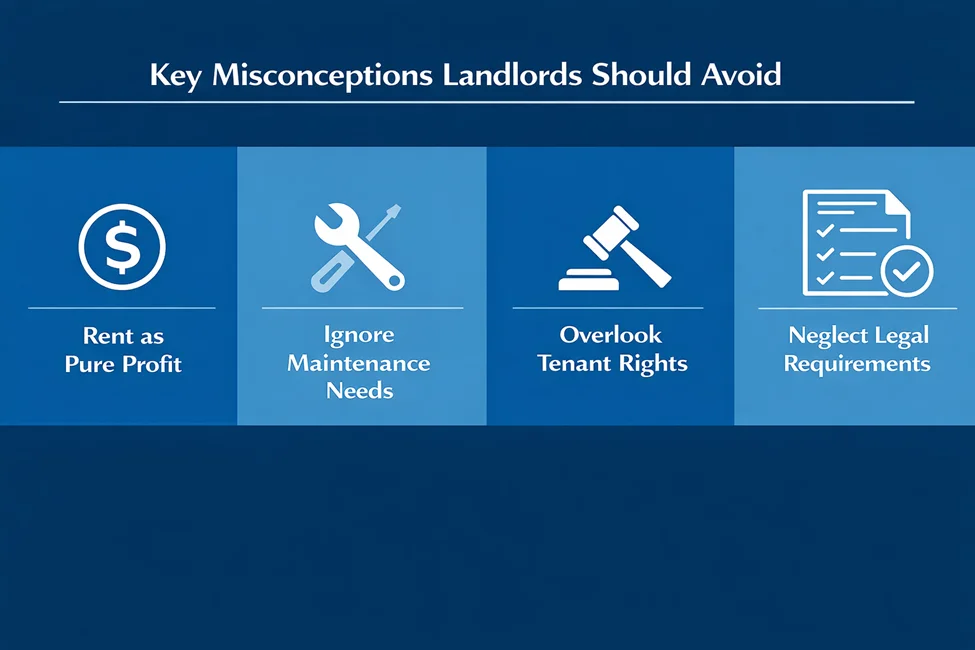
Myth 1: A regulatory judgement means financial collapse. False. L&Q is fully compliant and holds around £1 billion in cash.
Myth 2: Landlords are legally responsible for L&Q’s governance. False. You are not liable for L&Q’s regulatory status. But you are responsible for your own internal controls, which will be reviewed more often.
Myth 3: Nothing changes after a regulatory judgement. False. L&Q has an active Improvement Plan that will change how partners report data and how repairs are handled.
FAQ
The main change is on-balance sheet lease accounting. Almost all leases must now be recorded as a Right-of-Use (ROU) asset with a matching liability.
The 2026 FRS 102 changes often require restatement of comparative figures for consistency.
Landlords must keep digital audit trails for fire safety checks, asbestos records, gas safety certificates (CP12s), and damp and mould sensor data.
First, review your contracts with housing associations for clauses that a regulatory downgrade could trigger. Second, run a financial health check to see how FRS 102 changes affect your debt covenants.
Not complying with the Renters’ Rights Act can mean civil penalties of up to £40,000 and a ban from the sector.
What Should Landlords Do Next?
The L&Q regulatory judgement of 2026 marks a turning point. The era of high-yield, low-oversight partnerships is over. To stay safe, landlords must put compliance first.
The mix of G2/V2/C2 findings with FRS 102 and MTD changes creates a new landscape. Only landlords who are transparent and digitally prepared will succeed. Proactive accounting is no longer optional. It is essential for survival.
Act now:
- Review your leasehold structures
- Digitise your safety records
- Align your internal financial controls with RSH standards
Lanop’s dedicated landlord accounting service offers the specialist expertise you need to navigate this new regulatory environment and turn compliance into a competitive advantage.