
Navigating the 2026 UK Tax Landscape
Getting an HMRC late payment surcharge notice is stressful. It can happen to any UK taxpayer. In 2026, the tax system is now fully digital. HMRC uses automated systems. These systems work fast. Surcharges appear the moment you miss a deadline. Many people get these notices as a surprise. A small admin error can trigger them. Or a real emergency stops you from paying on time. The late payment surcharge HMRC sends is not a reminder. It is a formal penalty.
It means the government flagged your account for missing a payment deadline. Here is what you need to know. Many of these notices come from algorithms. These systems do not think about human circumstances. This guide helps you understand your rights as a taxpayer. You can challenge unfair surcharges. This applies if you are a self-assessment freelancer. It applies if you are a contractor. It applies if you are a VAT-registered business owner. It applies if you are a company director. If you are facing any HMRC tax investigations or penalty disputes, professional support can make all the difference.
What Is an HMRC Late Payment Surcharge?
You need to understand what an HMRC late payment surcharge is. This is a financial charge. It is imposed when you fail to pay your tax by the deadline. It is different from a filing penalty. A filing penalty is for not submitting paperwork. The surcharge is about the actual payment of money. If you need help with self assessment tax returns, our team can guide you through the entire process. If your tax stays unpaid after 30 days, the surcharge kicks in. In 2026, the late payment surcharge HMRC uses is completely automated. When you file your tax return, the system creates a “charge” on your account. If a matching “credit” does not appear by the deadline, the system calculates a penalty. Your payment is the credit. This penalty is based on a percentage.
How Much Is the Late Payment Surcharge in the UK?
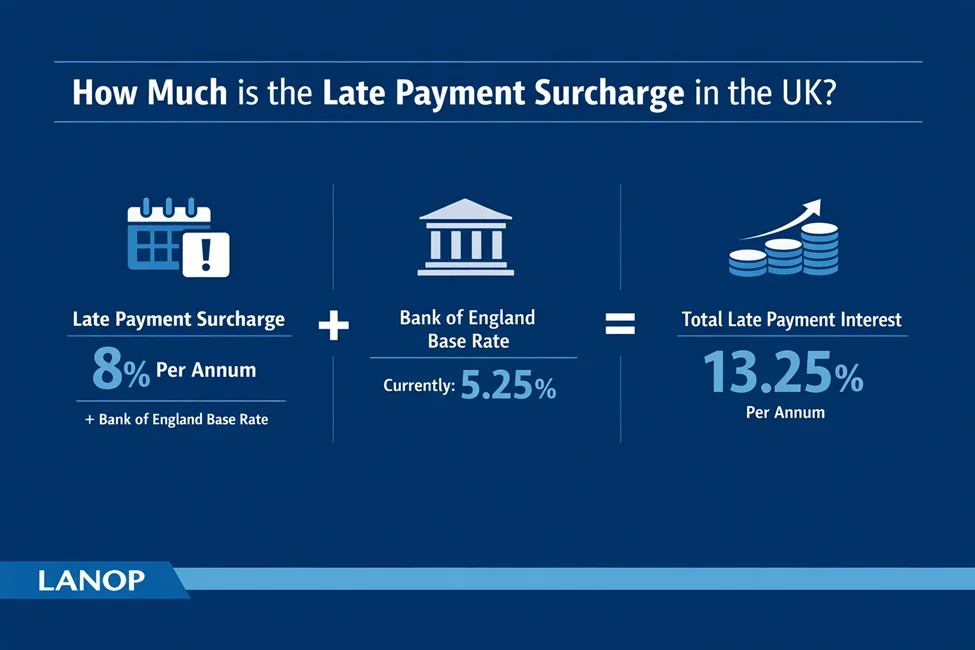
One of the biggest questions is this. How much surcharge do UK residents have to pay? The cost is not a flat fee. It is a percentage of the tax you have not paid. This happens at specific trigger points. In 2026, these percentages create a real burden. This is especially true for those with large tax bills. The structure escalates over time. The longer you leave the debt unpaid, the more it costs.
Penalty vs Surcharge – What’s the Difference?
You need to understand the penalty vs surcharge difference that UK tax law sets out. This is key to filing a correct appeal. People use these terms the same way. But they mean different things. A “Penalty” is a broad term. It covers many infractions. This includes filing your tax return late. It applies even if you owe no tax. It also includes making errors in your return. A “surcharge” is more specific. It relates only to the late payment of the tax itself.
Why Did You Receive a Late Payment Surcharge Notice?
There are several reasons why you might need to make a late payment surcharge notice appeal. The most common trigger is simply missing the payment deadline. For most Self Assessment taxpayers, this is January 31st and July 31st. However, many taxpayers are shocked to get a notice. This happens even when they thought they had paid on time. This often happens with partial payment. You might pay most of the bill. But you leave a small balance. This can happen due to a calculation error. It can also happen from not understanding interest charges.
Other common triggers include:
- Bank transfer delays that push the payment past the deadline
- HMRC applying your payment to the wrong tax year
- Technical failures when using HMRC’s online payment system
- Confusion over Payment on Account requirements
- Postal delays affecting cheque payments
Can You Appeal an HMRC Late Payment Surcharge?
Yes. You have a legal right to appeal. You can appeal any surcharge you believe is unfair or incorrect. The UK tax system is built on fairness. HMRC knows that life is unpredictable. For more detailed guidance on the appeals process, read our comprehensive guide on how to appeal against self assessment penalty. You have to demonstrate that you had a good reason for the delay. If you can do this, HMRC is able to annul the surcharge. This protection is critical. It assists taxpayers who have experienced genuine hardship. This helps those who are facing admin errors, no fault of their own.
How Do You Appeal a Late Payment Surcharge?
Following the how to appeal surcharge 2026 process requires care. You need a step-by-step approach. Use these steps to make sure your appeal is strong. Make sure it meets current HMRC standards.
Step 1: Review the Surcharge Notice in Detail
Before you do anything else, examine the notice carefully. Check that the tax year is correct. Check that the amount of tax owed is accurate. Check that the calculated surcharge is right. Surcharges are sometimes calculated on an estimated discovery assessment. This may be higher than your actual liability. Confirm the Issue Date. This starts your 30-day clock.
Step 2: Confirm the Appeal Deadline
Mark the 30th day from the notice date on your calendar. Are you already past this date? If yes, you must prepare a statement. This statement must explain why the appeal is late. For example, you might have been in hospital. Or the notice might have been sent to a previous address. This could happen even after you told HMRC about your address change.
Step 3: Identify Your Formal Reason for Appeal
You must fit your reason within a specific framework. This is either a reasonable excuse or HMRC error.
An HMRC error might include their system failing to credit a payment. You made this payment on time. Or it could be them giving you wrong advice over the phone. A reasonable excuse involves external factors. This includes serious illness, bereavement, or technical failures.
Step 4: Gather Evidence Systematically
This is the most critical step. Do you claim illness? You need a doctor’s note. Do you claim technical failure? You need screenshots or IT logs. Do you claim postal delays? You need a certificate of posting. HMRC will rarely take your word alone. They need probative evidence. This means evidence that proves the circumstances were as you described.
Online HMRC Surcharge Appeal Process
In 2026, the online surcharge appeal process has become standard. Most taxpayers use it. You can access your appeal through the Government Gateway. You can also use the HMRC App. This offers several advantages. If you have not set up your Government Gateway account yet, follow our step-by-step guide to creating a Government Gateway account. The digital interface walks you through a series of questions. These are Yes or No questions. They help put your appeal in the right category. This makes sure you do not miss any required information. Missing information might lead to rejection on technical grounds. One of the best benefits is the ability to upload documents instantly. Whether it is a PDF of a hospital discharge form or a JPEG of an error message, digital uploads work well. They ensure your evidence is attached directly to your case file. This reduces the risk of documents getting lost in the post. It also stops them from being separated from your file at an HMRC processing center.
The online system also provides:
- Immediate confirmation of receipt
- A reference number for tracking
- Automated reminders if more information is needed
- Faster processing times compared to postal appeals
- A clear audit trail of all submissions
What Evidence Do You Need for a Successful Appeal?
The success of a late payment surcharge notice appeal depends on your evidence. Almost entirely. HMRC works on the balance of probabilities. This means you must prove that it is more likely than not that your excuse is valid.
The evidence required surcharge appeal officers look for is specific. It must be objective. For medical-related appeals, a simple statement will not work. Saying I was unwell is not enough. You should provide a letter from a medical professional. This letter must cover the specific dates of the tax deadline.
The letter should ideally state how your condition stopped you from managing your money. For example, you might have been having surgery. Or you might have been unable to function due to a severe mental health crisis. These are viewed as strong grounds.
For technical failures, you need:
- Screenshots of error messages with timestamps
- Confirmation letters from your bank or payment provider
- IT support logs showing system outages
- Evidence that you tried the payment multiple times
For bereavement, you need:
- A death certificate
- Evidence showing the deceased was a close relative
- Proof that the death happened close to the tax deadline
- Documentation showing you were responsible for funeral arrangements
For postal delays, you need:
- A certificate of posting showing you sent payment in time
- Evidence of unusual postal disruption like strikes or extreme weather
- Proof that you used a reasonable posting method
What Are Reasonable Excuse Examples HMRC Accepts?
Understanding reasonable excuse examples UK tax law recognizes is vital. It helps you frame your argument. HMRC defines a reasonable excuse in a specific way. It is something that stopped you from meeting a tax obligation. This happens despite you taking reasonable care to do so. It must be an event that is exceptional. It must be outside your control.
Accepted examples typically include:
- Death of a close relative. This means a spouse, child, or parent. The death must happen shortly before the tax deadline. The key is proving the relationship was close. The timing made it impossible to manage tax affairs.
- Unexpected hospital stay. This must stop you from accessing your accounts. You need to show the admission was emergency-based. It must have covered the deadline period.
- Serious or life-threatening illness. This illness must make it impossible to deal with tax affairs. Mental health crises that left you unable to function also qualify.
- HMRC’s own online service failure. This must stop submission or payment. You need evidence of trying to pay. You need evidence of the system failing.
- Natural disasters. These include fire, flood, or theft. They must have destroyed your records. Or they must have stopped access to your home or office.
- Postal delays. These must be truly unpredictable. They cannot be due to you sending the payment too late.
The prudent person test is often applied here. Would a responsible person have been able to overcome the obstacle? This person wants to follow the law. If the answer is no, you likely have a valid reasonable excuse. Professional tax planning services can help you avoid these situations in the first place.
What Happens After You Submit an Appeal?
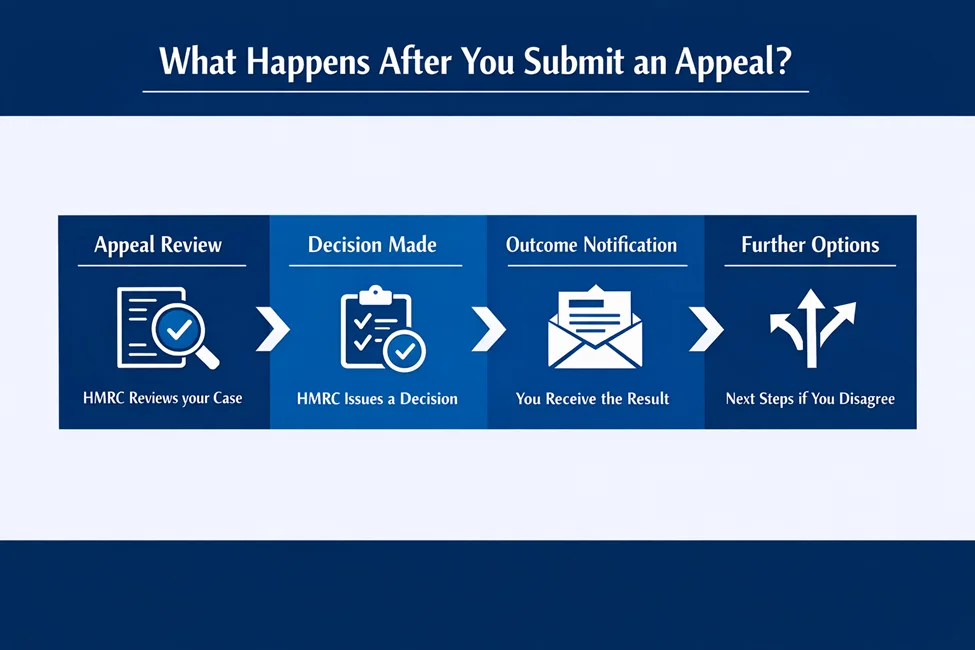
Once you submit your late payment surcharge notice appeal, something happens. The surcharge enters a state of suspension. This is often called being stood over. This means HMRC will typically pause active debt collection efforts. They pause it for that specific surcharge amount. The review process involves an HMRC officer. Sometimes it is an automated system in the first instance. They check your excuse against the evidence you provided. They are looking for consistency. If your story changes, they will likely reject the appeal. If your evidence is dated after the deadline, they will likely reject the appeal too.
If they accept it, you will receive a Notice of Conclusion. This states that the surcharge has been cancelled or reduced. If they reject it, the letter will explain why. It will tell you about your right to request an internal review. It will tell you about appealing to the tribunal.
During this time:
- Keep checking your HMRC account for updates
- Save all correspondence
- Do not ignore other tax deadlines
- Keep paying the original tax debt to minimize interest
What If HMRC Rejects Your Appeal?
What if your first attempt to dispute tax surcharge notices is rejected? Do not give up. HMRC rejections are often based on a narrow view of the rules. You have the right to request an Internal Review. If you are facing complex disputes or investigations, our HMRC tax investigation specialists can represent you throughout the entire process.
This is a second look at your case. An officer who was not involved in the original decision does this. Statistics show internal reviews can be very successful. The reviewing officer often has more experience. They have a broader understanding of reasonable excuse case law.
To request an internal review, you must write back to HMRC. Do this within 30 days of the rejection letter. This is your chance to address the specific reasons. They gave these reasons for the rejection.
If they said your evidence was not enough, provide more. If they said your excuse did not meet the criteria, explain in more detail. Explain why it was truly outside your control.
In your internal review request:
- Reference the original appeal and decision letter
- Address each rejection reason directly
- Provide new or additional evidence
- Explain why the original decision was wrong
- Stay factual and avoid emotional language
What Are the Appeal Costs for Tax Surcharges?
When you think about an appeal, you naturally worry about costs. The appeal costs tax surcharge disputes might bring. The good news is the HMRC appeal process itself is completely free. This includes both the initial appeal and the internal review. HMRC does not charge a fee to review your case.
If you go to the First-tier Tribunal, there is generally no fee. This applies to individuals or small businesses. However, there are indirect costs to think about.
If you choose to hire professional help, there will be professional fees. This includes a tax specialist or an accountant from Lanop. While this is an added expense, it is often a wise investment. This is especially true for large surcharges.
A professional can significantly increase your success rate. This can save you thousands of pounds in penalties. They know how to:
- Frame your argument in legal terms HMRC understands
- Gather the right evidence in the right format
- Handle procedural requirements without errors
- Present your case well at tribunal
The cost of professional help typically ranges. It might be a few hundred pounds for a simple appeal. It might be several thousand for complex tribunal representation. However, balance this against a surcharge of 15%. Consider a large tax bill. The investment often makes financial sense. For contractors and freelancers who want ongoing support, our contractor accounting services provide comprehensive tax and compliance assistance.
How Do Self Assessment Late Payment Surcharge Appeals Work?
For those dealing with HMRC late payment surcharge self assessment issues, timing matters. The timing is often linked to the two main payment deadlines. These are January 31st and July 31st. To understand all the important dates and avoid missing deadlines, check our detailed guide on UK self assessment deadlines.
Surcharges for Self Assessment are especially common. Many people forget the Payment on Account due in July. If you only pay your January bill, the July balance can quickly trigger a surcharge notice. This arrives unexpectedly in late August.
When you appeal a Self Assessment surcharge, it helps to check something. Check your Statement of Account on the HMRC portal. Sometimes, a surcharge is issued because a payment was applied to the wrong tax year.
For example, you might owe money for 2024/25 and 2025/26. Your payment was applied to the newer debt first. The older debt might still show as unpaid. This triggers a surcharge. This happens even though you technically paid the right amount.
Other Self Assessment appeal tips:
- Check if HMRC has updated your Payment on Account correctly
- Verify that your bank reference matched your UTR number
- Confirm your tax calculation includes all reliefs and allowances
- Look for HMRC system errors in allocating credits
If you are a sole trader managing your own tax affairs, our sole trader accounting services can simplify the process and help you stay compliant.
How Do VAT Late Payment Surcharge Appeals Work?
The late VAT payment surcharge UK businesses face is different. It is governed by a harsher regime. This is called the Default Surcharge. If you need expert help managing VAT returns and avoiding penalties, our specialists are here to support you.
If a business is late with either a VAT return or a VAT payment, something happens. They enter a surcharge period. If they are late again within the next 12 months, a percentage-based surcharge is applied. This starts at 2%. It can rise to as much as 15% for repeated defaults.
Appealing a VAT surcharge requires deep understanding. You need to understand business operations. HMRC is often stricter with businesses. They expect you to have robust systems in place. These systems manage cash flow and deadlines.
However, a reasonable excuse still applies. For instance, a major customer might go into administration. This causes an unexpected and massive cash flow crisis. This makes the VAT payment impossible. This might be accepted as a reasonable excuse.
Other valid VAT appeal grounds include:
- Bank refusing a payment due to fraud concerns
- Software failure preventing return submission
- Fire or flood destroying business premises during the deadline period
- Serious illness of the sole director or key financial controller
The key difference with VAT appeals is this. HMRC expects businesses to have contingency plans. A simple forget excuse will not work. Being busy will not work either. You need to show that, despite having good systems, something exceptional happened. For businesses structured as limited companies, our limited company accounting services include comprehensive VAT compliance support.
How Can You Reduce a Late Payment Surcharge?
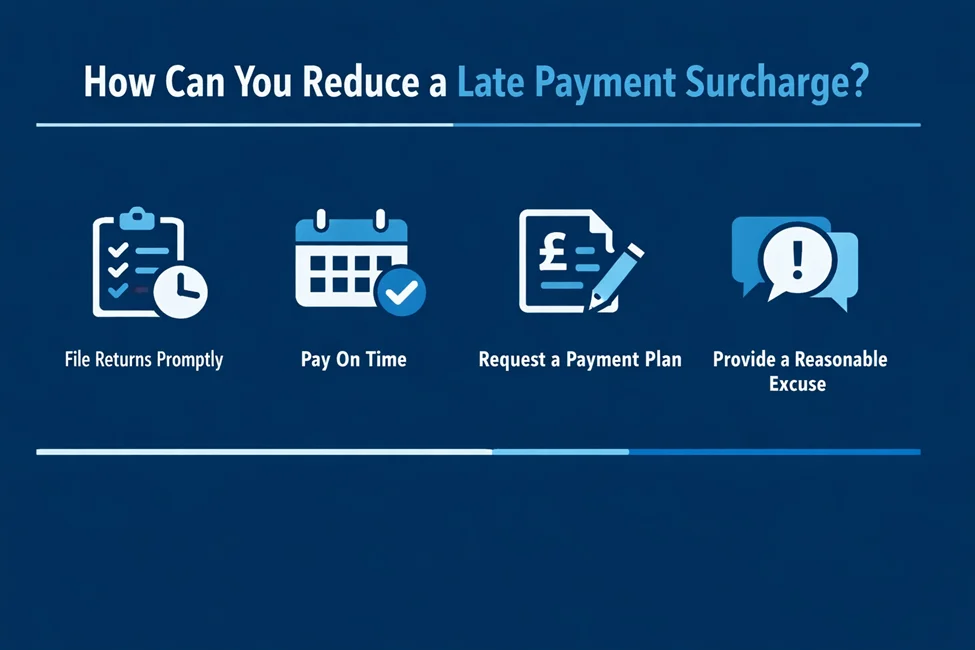
In some cases, you might be able to reduce late payment surcharge amounts. This can happen even if you cannot cancel them entirely. This is less common than a full cancellation. But it is worth knowing about.
HMRC has power to reduce a surcharge if:
- You have a partial reasonable excuse. The excuse covered some but not all of the delay period.
- You have a history of excellent compliance. This is a one-off error.
- The surcharge is out of proportion to the original offense.
- You can show you took reasonable steps to minimize the delay.
For example, you were in the hospital for two weeks. The payment was three weeks late. HMRC might reduce the surcharge to reflect something. You were only personally responsible for one week of the delay.
To request a reduction:
- Acknowledge the part of the delay that was your responsibility
- Provide evidence for the part that was not
- Show steps you took to pay as soon as possible
- Show this was out of character for you
Be realistic in your request. HMRC is more likely to agree to a partial reduction. This happens if you’re being honest about shared responsibility. Do not try to absolve yourself completely when the evidence does not support it.
How Can Lanop Help?
At Lanop, we understand that dealing with HMRC can be hard. It can be intimidating and time-consuming. Our team of tax specialists is dedicated to helping you. We help individuals and businesses. We help you handle the complexities of the HMRC late payment surcharge system. We do not just fill out forms. We build a complete case for your defense. Contact our expert team today to discuss your situation.
Our services include:
- Strategic Review: We analyze your surcharge notice and tax history. We identify the strongest grounds for appeal.
- Evidence Architecture: We help you identify and gather specific evidence. This is the evidence required surcharge appeal officers need to see.
- Professional Representation: We draft formal appeal letters. We handle all correspondence with HMRC. We act as your authorized agent.
- Tribunal Support: If your case needs to be escalated, we provide expert guidance. We provide representation throughout the internal review and tribunal stages.
- Compliance Planning: We help you set up systems. These ensure you never face another late payment surcharge HMRC notice again.
Do not face HMRC alone. With our expertise, you can significantly increase your chances. You can get a successful appeal. Visit Lanop Accountants today. Schedule a consultation. Take the first step toward resolving your tax dispute.
Frequently Asked Questions
To appeal to an HMRC late payment surcharge, you must first identify a reasonable excuse for the delay. You can then submit your appeal online. Use your HMRC Government Gateway account. Or submit by post using form SA370 for Self-Assessment. Make sure you include all supporting evidence. Submit within 30 days of the surcharge notice date.
The standard deadline for submitting an SA370 appeal is 30 days. This counts from the date the surcharge notice was issued. HMRC is very strict about this timeframe. If you miss this window, you must provide another reasonable excuse. This must explain why the appeal itself is late. In 2026, HMRC’s automated systems are programmed to reject late appeals. They reject them almost instantly unless a compelling reason is provided.
HMRC requires evidence that is specific and dated. It must directly link your reasonable excuse to the period of the tax delay. For medical reasons, this includes hospital records or a doctor’s letter. For technical failures, provide screenshots of error messages. Provide logs from your Internet Service Provider. If the delay was due to a postal strike, a certificate of posting is vital.
A reasonable excuse is generally something unexpected. It is outside your control. It stopped you from meeting a tax obligation. Examples include the death of a close relative shortly before the deadline. An unexpected stay in the hospital also qualifies. A serious fire or flood at your place of business qualifies, too. HMRC applies the prudent person test. Would a responsible person have been able to overcome the obstacle? If not, you likely have a valid excuse.
On average, an HMRC surcharge appeal takes between 30 and 45 days to process. If you submit your appeal online, you may receive an automated acknowledgement immediately. This is followed by a formal decision letter within a few weeks. If the appeal is complex or requires manual intervention by an HMRC officer, it can take longer. Sometimes up to 90 days.
Yes. You can submit an SA370 appeal online. Use the Check if you can appeal a penalty service on the GOV.UK website. Or use your Personal Tax Account. This is the fastest method. It is highly recommended in 2026. The online system provides immediate confirmation. It has a faster processing time than postal appeals.
If your initial appeal is rejected, you can request an Internal Review. This is a formal process. An HMRC officer who was not involved in the original decision looks at your case again. You must request this within 30 days of receiving the rejection letter. Write to the address on the rejection letter. Clearly state you want an internal review.
Yes. If you have already paid the surcharge but then win an appeal, HMRC will refund the amount. The refund is typically credited back to your tax account. You can then request that this credit be paid out to your bank account. Or leave it to offset future tax liabilities. Refunds usually take 2 to 3 weeks to process. This happens once the appeal is successful.
The strongest documents are those from independent third parties. For example, a letter from a bank confirming a technical glitch on their end is much stronger. It is stronger than your own written statement. Similarly, official documents carry significant weight. Death certificates, hospital admission forms, or police reports for a crime that disrupted your business all work well. The more official and dated the evidence, the better.
You can appeal a surcharge after the 30-day deadline. But it is much harder. You must prove that you had a reasonable excuse for the appeal being late. This is in addition to the original excuse for the tax payment being late. This double hurdle makes late appeals significantly more difficult to win. HMRC may reject the appeal on procedural grounds alone. This happens regardless of how valid your original excuse was.
Conclusion
Getting an HMRC late payment surcharge notice is not the end of the road. The automated nature of the tax system in 2026 can feel overwhelming. But the law provides clear pathways. These pathways are for those with a genuine, reasonable excuse. By moving quickly, you can succeed. Follow the late payment penalty appeal checklist. Provide strong evidence. You can successfully dispute tax surcharge notices. You can protect your finances. Professional support can be the deciding factor in a complex case. Whether you are dealing with a self-assessment surcharge appeal or a business VAT dispute, expert advice helps. It ensures your case is presented with authority. Do not let an automated mistake impact your financial future. Are you ready to take action against an unfair tax surcharge? Contact Lanop Accountants today. Get a professional review of your case. Let us handle the complexity of HMRC. You can focus on what matters most.