UK rental rules change fast. Councils now enforce them more than ever. In 2026, you need to do more than fix repairs or sign contracts.
You must keep safety checks up to date. You must protect deposits on time and have to meet licensing rules and report taxes online. Small errors can lead to big fines. They can also hurt your case in court.
This guide covers the full landlord compliance checklist for 2026. Use it to protect your tenants, avoid fines, and keep your income safe.
What Is a Landlord Compliance Checklist in the UK?
A landlord compliance checklist in the UK lists the legal duties of rental property owners. It covers what you must do before, during, and after a tenancy.
These duties come from housing law and local council rules. They cover tenant safety, correct paperwork, deposit handling, and tax reports.
A clear checklist cuts your risk. It keeps key dates in view. It stops you from missing key steps.
You must keep homes safe, protect deposits on time, and report rent to HMRC. Missing any of these can mean fines or loss of eviction rights.
What the Landlord Compliance Checklist 2026 Covers
The landlord compliance checklist 2026 reflects tougher checks on housing and tax. More focus is now on energy ratings, correct records, and digital filing.
Key areas include:
- Gas and electrical safety checks
- Fire safety and smoke alarm rules for landlords
- Right to rent check the UK for all adult tenants
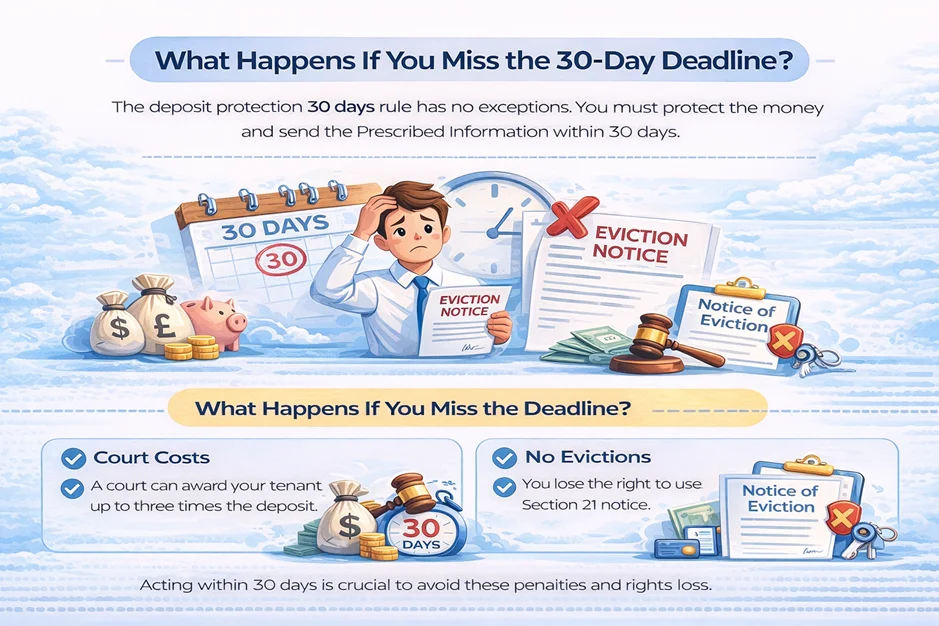
- Deposit protection within the 30-day deadline
- Digital tax filing through Making Tax Digital for landlords
- Local licence rules that vary by council area
Each area has real costs if you ignore it. Councils and HMRC now act more often on breaches. A good checklist keeps your property business safe from fines and legal trouble.
Quick Landlord Compliance Checklist UK (2026)
| Requirement | What You Must Do | Deadline |
|---|---|---|
| Gas Safety Certificate | Annual check by Gas Safe engineer | Every 12 months |
| Electrical Safety (EICR) | Electrical inspection report | Every 5 years |
| EPC Rating | Minimum EPC E required | Before renting |
| Smoke & CO Alarms | Install and test alarms | At tenancy start |
| Right to Rent Check | Verify tenant ID and status | Before move-in |
| Deposit Protection | Protect deposit in scheme | Within 30 days |
| Property Licensing | HMO or council licence if required | Before letting |
| Tax Compliance | Keep income & expense records | Every tax year |
| Making Tax Digital | Use digital records and reports | From April 2026 |
Core Legal and Tax Requirements Every UK Landlord Must Meet
A strong landlord compliance checklist starts with the basics. These rules apply to almost every rental home in England.
You must get a Gas Safety Check each year. A Gas Safe engineer must do this. You also need an Electrical Report every five years. This checks all fixed wiring and sockets.
Your property must have at least an EPC E rating. You cannot legally rent a home rated F or G.
On tax, keep clear records of all costs. This helps you claim the right expenses and stay in line with HMRC rules. If you skip these basics, you may lose the right to evict a problem tenant.
What Must Landlords Do Before Renting Out a property?
Good prep is the base of any landlord compliance checklist. You cannot move a tenant in until the property passes key checks. These steps come before you list or sign anything. Skip them and face fines or council action.
Energy Performance Certificate (Minimum EPC E Requirement)
You need a valid EPC before you list the property. Tenants must see the rating up front. The legal minimum is an EPC E rating. You cannot rent an F or G-rated home unless you have a valid exemption.
If your rating is low, act now. These changes often raise the score:
- Loft or wall insulation
- Double or triple glazing
- A new boiler or heating system
- Smart heating controls
A better EPC score also helps attract tenants. Many renters now check energy costs before they choose a home.
Electrical Safety Certificate Frequency (EICR Every 5 Years)
Electrical checks are a legal must. The electrical safety certificate frequency is every five years. A trained electrician must check all fixed wiring, plugs, and the fuse box. You then get an Electrical Report, called an EICR.
You must:
- Give a copy to tenants within 28 days
- Give new tenants a copy before they move in
- Fix any faults within the set timeframe
If the report finds C1 or C2 faults, fix them fast. Delays lead to fines and formal notices from your council.
Gas Safety Certificate (Annual Requirement)
If the property has gas, an annual check is a must. Only a Gas Safe-registered engineer can do this. The check must happen every 12 months. Give the new cert to your tenant within 28 days.
You should also:
- Keep certificates for at least two years
- Give new tenants a copy before they move in
- Keep proof of all service and repair work
No valid gas cert can mean the court throws out your eviction notice.
Smoke Alarm Regs Landlord and Carbon Monoxide Rules
Smoke alarm regs landlord rules say you need at least one alarm on every floor. Test them at the start of each new tenancy. You must make sure they work on day one.
A carbon monoxide alarm must go in any room with a fuel-burning device. This includes:
- Gas boilers
- Wood-burning stoves
- Coal fires
If a tenant says an alarm is broken, fix it right away. This reduces your legal risk and keeps tenants safe.
Right to Rent Compliance: Required Checks and Legal Process
Before any tenancy starts, you must check that each adult tenant has the legal right to live in the UK. This is known as the Right to Rent check. You must do this before the tenancy begins. Check their original ID in person. Common IDs include a passport, a visa, or a biometric permit.
In some cases, you can use the Home Office online service instead. This works when the tenant gives you a share code.
You must:
- Check all IDs with care
- Make clear copies
- Write down the date of the check
- Store records safely
Keep copies for the full tenancy and at least one year after it ends. Failing to do this can mean heavy fines and council action.
Landlord Furniture Fire Safety Compliance
If you rent a furnished home, fire rules apply to some items. A landlord furniture compliance checklist makes sure all soft furnishings meet safety standards. All items must meet the Furniture Fire Safety Rules. Most safe items have a fire-resistant label on them.
Items that must comply include:
- Sofas and chairs
- Mattresses and bed bases
- Cushions and padded headboards
Furniture made before 1988 may not pass. If a label is missing, replace the item. Providing unsafe furniture can mean fines and legal claims if something goes wrong.
Deposit Protection 30 Days Rule: What Happens After Receiving the Deposit?
Deposit handling is a high-risk area. The law is very clear on timing and paperwork.
How to Protect a Tenant Deposit Correctly?
When you take a deposit, place it in a government-approved scheme. There are three main UK schemes. You can choose a custodial scheme where they hold the money. Or you can use an insured scheme and hold it yourself.
Tenant Deposit Dispute Process Explained
At the end of a tenancy, you may want to claim for damage or unpaid rent. If the tenant disputes this, the tenant deposit dispute process begins. Each scheme offers a free dispute service. Give them your check-in and check-out records as proof. The final ruling comes from an adjudicator. So, keep your photos and receipts in order.
Landlord Licensing Requirements in the UK
Not all landlords need a licence. But many do. Rules vary a lot between councils and cities.
Do All Landlords Need a Licence?
No, but more councils are adding selective licensing. Many now require a licence for all private rentals in certain areas. Check your local council website before you list any property.
HMO, Selective and Additional Licensing Explained
HMOs need a license when five or more people share the home. Some councils add licensing for smaller HMOs too. Selective licensing covers normal family homes in set zones. It aims to raise rental standards in those areas.
Landlord Licensing Fees in the UK: Typical Costs
Landlord licensing fees in UK vary by area. Most licences cost between £500 and £1,200 for five years. Some councils offer a discount for accredited landlords. You can usually claim the licence fee as a tax expense.
Ongoing Compliance Duties During Tenancy
Your duties do not end on move-in day. You must keep the property in good shape throughout the tenancy.
Repairs and Maintenance Legal Responsibilities
Under Section 11 of the Landlord and Tenant Act 1985, you own the structure and exterior of the home. You must keep water, gas, electric, and heating working. Fix reported faults within a fair timeframe.
Record Keeping and Documentation Requirements
Keep a file for each property. Store these items in it:
- All safety checks and certs
- Signed tenancy agreements
- The full inventory report
- All rent payment records
- All repair request messages
Landlord Tax Allowable Expenses and Financial Compliance
Paying the right tax means knowing what you can deduct from your rental income.
What Expenses Can Landlords Legally Claim?
Tax applies to profits only. You can cut your taxable income using landlord tax allowable expenses. Common claims include:
- Letting agent and management fees
- Landlord insurance premiums
- Cleaner or gardener costs
- Accountant fees
- Repairs, but not home improvements
Repairs vs Improvements: Understanding the Difference
HMRC draws a clear line here. A repair brings the home back to its old state. For example, fixing a broken window. That is an allowable expense. An improvement adds value, like adding a new room. That is a capital cost. It only applies when you sell the property.
Replacement of Domestic Items and Furniture Relief
Replace a sofa or fridge in a furnished let? You can claim the Replacement of Domestic Items Relief. Deduct the cost of the new item if it is a like-for-like swap. You cannot claim for the first time that you bought furniture for the home.
Making Tax Digital for Landlords (2026 Update)
The biggest change in 2026 is how you report income. Paper tax returns are being phased out.
Who Must Comply with Making Tax Digital?
Under Making Tax Digital landlords’ rules, those earning over £50,000 in gross rental income must comply by April 2026. If you earn over £30,000, you have until April 2027. This applies even with just one property.
Quarterly Reporting and Digital Record Requirements
You can no longer file just one return per year. You must use approved software to keep digital records. Send a summary of income and costs to HMRC every three months. Then file a final report at year’s end.
Penalties for Non-Compliance With MTD
HMRC now uses a points-based fine system. Miss a quarterly deadline, and you get a point. Hit the limit, and you get fined, usually £200. Late tax payments also bring growing percentage-based charges.
Eviction Process Every UK Landlord Must Follow
If a tenancy breaks down, you must follow the law exactly. Any gap in your landlord compliance checklist can block your right to regain your home.
Section 21 and Section 8 Notice Requirements
A Section 21 notice is a no-fault eviction tool. A Section 8 notice is for when a tenant has broken the agreement, such as not paying rent. Both need the correct forms and notice times. Section 21 usually needs two months’ notice.
Compliance Failures That Invalidate Eviction
The eviction process for UK landlords is strict. You cannot serve a valid Section 21 notice without giving the tenant:
- A current EPC
- A current Gas Safety certificate
- The How to Rent guide
- Proof of deposit protection
How Deposit and Certificate Errors Affect Possession Claims?
If you protected the deposit late, you may have to return it before you serve notice. A late gas check may also lead to the court rejecting your claim. Staying compliant from the start costs far less than fixing errors with a solicitor.
Common Landlord Compliance Mistakes in 2026
Even seasoned landlords slip up. Here are the top mistakes to avoid this year.
Misunderstanding Deposit Protection Rules
Many landlords protect the money but forget to send the Prescribed Information. This is a set of terms from the protection scheme. Without it, you are not fully compliant. Even if the money is safe, you can still face a court order.
Assuming Letting Agents Remove Legal Responsibility
Agents can manage the day-to-day work. But the legal duty stays with you. If an agent misses a gas check, the council fines you, not them. Ask for copies of all certs to stay on top of your agent’s work.
Ignoring EPC and Electrical Updates
The rules on EPC ratings and electrical checks keep getting tighter. Leaving upgrades too late can leave your home empty and off the market. You cannot legally rent it until it meets the standard.
Failing to Prepare for Making Tax Digital
Do not wait until April 2026 to think about software. Making Tax Digital landlords’ rules need new habits. Start logging your costs online now. The switch will be much smoother.
How Lanop Business and Tax Advisors Support UK Landlords
Keeping up with a landlord compliance checklist can feel like a lot. Rules keep changing in 2026. Lanop Business and Tax Advisors give landlords clear, hands-on support.
We check your safety certificates, deposit timelines, and licence status. We guide you on landlord tax allowable expenses. We also get you ready for the Making Tax Digital landlords’ filing.
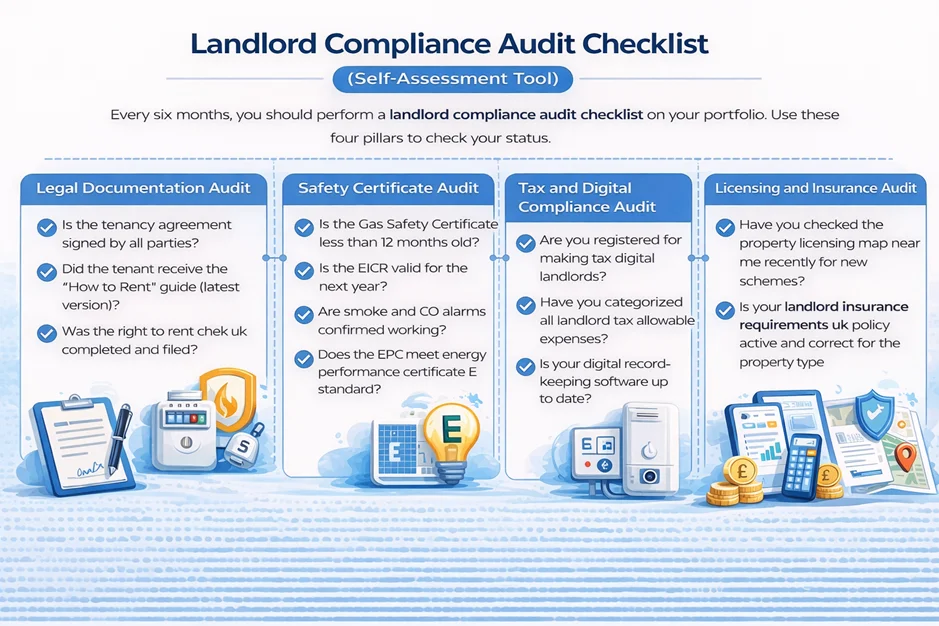
We use a practical landlord compliance audit checklist to find gaps before they become fines. We set up digital record systems and compliance calendars, too. The goal is simple. We help landlords stay on top, stay legal, and stay confident.
Conclusion: How to Stay Fully Compliant as a UK Landlord in 2026
The landlord compliance checklist for 2026 has many parts. But it is very manageable. Focus on three things: stay organised, keep to deadlines, and go digital. Keep your safety certs current. Start using Making Tax Digital landlords’ tools now. This protects your tenants and your income.
Compliance is the base of a good property business. It stops legal fights and keeps your name solid. Use this guide to check your homes today. Make sure you meet every legal duty.
FAQ
Landlords must hold an annual Gas Safety certificate and a valid EICR every five years. The home also needs an EPC with at least an E rating. Smoke and carbon monoxide alarms must meet legal rules. Missing these can lead to fines and loss of eviction rights.
A Gas Safety certificate is needed every 12 months. A Gas Safe engineer must carry out the check. Tenants must get a copy within 28 days. New tenants must get it before they move in.
Landlords must get an EICR at least every five years. This is the standard electrical safety certificate frequency. If serious faults come up, fix them within the set time. Give a copy to tenants within 28 days.
Rental homes must have at least an EPC E rating. Homes rated F or G cannot be let unless an exemption applies. Give the EPC to tenants before you list the property.
Keep records of rental income and all costs. This includes invoices and bank statements. Hold these for at least five years after the tax deadline. Good records keep you in line with HMRC rules.
Under Making Tax Digital rules, landlords above the income threshold must keep digital records. They must send quarterly updates to HMRC. From April 2026, this applies to income over £50,000. You must use approved software to do this.
Protect deposits within 30 days of receipt. Send the Prescribed Information within the same window. Missing this deadline can mean court fines. It can also stop you from using a Section 21 notice.
An HMO licence is needed when five or more people share a home. Some councils need licences for smaller HMOs too. Rules often include minimum room sizes and safety standards.
Councils can issue civil fines for safety breaches. Serious cases can lead to rent repayment orders or court action. Non-compliance can also block your eviction rights.
You must give the tenant a valid EPC, gas cert, deposit proof, and the How to Rent guide. Section 21 usually needs two months’ notice. Missing any document can make your notice invalid.