
Introduction
Moving your life and business abroad is a massive step. This change is emotional. More importantly, it involves a complex financial process. For business owners leaving Britain, the stakes are incredibly high.
One small mistake in your timing can lead to years of trouble with HMRC. It can also result in huge, unexpected tax bills. At Lanop, we help founders navigate these tricky waters. This guide shows you how to exit the UK without losing the empire you built.
Why UK Business Owners Are Leaving Britain
The world is changing for UK entrepreneurs. We now see a record number of UK small business owners leaving for several key reasons.
Rising Tax Pressure and Regulatory Changes
Recent tax hikes have made it harder to build wealth in the UK. Changes to National Insurance and dividend rules have increased the cost of doing business. Many founders feel tax pressures are now driving business decisions instead of long-term growth plans.
Why More Entrepreneurs Are Relocating Abroad
Founders are looking for a better lifestyle and less red tape. Countries like Dubai or Portugal offer friendly rules for investors. These hubs make it easier to reach global markets.
Common Concerns Before Leaving the UK
Most founders share the same worries:
- Can I still take dividends without facing double taxation?
- Will HMRC say my company is still a UK resident?
- How do I avoid a huge Capital Gains Tax (CGT) bill if I sell later?
What Happens to Your UK Company When You Move Abroad?
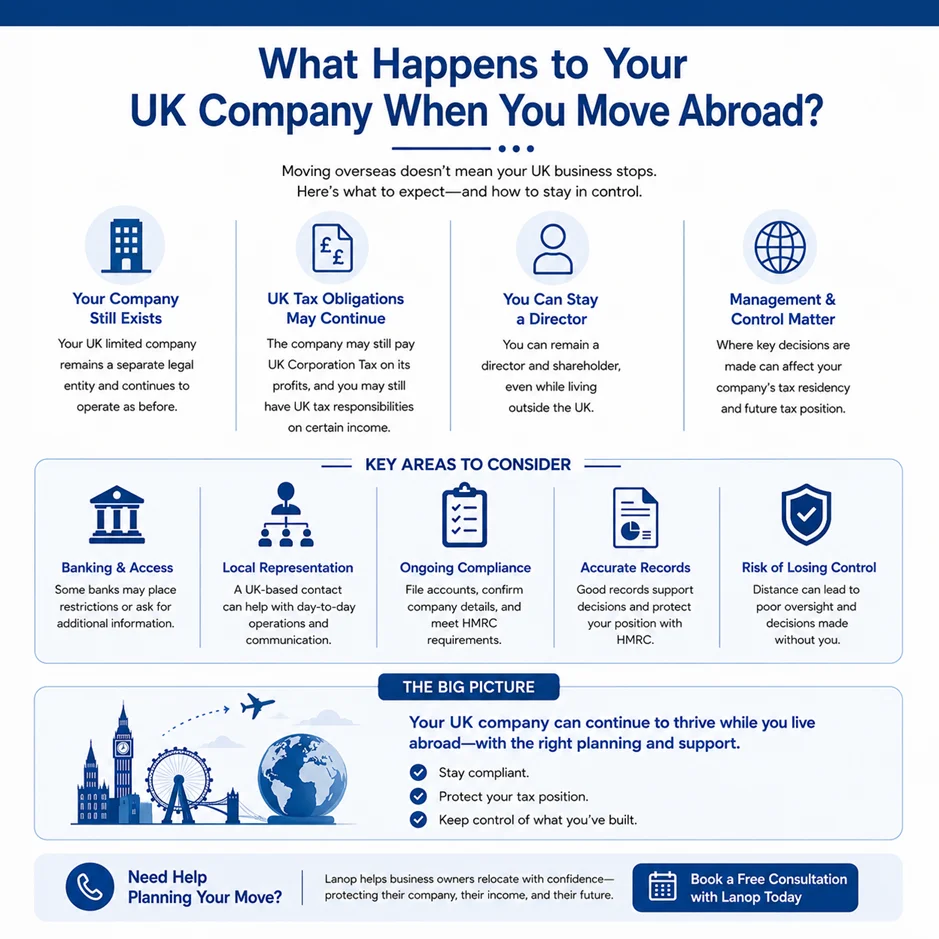
Moving your body does not mean you have moved your business. Many UK company owner relocating abroad assume their firm becomes “international” instantly. This is a mistake.
Can You Keep a UK Limited Company as a Non-Resident?
Yes, you can. A UK director does not have to live in the UK. However, leaving UK as a business owner tax rules change everything. You can stay the owner, but your absence changes how the taxman sees the company. Understanding the full picture of limited company accounting obligations before you leave is essential.
Does Your Company Stay UK Tax Resident?
A company is usually taxed where it is set up. But it can become a resident elsewhere if you make the big decisions from another country. If you move to Spain and run everything from there, Spain may claim your UK company as its own for tax.
Can You Continue Running the Business Remotely?
You can, but you must be careful. Managing things from abroad can create a “Permanent Establishment.” This leads to double taxation and a mountain of extra paperwork. Our international and offshore accounting services are designed to help you stay compliant across borders.
Understanding UK Tax Residency Before Leaving the UK
Before you pack your bags, you must learn the Statutory Residence Test (SRT). HMRC uses this test to see if you are “in” or “out” of the UK tax net.
How the Statutory Residence Test Works
The SRT is more than just counting 183 days. It looks at your “ties” to the UK. It checks where your family lives and where you work. It also looks at how much time you spent in the UK in past years.
Split-Year Treatment Explained
You might qualify for split-year treatment if you leave in the middle of a tax year. This splits the year into two parts. It lets you start your new tax life abroad without waiting until April.
Risks of Accidental UK Tax Residency
Spending too many nights in the UK for work or family can be risky. You could accidentally stay a UK resident. This would mean HMRC taxes your worldwide income.
Temporary Non-Residence Rules Business Owners Must Understand
HMRC has a specific trap for those who leave for only a short time. This is called the temporary non-residence rule.
Why HMRC Can Still Tax You After Leaving
HMRC wants to stop people from leaving just to avoid tax on a big sale. If you come back to the UK too soon, your gains become taxable the year you return.
The Five-Year Rule Explained
To avoid close company rules temporary non-residence traps, you must stay away for more than five full tax years. If you return sooner, your old dividends and gains may be taxed in the UK again.
Capital Gains Risks for Shareholders
If you sell shares while away but return within five years, your tax break could vanish. The CGT on UK shares non-resident rules are very strict about this timeframe.
Corporate Residency Rules That Can Trigger Unexpected Tax Exposure
One of the biggest risks in entrepreneur emigrating tax planning is the corporate residency rules UK company owners face.
What Central Management and Control Means
HMRC looks at where the real power sits. If you make all the big calls from Dubai, HMRC may say the control has moved. This can lead to the company being taxed in both countries.
Risks of Running a UK Company from Abroad
If your company moves residency by mistake, you face:
- Exit charges on your assets.
- Paying tax twice on the same profits.
- Hefty fines for missing foreign rules.
Why Board Structure Matters
To stay safe, keep some directors in the UK. Make sure all big board meetings happen in person in a safe place. This proves the company is still managed correctly.
How to Maintain Control of Your Business After Relocating
Control is not just about owning shares. It is about how you lead.
Structuring Management Correctly
You may need to move from “boss” to “chairman.” Hire a strong UK team to handle the daily work. This keeps the business roots firmly in the UK.
Protecting Ownership and Voting Rights
You can keep 100% of your votes while living abroad. Just be careful how you use them. Retaining UK business after leaving UK tax means acting like an owner, not a secret manager.
Operational Systems for International Founders
Use good cloud tools for your records. Your board minutes must show exactly where decisions were made. Good records are your best shield against HMRC.
Offshore Holding Company Structures for UK Business Owners
For high-net-worth owners, an offshore holding company structure offers a layer of safety.
What an Offshore Holding Company Does
You place a new company between you and your UK firm. This new firm might be in the UAE or the Channel Islands. It creates a buffer for your wealth.
Benefits and Risks of Offshore Structures
- Benefit: It makes selling the business easier in the future.
- Risk: HMRC has “anti-avoidance” rules. If the structure is only to save tax, they will ignore it and tax you anyway.
When Offshore Planning Can Trigger HMRC Scrutiny
HMRC uses AI to track money held abroad. Any UK holding company offshore structure HNWI must have a real business reason. It cannot just be an empty shell. If you have undisclosed offshore income or assets, the Worldwide Disclosure Facility offers a way to regularise your position before HMRC comes to you.
Offshore Trusts and Asset Protection Planning
An offshore trust UK business owner plan is usually for long-term safety, not quick tax wins.
Protecting Family Wealth Before Emigration
Trusts can hold your shares. This protects them from lawsuits or divorce. You must set these up before you leave the UK to get the best protection.
Inheritance Planning for Business Owners
Leaving the UK does not mean you escape the UK Death Tax. This tax is based on your “domicile,” which is hard to change. An asset protection structure leaving the UK helps manage this long-term risk. Proper inheritance tax planning before you emigrate is the most effective way to manage this long-term risk.
Family Investment Companies and Succession Planning
A family investment company’s UK exit strategy is a great alternative to a trust.
Using a Family Investment Company (FIC) Before Relocating
An FIC lets you keep control of your money while giving future growth to your kids. It is a powerful tool for succession planning that works well even if you live abroad.
Long-Term Ownership and Succession Planning
Because an FIC is a company, the rules are easy to follow. It lets you move wealth to the next generation without the big upfront costs of a trust.
How UK Dividends Are Taxed After Becoming Non-Resident
The big question is: How do I get my money out?
Dividend Tax Rules for Non-Residents
For non-residents, UK dividend income non-resident tax is often zero. But your new country will likely want to tax that money. You must check the rules in both places.
Salary vs Dividend Planning
Taking a high salary from abroad is often a bad idea. It usually triggers National Insurance costs. Most founders prefer dividends, but you must watch the temporary non-residence rules.
Selling Your Business Before or After Leaving the UK
Timing your sale is a multi-million-pound choice.
Tax Differences Between Selling Before and After Relocating
In the UK, you might pay 10% tax on the first £1m of profit. If you sell as a non-resident, you might pay 0% in the UK. But this only works if you stay away for more than five years.
Timing Risks Founders Often Ignore
If you move to a tax haven just to sell, HMRC might still find a way to tax you. You need a “clean” break before the sale happens.
How Temporary Non-Residence Rules Affect Business Sales
If you sell, move to Dubai, and come back in four years, you will get a massive tax bill. HMRC will tax the whole gain the moment you land back in the UK.
Special Considerations for UK Property Business Owners
Property owners face a different set of hurdles.
Incorporation Relief for Property Companies
If you own land in your own name, look at the incorporation relief UK property company rules. This lets you move property into a company without paying tax right away. It makes moving abroad much simpler.
Non-Resident Capital Gains Tax on UK Property
Unlike shares, UK land is always taxed in the UK. Even if you live in Timbuktu, you must tell HMRC about a property sale within 60 days.
Best Countries for UK Entrepreneurs Relocating Abroad
Dubai (UAE)
A top pick for SaaS founders. It offers 0% personal tax and has great treaties with the UK. It is perfect for business owners leaving Britain.
Portugal
The “Digital Nomad” visa is very popular. It offers a 10-year tax break for those who move their skills to Portugal.
Cyprus
Cyprus has a “60-day rule” for residency. It is very attractive for owners who travel a lot and want to pay low tax on dividends.
| Country | Personal Tax Rate | Corporate Tax | Key Benefit for UK Founders |
|---|---|---|---|
| Dubai (UAE) | 0% income tax | 9% corporate tax (above AED 375k) | No CGT, no income tax, strong infrastructure |
| Portugal (NHR) | 10–20% on foreign income (new regime) | 21% standard | EU access, Non-Habitual Residency regime |
| Cyprus | 0% on dividends (non-dom) | 12.5% | EU member, non-dom status for 17 years |
| Malta | Flat rate remittance for non-doms | 5% effective (with refund) | EU membership, holding company planning |
Banking and Compliance Challenges After Leaving the UK
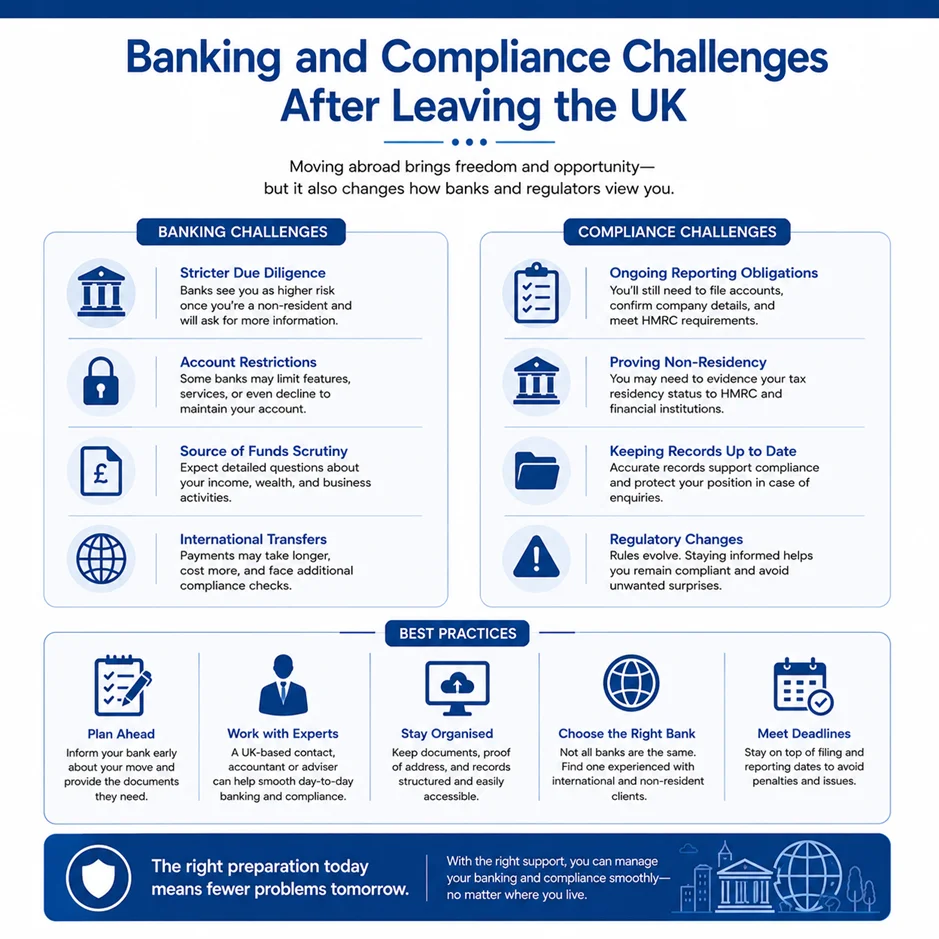
Why Banks Sometimes Restrict Non-Resident Founders
Many UK banks will close your account if you move abroad. They find it too hard to check your ID. You may need a specialized “Expat” bank account.
AML and Compliance Reviews
Moving abroad triggers “red flags.” Be ready to show where your money came from. Always keep your tax residency papers ready.
Common Mistakes UK Business Owners Make Before Leaving
- Leaving Too Fast: Not checking the residency tests first.
- Coming Back Too Soon: Triggering the 5-year “clawback” tax.
- Poor Records: Failing to prove that the company is managed in the UK.
Business Owner Exit Planning Checklist
- Pick a Date: Aim for April 6th to keep things clean.
- Count Your Days: Know your UK limit for the next few years.
- Appoint a UK Director: Keep your company residency safe.
- Value Your Firm: Know what it is worth on the day you leave.
- Call Lanop: Get a professional plan before you book your flight.
Conclusion
Leaving the UK as a business owner is a great way to grow your wealth. But the path is full of traps. The difference between success and a tax disaster is early planning.
You have worked too hard to lose your money to a mistake. Whether you need a family investment company or a new offshore structure, you must act with care.
Don’t leave your wealth to chance. If you are moving in 2026, talk to us. At Lanop, we help founders protect what they have built.
Contact Lanop today for a private chat. We will help you move with confidence.
FAQs:
Business owners ask this a lot before relocating. The fear is usually the same. They worry the company will slowly drift out of their hands once they are no longer in the UK. That can happen, especially when the move is rushed. In many cases, though, founders continue managing their companies from abroad without major disruption. The businesses that handle it well normally have clear reporting systems, trusted people in place, and proper planning before the move even happens.
There is no single answer because every owner is dealing with a different situation. One founder may want to sell within a year. Another may keep the company for decades. Some leave for lifestyle reasons. Others are thinking mainly about taxes and long-term wealth protection. The biggest mistake is usually leaving planning too late. Once a relocation is already underway, options can become more limited than people expected.
Not necessarily. Some people move abroad while the company continues operating from the UK, much like before. The confusion normally starts around where important business decisions are being made. Founders often assume their personal move automatically changes the company’s position too, but things are rarely that straightforward once tax residency rules are involved.
A lot of business owners expect things to become simpler after they leave. Instead, they often realise the UK remains connected to parts of the business financially. The company may continue paying UK taxes, and certain types of income can still stay within HMRC’s scope. This catches people off guard more often than you might think.
Yes. Plenty of directors continue running UK businesses after relocating. Still, managing things remotely feels very different once daily operations are happening from another country. Even simple admin tasks can become frustrating if banks, accountants, or compliance teams start requesting extra checks because the director now lives overseas.
A lot of founders start reviewing ownership structures once relocation becomes serious. Some want stronger protection for voting rights. Others focus more on family succession or future exit planning. There is usually no perfect setup that works for every business because long-term goals are different from one founder to another.
Many people assume leaving the country means leaving the paperwork behind, too. That is rarely how it works in practice. HMRC may still expect proper reporting, records, and evidence around residency and company activity. Problems often begin when founders try sorting everything out after relocating instead of preparing properly beforehand.