
Introduction
The UK economy in 2026 has raised the stakes for business survival. Many directors see leadership change as a soft HR issue. This view is dangerous.
A succession planning compliance checklist is a legal and financial requirement. What is it? It’s a plan that keeps your business legal when leadership changes. This includes the Companies Act 2006, HMRC tax rules, and your company’s rules. Learn more about ours succession planning services.
Without this plan, you risk more than low morale. Legal disputes, massive tax bills, and business failure become real threats.
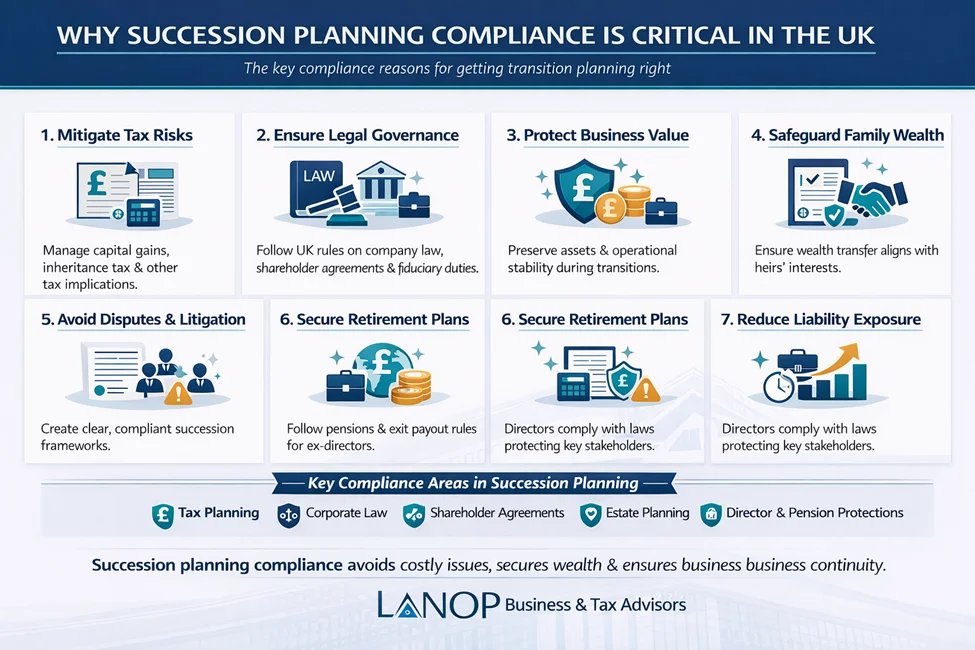
The UK watches companies more closely in 2026. Succession planning compliance has become essential. Here’s why:
HMRC Oversight: Tax offices closely monitor share values. They review Business Property Relief (BPR) claims with care. Errors cost real money.
Director Liability: When you fail to plan for your replacement, you may break the law. You must help your company succeed. Not planning can make you personally liable.
Market Stability: Banks and insurers now ask direct questions. They want to see your succession planning compliance checklist. No plan? They may refuse to renew your credit or insurance.
What Are the Different Types of Planning?
People often mix up different plans. Let’s make this clear:
Succession Planning: This covers who takes over leadership and ownership. You pick future leaders. You train them. You follow the law.
Estate Planning: This is personal. It deals with what happens to your assets when you die. This includes business shares. It handles succession planning and inheritance tax. Our inheritance tax planning services can help protect your wealth.
Business Continuity Planning: This covers quick fixes. What happens if the office burns down? What if a director gets sick? This addresses short-term problems.
You need all three types.
What Happens Without a Compliant Plan?
Running without a succession planning compliance checklist creates serious risks. Here’s what can happen:
Tax Bills: Get your exit wrong and face massive taxes. Succession planning inheritance tax can hit 40% of your business value. That money is gone forever. Property investors should also review our landlord accounting services for portfolio succession planning.
Legal Freeze: A key shareholder dies without a plan? Legal requirements in the UK may freeze the business. Nothing moves. The business sits idle.
Value Loss: When the future looks unclear, panic sets in. Company value drops fast. Good staff leave. Clients worry. Value vanishes.
These risks are real. They hit UK businesses every year.
What Are the Legal Requirements for Succession Planning in the UK?
Know the Companies Act 2006. Section 172 is key. It says you must act in good faith. You must help the company succeed.
This is law, not a suggestion.
What Are Director Duties Under the Companies Act?
Section 174 requires directors to use care, skill, and diligence. Your CEO will leave someday. Your Chairman will retire. Ignoring this fact means you’re failing your duty.
The 2026 “Governance Code for SMEs” makes this clear. You need formal plans for future leaders. Without a succession planning compliance checklist, shareholders can sue you. They can claim you lost company value.
What Are Governance Responsibilities for Boards?
Boards have clear jobs. You must add succession plan governance to your risk plan. This means:
Check Your Articles: Do this often. Make sure they allow easy share transfers. Old rules often block the changes you need.
Review Buy-Sell Deals: These must be legal and funded. Usually through insurance. Without funding, they’re just paper.
Write Everything Down: Board notes matter. They prove you planned. They show you took this seriously.
What Happens if a Business Owner Dies Without a Plan?
If a UK owner dies without a will or plan, big problems start fast. The law then decides who gets what. It doesn’t care about your business.
Shares might go to families who know nothing about the business. They may not want to run it. They may fight each other.
Result? Business failure. Sometimes total loss. Your life’s work is gone because you didn’t plan.
The Complete Succession Planning Compliance Checklist
Use this list as your guide. Check it every year. Use a succession plan audit checklist.
Governance Compliance Checklist
Good rules make your plan work. Bad rules make it fail.
- Board Approval on Record: Check out your meeting notes. They must show that you discussed and approved the plan. No notes means no proof.
- Articles Checked: Look for drag-along and tag-along rights. Do they cover death or illness? Many old ones miss this.
- Shareholder Deal Updated: Must show current values and exit rules. Markets change. Your deal must change too.
- Replacement Process Set: Write down how you pick new directors. How do you pick temporary ones? How do you pick permanent ones?
- Conflict Rules Updated: Must handle tricky cases. What if your replacement is family? What if they worked for rivals? Fix this now.
Legal Documentation Checklist
You need these succession planning documents:
- Updated Will: Must mention business assets. Must match your company’s plan. Basic wills don’t work. Be specific.
- Lasting Power of Attorney (LPA): Get one for business. If you can’t make decisions, someone needs this power. No LPA means the business freezes.
- Shareholder Deals: These say how ownership changes. They set the rules. They stop fights.
- Cross-Option Deals: Work when a shareholder dies. Others can buy shares. The estate can sell them. Insurance pays for this.
- Trust Papers: Shares going to future generations? Papers must follow the current tax implications of succession planning. Tax laws change. Update papers, too.
Tax Compliance Checklist (UK-Specific)
Tax is the highest cost in the UK. This section saves you money.
- Business Property Relief (BPR): Make sure you qualify for 100% relief. This is huge. HMRC excludes some companies. Too much property kills BPR. Too much cash kills it too. Check now.
- Capital Gains Tax (CGT): Know the tax implications of succession planning for selling shares. In 2026, CGT rates worry owners. Plan early. Learn about capital gains tax planning.
- Holdover Relief: Can you give shares and defer tax? If so, the tax only applies when shares are sold later. This delays the tax. It may reduce it.
Know these rules and save money. Skip them and lose money.
What Does Director and Leadership Transition Compliance Involve?
Succession planning for directors needs more than picking names.
- Set Authority Limits: Make it clear. What can the new person approve of? What needs board sign-off? Remove all doubt.
- Fix Employment Contracts: The new director needs a proper contract. Add rules that protect the business if things fail. Stop them from stealing clients or staff.
- Notify on Time: Tell Companies House. Tell regulators like the FCA. Missing deadlines creates legal problems.
What Should a Family Business Succession Checklist Include?
Family firms face special challenges. A family business succession checklist must balance family and business.
Fair vs. Equal Ownership
Should all kids get equal shares? Or should active kids get more? This splits families.
One fix works well. Active kids get voting shares. Others get dividend shares. Both make money. Only active ones control decisions.
Write down your choice. Explain why. This stops hurt feelings later.
Stop Disputes Early
Family fights destroy businesses. Stop them before they start.
- Start a Family Council: This creates a place to talk. Issues get fixed before they explode.
- Make a Family Charter: This sets rules. It covers pay. It covers hiring family. It covers share sales. Everyone signs. Everyone follows.
These seem formal. But they save relationships and businesses.
Active vs. Non-Active Members
Define roles clearly. Who works here? Who doesn’t? What does each get?
Avoid succession planning mistakes. Don’t give jobs to family members just because they’re family. They must earn it. They must add value. Set standards. Apply them fairly. This protects business and family.
What Is the Succession Planning Timeline?
| Stage | Timeline | Key Actions |
|---|---|---|
| Foundation | 5–10 Years Before Exit | Identify potential successors and begin the succession planning compliance process. |
| Tax Setup | 3–5 Years Before Exit | Review Business Property Relief (BPR) eligibility, assess inheritance tax risks, and use available tax reliefs. |
| Training | 2–5 Years Before Exit | Gradually transfer responsibilities to the successor so they gain experience and confidence. |
| Audit | Every 2 Years | Conduct a full succession plan audit using a checklist to ensure compliance with changing laws and business conditions. |
| Execution | 12 Months Before Exit | Finalize succession planning documents, inform key stakeholders, and formally implement the transition. |
How Do You Check Succession Planning Risks?
A succession planning risk assessment helps you identify weak areas in your transition strategy. It shows whether your business is legally, financially, and operationally ready for leadership change.
Use the simple scoring system below to evaluate your readiness.
Score Your Readiness
Rate each category from 1 to 5:
- 1–2 = High Risk
- 3–4 = Medium Risk
- 5 = Low Risk
| Risk Area | High Risk (1–2) | Medium Risk (3–4) | Low Risk (5) |
|---|---|---|---|
| Legal Documents | No Will or Lasting Power of Attorney for business decisions | Will exists but may be outdated | All succession planning documents are current and aligned with company structure |
| Tax Planning | No review of Business Property Relief (BPR) or inheritance tax exposure | Basic tax planning but no recent review | Tax planning completed and BPR eligibility confirmed |
| Governance | No board discussions or records about succession | Informal conversations only | Formal succession plan approved and recorded in board minutes |
| Leadership Readiness | No successor identified | Possible internal candidate but not trained | Successor identified and prepared for leadership transition |
| Family / Ownership Issues | Active disputes between family or shareholders | No structured discussions yet | Family governance rules or succession checklist in place |
Review this assessment at least once a year to keep your succession strategy aligned with legal, tax, and governance changes.
What Are Common Succession Planning Mistakes to Avoid?
- Thinking a Will is Enough: A personal will doesn’t control company actions. You need a company-wide succession planning compliance checklist. Your plan may not work without one. You need both.
- Hiding the Plan: Keeping plans secret makes key people panic when change happens. Share with key staff and clients when appropriate.
- Underestimating Tax: Never assume family transfers are tax-free. HMRC rules on “Gift with Reservation of Benefit” are complex. Get professional help.
What Is the Cost of Succession Planning in the UK?
Typical professional fees:
- Legal Fees: £3,000 to £15,000+ for drafting succession planning documents
- Tax Planning: £2,000 to £10,000 for cutting succession planning inheritance tax
- Valuation: £1,500 to £5,000 for business valuation
- Governance Update: £2,000 to £7,000 for updating Articles and Shareholder deals
Cheap templates exist. But a single error in succession planning compliance can void your entire plan. Hiring succession planning advisors protects your life’s work.
Who Should Be Involved in Succession Planning?
- Legal: Hire a solicitor for legal requirements in the UK. They write documents. They ensure compliance. Work with experienced accountants who understand director responsibilities.
- Tax: Hire a tax expert for tax implications and succession planning. They find relief. They cut tax bills. Our tax planning services help reduce liabilities.
- Governance: Hire succession planning advisors to run succession plan governance. They coordinate with other advisors.
- Leadership: Your board and HR handle succession planning for directors. They find talent. They grow talent.
- Finance: Hire a financial planner for insurance and cash. Our financial planning services help ensure your plan is properly funded.
How Do You Review Your Succession Plan?
Review your succession plan audit checklist at least every 2 years. Annual is better.
- Tax Law Changes: Check if UK budgets changed IHT limits or BPR rules.
- Share Changes: Document any shares issued or transferred.
- Director Changes: Record any resignations or new appointments. These affect succession planning for directors.
- Insurance Check: Make sure Key-Man insurance matches the current company value.
- Replacement Check: Confirm your chosen successor is still the right fit.
Regular audits keep you prepared for regulatory changes.
How Lanop Can Help
At Lanop Business & Tax Advisors, we provide full support for business transitions. We lead with compliance. We coordinate legal, tax, and governance needs.
- Compliance-Led Planning: We build frameworks. They align with the Companies Act 2006. They align with the latest HMRC guidance.
- Tax-Smart Structuring: We reduce inheritance tax on succession planning. We do BPR audits. We do expert tax planning.
- Governance & Risk Checks: We find hidden gaps. We look in shareholder deals. We look in Articles of Association.
- Ongoing Review: Our annual succession plan review checklist service keeps your strategy current. UK rules change. We keep you updated.
Secure Your Business Future in 2026
Succession planning often sits at the bottom of busy to-do lists. This is wrong. It’s the single most important thing for long-term survival. For any UK company. By following a strong succession planning compliance checklist, you protect your staff. You protect your family. You protect your legacy.
The legal requirements UK businesses face in 2026 are complex. But they’re manageable with the right planning. From managing succession planning and inheritance tax to making succession planning documents perfect, every step today adds value to tomorrow. Don’t leave your life’s work to chance. Don’t rely on default rules. Avoid common succession planning mistakes. We discussed these mistakes above.
Work with professional succession planning advisors. Ensure smooth, compliant transition. Protect everything you built. Learn more about our team and our approach to succession planning.
Contact Lanop today. Begin your journey to a secure, compliant, and successful business future.
Frequently Asked Questions
You need four core documents. First, an updated one that covers business assets. Second, a Shareholder Agreement allowing share transfers. Third, Articles of Association supporting transitions. Fourth, a Lasting Power of Attorney for business decisions. Add Cross-Option Agreements funded by insurance. These protect the remaining shareholders. Without these, your plan will not hold up legally.
IHT can take 40% of your business value on death. Business Property Relief (BPR) can eliminate this. If you qualify, you get 100% relief. Avoid holding too much property or cash. This kills BPR eligibility. Use the 7-year Potentially Exempt Transfer rule. Gift shares early. Survive 7 years. Then no IHT applies.
Update board minutes first. File Form AP01 with Companies House within 14 days. Notify industry regulators like the FCA. Update the successor’s service contract. Update the schedule of delegated authorities. Update conflict-of-interest policies. Do not skip regulatory notifications. Late filing creates penalties.
Three key reliefs apply. First, BPR gives 100% IHT relief on qualifying business assets. Second, Holdover Relief defers to Capital Gains Tax when gifting shares. Third, Business Asset Disposal Relief cuts CGT to 10% on qualifying disposals. Up to £1m lifetime. Structure transfers carefully. BPR requires a trading business. Holdover Relief requires gifting to individuals, not trusts.
Your Shareholder Agreement needs clear share valuation methods. It needs drag-along and tag-along rights. It needs pre-emption rights for existing shareholders. Add Cross-Option Agreements. These trigger on death or incapacity. Define buyout triggers clearly. Fund these agreements with key-man insurance. Then the cash is there when you need it.
Plan for at least 3 to 10 years. The 7-year PET rule alone demands time. Successor training takes 2 to 5 years. Document restructuring takes 6 to 12 months. Rush it and you lose tax benefits. Start at least 5 years before your intended exit. Earlier is always better.
If a business sale triggers TUPE, consult affected employees first. Do this at least 28 days before the transfer. Follow collective consultation rules if redundancies are possible. Review change-of-control clauses in key employee contracts. Do this before announcing anything. Update employment contracts and policies. Do not overlook GDPR compliance when transferring employee data.
Trustees must understand their duties under the Trustee Act 2000. Confirm the trust deed allows holding business shares. Confirm that trustees can vote shares. Check BPR eligibility. Discretionary trusts face different rules. File annual trust accounts and SA900 returns. Get legal advice. Trust mistakes can trigger immediate IHT charges.
Review every 2 years minimum. Annual reviews are better. Tax laws often change. The board must formally approve the plan in minutes. Major shareholders should approve changes by resolution. Review straight away after the UK budgets. Review after the director changes. Review after big shifts in company value.
HMRC wants proof that your BPR claims are valid. Keep records showing the business is trading. Not an investment. Keep professional share valuations. Keep board minutes. Keep updated registers. Keep legal documents. Keep insurance policies. Document the 7-year PET survival period. Missing records can void your entire plan. They can trigger a tax challenge.