
UK Statutory Compliance Checklist (2026): Key Filings, Deadlines & Legal Duties
Running a UK business is tough. In 2026, new laws make it even harder. Every director needs a clear statutory compliance checklist. It helps you avoid fines and stay on the right side of the law.
Why does 2026 stand out? Directors must now pass an ID check. Paper filing is ending soon. You need to know your exact duties to Companies House and HMRC. This applies to all business owners, new or experienced.
This guide walks you through UK filing rules for 2026. We cover ID checks, new software rules, and key deadlines. Follow it, and your business stays safe.
What Is a Statutory Compliance Checklist in the UK?
Every UK company must follow certain legal rules. These rules make up what we call statutory compliance. They come from the Companies Act 2006 and the Finance Acts. A good checklist helps you meet these rules on time. The two main bodies you report to are Companies House and HMRC.
Many new directors make one big mistake. They think filing with HMRC covers all their duties. It does not. You must submit separate filings to Companies House and HMRC. Each one has its own rules and its own deadlines.
As a limited company accountant would tell you, staying on top of both bodies from day one is the single most important compliance habit you can build.
What Are the Core Pillars of Compliance?
Companies House holds records about your company. This covers who runs it, who owns it, and your annual accounts. Keeping this data up to date protects the public register.
HMRC collects your business taxes. This includes Corporation Tax, VAT, and pay-as-you-earn (PAYE). You must report and pay these on time. Good tax planning keeps you organized and ensures you never pay more than you should.
The Pensions Regulator looks after workplace pensions. Most employers must set up a pension scheme for their staff. This is a legal duty, not an option.
As a company director, you are legally responsible for all filings. Even if you use an accountant, the duty stays with you. You must make sure deadlines are met, and all data filed is correct.
Complete UK Statutory Compliance Checklist (2026)
A. Companies House & HMRC Filing Overview
| Filing | Authority | Deadline |
|---|---|---|
| Annual Accounts | Companies House | 9 months after year-end |
| Confirmation Statement | Companies House | Within 14 days of review period end |
| Director ID Check | Companies House | On new appointment or by 2026 deadline |
| CT600 Tax Return | HMRC | 12 months after the period end |
| Corporation Tax Payment | HMRC | 9 months + 1 day after year-end |
| VAT Returns | HMRC | Quarterly (1 month + 7 days after period) |
| PAYE / RTI Filings | HMRC | On or before each pay date |
B. What Is the Audit Threshold for 2026 in the UK?
Not all companies need an audit. But if yours does, the rules are strict. You need an audit if your company meets two of these three tests for two years in a row:
| Test | Audit Threshold 2026 UK |
| Annual Turnover | More than £10.2 million |
| Gross Assets | More than £5.1 million |
| Staff Count | More than 50 employees |
What Are the Companies House Deadlines in 2026?
Companies House is the UK’s official company register. Missing their dates costs money. They do not accept late excuses. Fines hit right away.
1. What Is the Annual Accounts Deadline in the UK?
Private limited companies must file accounts within 9 months of the year-end. If your year ends on 31st December 2025, you must file by 30th September 2026. This gives you time to get your numbers right. A professional bookkeeping service can help you stay on track throughout the year, so the year-end is never a scramble.
First Year Rule: Your first accounts are due 21 months after you sign up with Companies House. New firms get extra time to set up their books.
2. What Is the Confirmation Statement Deadline?
This form replaced the old Annual Return. It tells Companies House that your company’s data is still correct. This covers your directors, your office address, and your shareholders. You must send it even if nothing has changed. You have 14 days after your review date to do this. The review date is usually your company’s sign-up date each year.
3. Moving to Digital Filing
Watch out for the 2027 software filing rule. In 2026, some web filing is still open. But the government is moving to software-only filing very soon. You will need tools like Xero to send your accounts. Manual filing will end for most firms.
HMRC Deadlines 2026 Explained
HMRC works in two steps. First you pay what you owe. Then you file the return. The payment date often comes before the filing date. This trips up many business owners.
CT600 Filing Rules
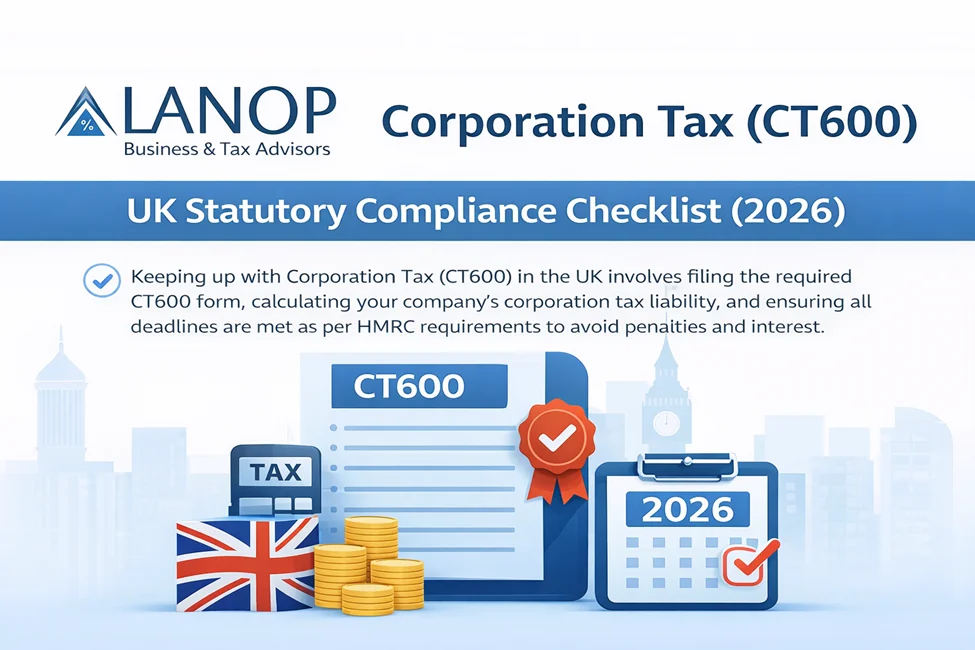
You must file your CT600 within 12 months of your period end. But you must pay Corporation Tax earlier, at 9 months and 1 day after the year ends. These are two different deadlines.
Example: Your year ends on 31st March 2026. Pay by 1st January 2027. File by 31st March 2027.
VAT & PAYE
If your turnover goes past £90,000, you must sign up for VAT. Under Making Tax Digital (MTD), you must use software to file your VAT returns. For employers, Real-Time Information (RTI) means you report payroll to HMRC on every pay date. This keeps tax records clean and up to date.
Directors’ ID Check: What’s New in 2026?
This is one of the biggest changes in years. All directors, new and existing, must verify their identity. This stops false identities being used in business. It also makes the company register more open and trustworthy.
How Does the ID Check Work?
Direct Check uses a digital ID tool. You can use a government app or the GOV.UK ID service. This is the quickest route for most directors.
Indirect Check goes through an Authorised Corporate Service Provider (ACSP). This could be an accountant or a law firm. It suits directors who want expert support through the process.
What Happens If You Don’t Verify?
Missing the 2026 ID check deadline is a crime. Authorities could impose large fines on you or ban you from acting as a director. An “unverified” flag will show on your public record. This flag can hurt your credit score and damage your bank ties. Getting loans becomes much harder. Working with dedicated limited company accounting specialists ensures this step is handled correctly and on time.
Late Filing Penalties: What Do They Cost?
Missing deadlines is costly. Companies House fines are automatic. There is no room to argue.
Companies House Penalty Scale (Private Limited Companies)
| How Late | Fine |
| Up to 1 month | £150 |
| 1 to 3 months | £375 |
| 3 to 6 months | £750 |
| Over 6 months | £1,500 |
Warning: File late two years in a row and all fines double.
HMRC Fines
HMRC charges £100 if your CT600 is one day late. After three months, they add another £100. After 6 months, they estimate your tax bill and add a 10% fine on top. This gets costly fast. Expert HMRC tax investigation support can help if you find yourself facing an enquiry or penalty dispute.
The real cost: Missing filings for 6 months can mean over £2,000 in fines from both bodies. That is far more than the cost of professional compliance support.
Statutory Filings for Small Businesses
Many owners ask: do these rules apply to my small business? Yes, they do. But the filing is often much simpler. Small business statutory filings often fall under the micro-entity rules. Working with small business accountants who know these thresholds can save you a significant amount of time and money each year.
Micro-Entity Provisions
You can file abridged accounts if your business meets two of these three tests:
- Turnover of £632,000 or less
- Balance sheet of £316,000 or less
- 10 or fewer staff
Abridged accounts need far less detail than full accounts. This saves small firms time and money while still meeting the law.
How Do You Build a Statutory Compliance Checklist?
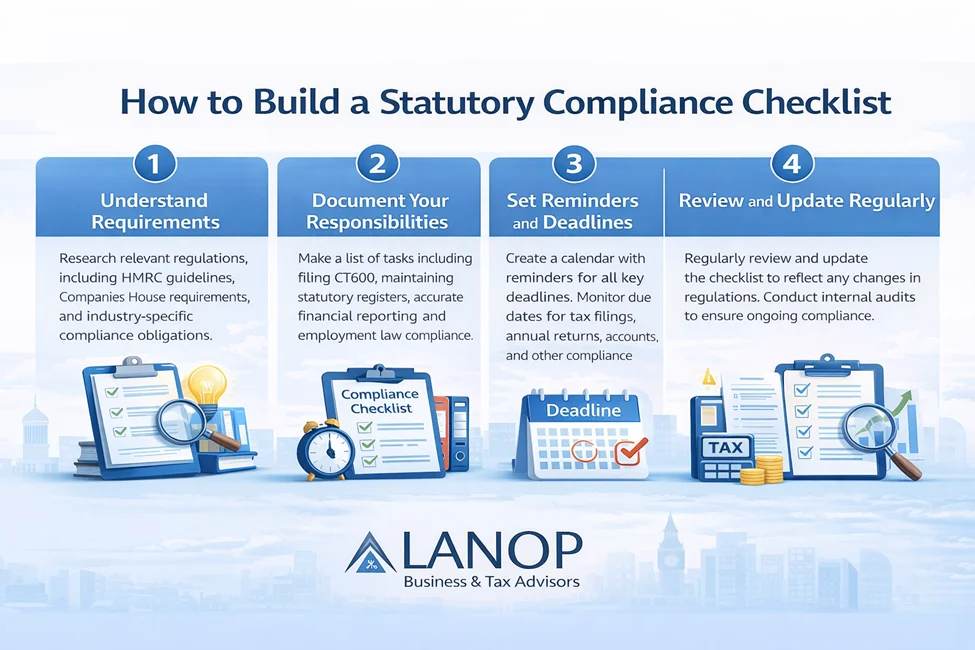
Building your first checklist is simple if you follow clear steps:
- Find Your Year-End: Check your Accounting Reference Date on Companies House. This sets your full filing schedule.
- Mark Key Dates: Use the 9-month rule for Companies House. Use the 12-month rule for HMRC. Set calendar alerts early.
- Book an ACSP: Make sure your directors are ready for ID checks. An ACSP can get this done fast.
- Check Your Payroll: Review payroll and auto-enrolment duties. Confirm that all eligible staff are enrolled in a qualifying pension scheme.
- Go Digital: Drop the spreadsheets. Use MTD software that links with government systems.
- Set Controls: Assign someone to check the Confirmation Statement data at least 30 days before the due date.
Many firms offer a free statutory compliance checklist template to help you get started.
Software & Digital Filing Changes (2027 Planning)
Manual filing is coming to an end. The 2027 software filing rule is on its way. The government wants a more accurate, fully digital company register.
By 2027, most companies will no longer be able to use basic web filing for accounts. You will need software that supports iXBRL. This is a reporting format that lets the government check your data automatically. Even dormant firms that once used paper filing must go digital.
For 2026, make sure your software works with both HMRC and Companies House systems now. Do not leave this until 2027.
Accountant vs DIY Compliance: Which Is Right for You?
A free checklist helps you track dates. But filing is where the risk sits.
| Feature | DIY | Professional Accountant (Lanop) |
| Direct Cost | Low (software fees only) | Moderate (monthly or annual fee) |
| Error Risk | High (self-taught) | Very low (expert checked) |
| Penalty Risk | High | Zero (on-time filing guaranteed) |
| Time Needed | 20+ hours per year | Almost none |
| Tax Savings | None | Yes (proactive advice) |
DIY works for simple, dormant firms. But the 2026 rules are complex. For any trading company, getting help from specialist limited company accountants is a smart investment that pays for itself quickly.
Common Mistakes Businesses Make in 2026
Mixing Up Filing and Payment: Many owners think paying tax means they have also filed the return. Or they assume filing means the bill is paid. Both errors lead to fines.
Delaying the ID Check: Directors wait too long to verify. This creates an unverified flag on the public register. It hurts credibility with banks and lenders.
Assuming the Accountant Does It All: Not all accountants include the Confirmation Statement in their package. This leaves a gap you may not notice until it is too late.
Missing Auto-Enrolment: Forgetting to re-declare pension compliance to The Pensions Regulator every three years leads to fines that are easy to avoid.
First-Year Date Errors: Many new firms don’t know their first accounts are due 21 months from the start date, not 9 months from the year-end. This catches new directors off guard.
How Lanop Can Help
At Lanop, we take compliance off your plate. The UK is moving fast toward digital rules and tighter laws. Having an expert partner on your side now is vital.
We handle all filings for Companies House and HMRC. We act as your Authorised Corporate Service Provider for director ID checks. We move your business to software only filing before the 2027 cut-off. For firms that need an audit in 2026, we offer a full, stress-free audit service.
Ready to protect your business? Book a call with Lanop today. Or explore our full limited company accounting services to see exactly how we keep your company safe, compliant, and one step ahead.
Conclusion
The 2026 compliance rules are changing fast. ID checks are now the law. Manual web filing is ending. The window for error is getting smaller.
Stay ahead with a solid statutory compliance checklist. Get help from a professional accountant. This keeps you clear of heavy fines and the harm that late filings can do to your name.
Compliance is not just box-ticking. It is the base of a strong, trusted, and lasting business. If you’re ready to hand this over to experts, our limited company accounting team is here to help.
Frequently Asked Questions
You must file Annual Accounts and a Confirmation Statement with Companies House. You must also file a CT600 Tax Return with HMRC. Directors must pass an ID check under the new ECCTA rules. You must run payroll via RTI, file VAT under MTD, and offer a workplace pension scheme.
Private limited companies have 9 months from the year-end. If your year ends on 31st December 2025, file by 30th September 2026. Public companies only get 6 months.
File your CT600 within 12 months of the period end. Pay the tax at 9 months plus one day. VAT returns are quarterly, due one month and seven days after the period ends.
Check your company data on Companies House each year. After your review date, you have 14 days to file. Use the Companies House online portal or your accountant’s software.
Companies House fines range from £150 (up to one month late) to £1,500 (over six months). File late two years in a row and all fines double. HMRC charges £100 for a late CT600, plus more charges and interest on unpaid tax.
You need an audit if you meet two of these tests: turnover over £10.2 million, gross assets over £5.1 million, or more than 50 staff. Some regulated industries also need audits no matter their size.
Sign up as an employer with HMRC. Report pay and tax via Real-Time Information on every pay date. Set up a qualifying pension scheme through payroll and auto-enrolment for all eligible staff.
Keep financial records for at least 6 years from the last year-end. Keep meeting minutes and director or shareholder registers permanently.
File accounts and returns on time. Keep accurate company records. Act in the best interests of the company. Follow your Articles of Association. Complete your ID check under the 2026 rules.
Find your accounting reference date. List all HMRC and Companies House deadlines. Add monthly payroll dates and quarterly VAT due dates. Include ID check steps and any software needs. Lanop can set all of this up and run it for you.