Introduction
Every year, thousands of UK workers miss out on money they are owed. If you wear a uniform at work, you may qualify for a uniform tax rebate. Most people never claim it.
HMRC’s rules can seem confusing. You might not know if you qualify, how much you will get, or whether it is worth claiming.
This guide answers all of that. By the end, you will know if you qualify, how much to expect, and how to claim it correctly.
What Is a Uniform Tax Rebate?
Definition
A uniform tax rebate is a refund from HMRC. It covers the cost of washing, repairing, or replacing your work uniform. You do not get the full cost back. Instead, HMRC gives you tax relief. This reduces the amount of income you pay tax on.
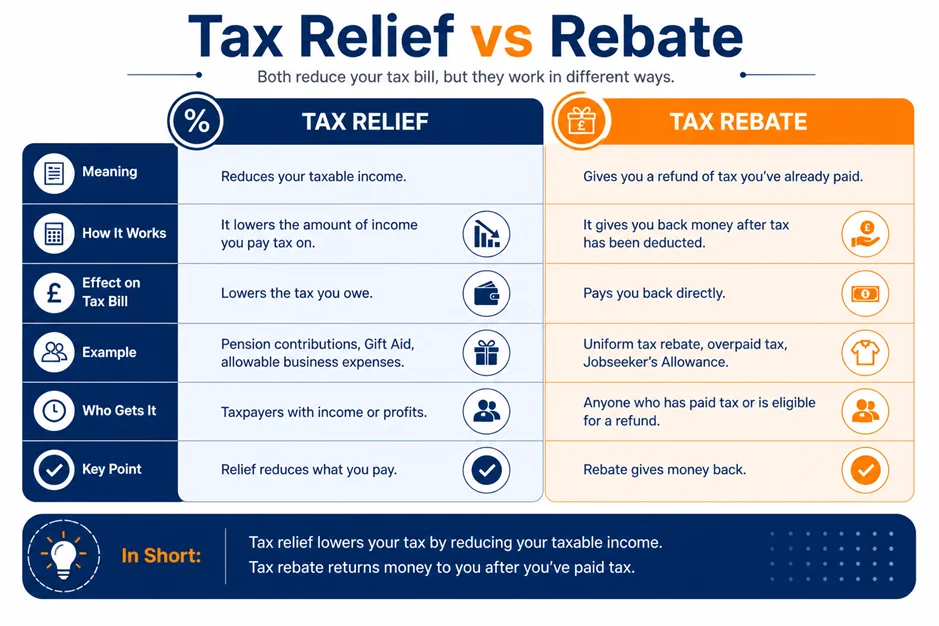
Tax Relief vs Rebate
These two terms are often confused. Tax relief reduces your taxable income. A rebate is the cash you get back. Most people use the term ‘uniform tax rebate’ to mean the money they receive from HMRC.
You may get a direct payment or a change to your tax code. This depends on your situation.
Who It Applies To
This relief applies to employed workers who wear a uniform that identifies their employer or job. You must pay for the upkeep yourself. It does not apply if your employer launders the uniform for you.
Who Qualifies for a Uniform Tax Rebate?
Eligibility Rules
To claim, you must meet all of these conditions:
- You are employed and pay tax through PAYE
- You wear a work uniform or protective clothing
- The uniform identifies your employer or occupation
- You wash, repair, or replace the uniform at your own cost
- Your employer does not reimburse these costs
- You pay income tax at 20% or above
Who Does Not Qualify
You cannot claim if:
- Your employer launders or replaces the uniform for free
- You wear everyday clothes that could be worn outside work
- You are self-employed
- You do not pay income tax
- You only wear PPE (protective equipment is treated separately)
Quick Eligibility Checklist
| Condition | Qualifies? |
| Wear a logoed or distinctive uniform | Yes |
| Wash uniform at home | Yes |
| Employer pays for laundry | No |
| Wear plain clothes (no branding) | No |
| NHS nurse in uniform | Yes |
| Office worker in smart casual | No |
What Counts as a Work Uniform?
HMRC defines a qualifying uniform as clothing that clearly identifies your employer or job. You must wear it as a condition of employment. Simply being told to look professional does not count.
Examples: Eligible vs Not Eligible
| Eligible | Not Eligible |
| NHS scrubs or nurse’s uniform | Smart office wear |
| Mechanic’s overalls with logo | Plain jeans and T-shirt |
| Police or security uniform | Business suit (no branding) |
| Chef’s whites with employer branding | Black trousers worn by waiting staff |
| Branded retail or hospitality uniform | General protective boots |
Grey Areas
Some cases are not obvious. Waiting staff in black-and-white uniforms without a logo can be tricky. HMRC may or may not accept the claim depending on whether the clothing is only used at work.
Branded items, such as a polo shirt with an employer logo, almost always qualify. Generic protective clothing like steel-capped boots usually does not, unless it is part of a full branded uniform.
Uniform Tax Rebate Amount: How Much Can You Claim?
Flat Rate Explained
Most people claim through HMRC’s flat rate expenses system. This gives a fixed annual deduction based on your job. You do not need receipts.
The standard flat rate for most jobs is £60 per year. Some industries get more. See the table below.
| Occupation | Annual Allowance | Tax Rebate (20% Rate) |
| Most industries (standard) | £60 | £12/year |
| NHS – Nurses, Midwives | £125 | £25/year |
| Ambulance staff | £185 | £37/year |
| Police officers | £140 | £28/year |
| Prison officers | £80 | £16/year |
| Mechanics / Vehicle technicians | £120 | £24/year |
| Chefs (full uniform) | £120 | £24/year |
Real Payout Examples
A basic rate taxpayer (20%) claiming the standard £60 allowance for four years:
- £60 x 4 years = £240 total allowance
- 20% of £240 = £48 cash rebate
An NHS nurse claiming £125 per year at 20% tax, over four years:
- £125 x 4 = £500 total allowance
- 20% of £500 = £100 cash rebate
Higher rate taxpayers at 40% get more. The same £60 allowance gives them £24 per year instead of £12.
Why Amounts Seem Low
The rebate surprises many people. You are not being reimbursed for the full laundry cost. You are getting back the tax on an estimated cost.
Think of it as a partial refund on tax already paid. Claiming for up to four years at once makes it far more worthwhile.
Flat Rate vs Actual Cost Claims
| Flat Rate | Actual Cost | |
| Receipts needed | No | Yes |
| Easier to claim | Yes | No |
| Higher potential rebate | Only if costs are low | Yes, if costs are high |
| HMRC scrutiny | Low | Higher |
For most workers, the flat rate is the right choice. It is quick and accepted without documentation.
If your real costs are much higher than the flat rate, you can claim actual expenses instead. A tax adviser can help you decide.
Step-by-Step Guide to Claiming
Online Method (Fastest)
This is the best route for most people:
- Go to gov.uk and sign in to your HMRC personal tax account
- Select ‘Check your Income Tax’
- Choose ‘Add a missing allowance or relief’
- Select ‘Uniform, work clothing and tools’
- Enter your occupation and the flat rate amount
- Submit. HMRC will update your tax code or issue a refund.
P87 Method
If you cannot use the online system, download form P87 from HMRC’s website. This form covers employment expenses including uniform costs. Post it to the address shown on the form.
This method takes longer. But it is a valid option if you do not have online access or are claiming for more than one job.
Self-Assessment
If you already fill in a self-assessment tax return, add your uniform expenses in the employment section under ‘Other expenses and capital allowances.’ This applies your relief automatically.
What Happens After You Submit?
Processing
Once HMRC receives your claim, they will either:
- Update your tax code to give relief going forward, or
- Issue a direct repayment for past years by cheque or bank transfer.
You will receive a letter or notification in your personal tax account with the outcome.
Tax Code vs Refund
If you claim for future tax years, HMRC adjusts your tax code. Your employer then deducts less tax each month. You get the benefit through higher take-home pay.
If you claim for past years, HMRC pays you directly. The amount is based on the tax you already paid in those years.
How Long Does a Uniform Tax Rebate Take?
| Method | Estimated Processing Time |
| Online (HMRC personal account) | 5–10 working days |
| P87 (postal) | 6–8 weeks |
| Self-assessment return | By tax return deadline |
Small mistakes can slow things down. Before submitting, check your National Insurance number, employer details, and tax reference. Even a minor mismatch can delay your uniform tax rebate.
Claiming for Previous Years
The 4-Year Rule
If you missed earlier claims, you can still go back. HMRC allows claims for up to four tax years. In 2026, this means you can claim from the 2022–2023 tax year onwards. Each year is reviewed on its own.
Submitting all years together can increase your total uniform tax rebate. Many people miss this and lose out on money.
Example
Here is a simple breakdown.
A retail worker claiming the standard £60 allowance at 20% tax could receive:
- 2022–23: £12
- 2023–24: £12
- 2024–25: £12
- 2025–26: £12
Total rebate: £48
Now look at a higher-rate taxpayer. A nurse with a £125 allowance at 40% tax could receive:
- £125 × 40% × 4 years = £200
Common Reasons Claims Are Rejected
Avoid these common mistakes:
- Claiming for everyday clothing that is not a recognised uniform
- Your employer already pays for laundry
- Wrong occupation selected, which leads to the wrong flat rate
- Using a third-party company that submits inaccurate details
- Submitting duplicate claims for the same tax year
How to Fix a Rejected Claim
If your uniform tax rebate claim is rejected, HMRC will send a letter explaining the reason. Read it carefully before you act.
You can challenge the decision. Gather clear proof, such as:
- Your employment contract
- Recent payslips
- Photos of your work uniform
Most rejections happen due to missing or unclear details. They are common and usually easy to fix once you provide the right information.
Uniform Tax Rebate for Specific Professions
NHS Workers
The NHS uniform tax rebate is one of the most commonly claimed in the UK. Nurses, midwives, healthcare assistants, and clinical staff all wear identifiable uniforms. This makes them eligible.
The flat rate for nursing roles is £125 per year. Ambulance staff can claim £185 per year. Many NHS workers have years of unclaimed relief with HMRC.
Other Common Roles
Workers who regularly qualify include:
- Police and emergency services
- Mechanics and engineers in branded overalls
- Chefs and kitchen staff with branded workwear
- Retail and hospitality workers in branded uniforms
- Prison and security officers
Special Cases
Multiple Jobs
If you wear a qualifying uniform in more than one job, you can claim the flat rate for each role. List each employer and role separately when you apply. The reliefs are added together.
Part-Time Workers
Being part-time does not affect your eligibility. The flat rate is not reduced for part-time hours. You get the full annual allowance if you wore the uniform during that tax year.
Agency Workers
Agency workers can claim if they wear a qualifying uniform and pay for its upkeep. You must be employed through PAYE and receive a payslip with tax deducted. Zero-hours workers on PAYE are also eligible.
DIY vs Using a Claims Company
| DIY (HMRC Direct) | Claims Company | |
| Cost | Free | 20–40% of rebate |
| Speed | 5–10 days online | Varies |
| Control | Full | Limited |
| Risk | Low if done correctly | Check terms carefully |
| Best for | Most people | Complex cases only |
Claims companies can simplify the process, but they take a cut. This is often 25% to 40% of your rebate. On a £48 payout, that is up to £19 in fees.
Some companies use aggressive marketing and lock you into terms you may not have read carefully. For a standard uniform rebate, claiming directly through HMRC is free and takes minutes.
Uniform Tax Rebate for Employers
Employer Role
Employers do not receive the rebate. That goes to the employee. But employers play an important role. If a company provides a qualifying uniform and does not cover laundry, employees are entitled to claim.
Some employers pay a laundry allowance directly to staff. If HMRC approves this arrangement, it can be paid tax-free. This saves money for both the employer and the employee.
Compliance
Employers must not accidentally create a benefit-in-kind by providing clothing that does not meet HMRC’s definition of a qualifying uniform. Getting this wrong can lead to unexpected tax liabilities. Speak to a tax adviser if you are unsure about your company’s uniform policy.
Is It Worth Claiming?
For most people, yes. The online claim takes under ten minutes. There is no cost and no risk if you genuinely qualify. You can backdate up to four years in one go.
Even the standard £48 four-year rebate is money that belongs to you. For NHS workers or higher-rate taxpayers, the amount is much larger.
The only time it is not worth claiming is if your employer already covers laundry costs, or you do not have a recognised work uniform. Claiming incorrectly could cause issues with your tax record.
Key Takeaways
- You qualify if you wear a recognisable work uniform, pay for its upkeep, and are a PAYE taxpayer
- The flat rate is £60 for most workers higher for NHS, police, and skilled trades
- Claiming takes minutes online through your HMRC personal tax account
- You can backdate up to four tax years for the biggest payout
- You get the rebate as a tax code change or a direct refund
- Claim directly through HMRC for free skip the claims companies
FAQs:
Most people get their HMRC uniform tax rebate within about 6 to 10 weeks. It can be quicker if you apply online. Delays usually happen when details are missing or HMRC is busy. In some cases, the money is paid directly. In others, it shows up as a change in your tax code instead.
The P87 form is the standard way to claim a uniform tax rebate if you are employed. You use it when you are not filing a self-assessment return.
It covers everyday work expenses such as:
- Cleaning your uniform
- Minor repairs
- General upkeep
You can fill it in online or send a paper version by post.
A uniform tax rebate is a small tax relief given by HMRC. It helps employees recover part of the cost of maintaining a required work uniform. You do not get the full amount back. Instead, HMRC reduces the tax you pay based on a set allowance.
Yes, you can claim a tax rebate for washing your uniform, but only in certain cases.
You must:
- Be required to wear a uniform for work
- Pay for cleaning it yourself
- Not receive any reimbursement from your employer
Most claims are based on a flat rate, not actual washing costs.
They can, but only if they meet the conditions. Student nurses must be working, earning, and paying tax to claim a uniform tax rebate. If you are still in training and not paying tax, the claim will not apply.
In many cases, yes. You usually need to apply each year unless HMRC has already added the allowance to your tax code. Even then, it is worth checking your tax code to make sure nothing has changed.
The P87 form is the most common option. You can complete it online through HMRC or send it by post. If you already file a tax return, you do not need a P87. You can claim through self-assessment instead.
There are three main ways to claim a uniform tax rebate:
- Use the HMRC online service
- Submit a P87 form
- Include it in your self-assessment
You will need basic details like your employer’s name and your job role.
The process is simple once you understand it. Start by checking if your uniform qualifies. Then choose how you want to apply. After you submit your claim, HMRC reviews it and applies the relief. The key is making sure your uniform meets their rules.
To claim a tax rebate for washing uniforms, you do not need to track every wash. Most people use HMRC’s flat rate system. You can apply online or through a P87 form. Just select uniform or clothing expenses and submit your details.
Conclusion
Paying to wash or maintain a work uniform can sometimes lead to tax relief. Many employees across the UK miss this without realising they qualify. HMRC allows eligible workers to claim back part of these costs. This often includes branded uniforms, safety clothing, or other required workwear.
The claim process is usually straightforward through your HMRC account. Some people may also be able to claim for earlier tax years. Checking the correct allowance matters before you apply. This becomes more important if you work several jobs or have different employers during the year.
If you are unsure where to start, Lanop Business and Tax Advisors can help you understand the process and review your claim properly.