

Most UAE residents feel safe when they leave Dubai. They hold on to their Emirates ID. They keep the free zone company. They plan around the 183-day rule. Then the tax bill lands.
Here is the hard truth. European tax offices do not care where your firm is registered. They care where you live, where you work, and where your family is. If those answers point to Europe, you likely owe tax in Europe.
This guide walks you through the real risks. It covers the key choices you face and the steps you can take to protect yourself before you move.
Why Moving from Dubai to Europe Creates New Tax Risks
The UAE has no personal income tax. That benefit is yours if you truly live there. The day you shift your life to Europe, that shield starts to go.
Most European countries tax their residents on all income worldwide. That means dividends from your UAE firm, rent from a Dubai flat, and gains on global investments can all be taxed in Europe.
The biggest shock for most people? They become European tax residents much faster than they thought. And they often find out too late to do anything about it.
How European Tax Residency Rules Actually Work
The 183-Day Rule and Why It Often Misleads
The 183-day rule Europe moving from Dubai myth is one of the most costly mistakes in global moves. Spending fewer than 183 days in a European country does not make you a non-resident there.
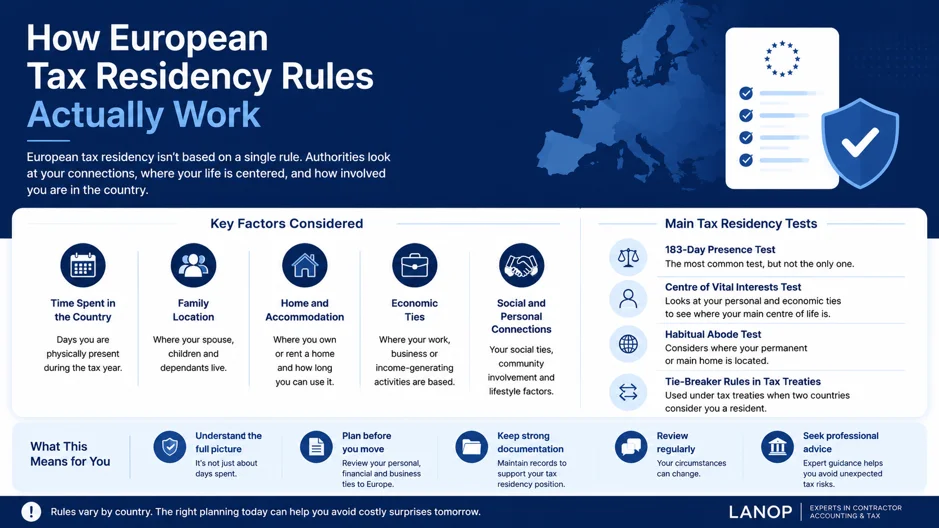
Most European countries use more than one test. Where does your family live? Do you own or rent a home there? Where do you run your business? Any of these can override the day count.
Here is a real example. Your spouse and kids move to Italy in January. You commute from Dubai. Italy may still call you a resident from day one, even if you only spend 90 days there.
What Tax Resident Actually Means
Immigration status and tax status are not the same thing. You can hold a UAE visa and still owe tax in Germany, France, or Spain. The key test in European tax residency rules is simple. Where is the centre of your life? Where do you sleep most nights? Where is your bank, your doctor, your family? That is where you pay tax.
Leaving the UAE: What You Actually Need to Do
UAE Tax Residency Exit
Holding a UAE visa does not mean you are still UAE tax resident once you leave. The UAE Tax Residency Certificate (TRC) matters, but it has limits.
A clean UAE tax residency exit means more than cancelling a visa. You need clear records showing your life and business were truly based in the UAE during the time in question. If you are also thinking about leaving the UK as a business owner, the same principle applies documentation and timing matter far more than most people expect.
Documents That Support Your Position
- UAE Tax Residency Certificate from the Federal Tax Authority
- Travel records showing time spent in the UAE
- Utility bills, tenancy contracts, and UAE bank statements
- Medical and school records for family members in the UAE
- Payroll records or invoices showing UAE based income
The Centre of Vital Interests Test
The centre of vital interests EU tax treaty UAE test shows up in most tax treaties. When two countries both claim you as a resident, this test picks the winner.
It looks at your personal ties such as family and home. It also looks at your money ties such as employer, clients, and savings. The country with the stronger link wins.
This is a big deal for UAE expats. If your family moves to Europe before you do, Europe may already hold the stronger claim. Even if you are still physically in Dubai.
Does Your UAE Free Zone Company Still Work After You Move?
This is one of the top questions for anyone planning a UAE company move Europe strategy. If you originally set up your business in Dubai for tax and operational reasons, moving to Europe without reviewing that structure first is a serious risk.
UAE free zone firms offer real tax benefits, but only when run from the UAE. Once you move to Europe and keep managing the firm from there, European rules may kick in.
Management and Control
European tax offices use a management and control test. If the big decisions are made in Europe, where you now live, the firm may be treated as a European tax resident. That means local corporate tax on its profits.
Having a UAE address for the company is not enough. Tax offices look at where directors meet, where deals are signed, and where the real choices are made.
Permanent Establishment Risk
Even if the company avoids corporate tax, permanent establishment risk EU moving from UAE is still a threat.
If you regularly close deals for your UAE firm while living in Germany or Spain, those countries may say the company has a taxable presence there. That can mean local tax on part of the firm’s profits, even without a formal office in that country.
Foreign Income Tax Exposure After Relocating
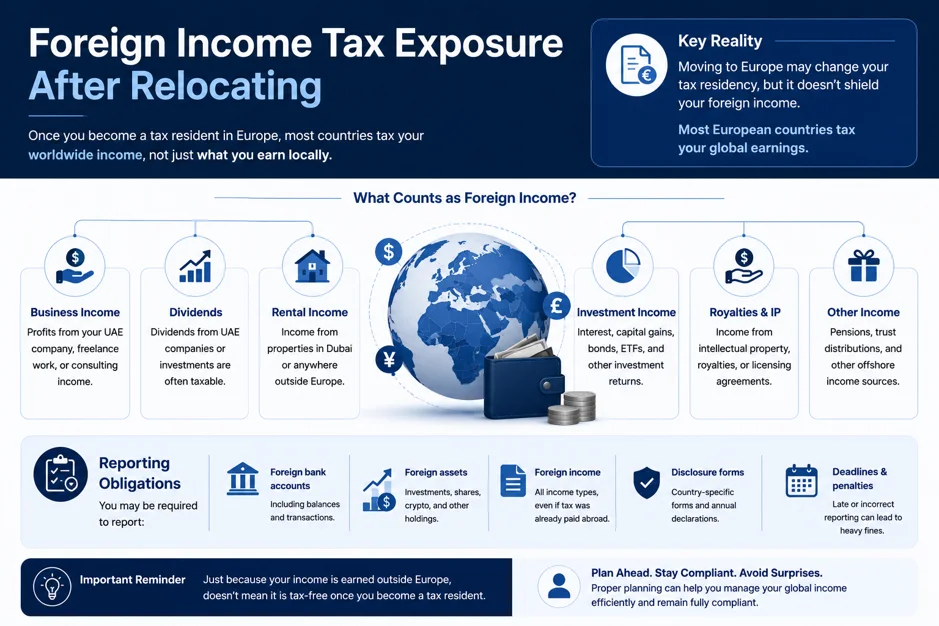
Once you are a European tax resident, your new country typically taxes all your income worldwide. Here is what that looks like in practice.
- Dividends from your UAE firm: taxable in Europe as personal or dividend income
- UAE rental income: taxable in both the UAE where applicable and Europe, with some treaty relief
- Gains on UAE or global investments: taxable in your new country under local rules
- Bank interest and investment returns: reportable and taxable in most European countries
Tax treaties between the UAE and European countries can cut double taxation. But they do not wipe out reporting duties. You still need to declare foreign income and show the treaty applies.
Italy, Greece, and Cyprus: A Quick Comparison
Three popular picks for Dubai to Italy Greece Cyprus tax planning each come with their own rules:
| Country | Key Regime | Foreign Income | Best For |
|---|---|---|---|
| Italy | Flat Tax (100k EUR/yr) | Exempt under flat tax | HNWIs, retirees |
| Greece | Non-Dom (50k EUR/yr) | Exempt for 15 years | Entrepreneurs, investors |
| Cyprus | Non-Dom (60-day rule) | Dividends and interest exempt | Business owners, families |
Dubai Relocation Tax Checklist
Personal
- Set your move date and track days in each country
- Get your UAE Tax Residency Certificate before you leave
- Plan where each family member will be based
- Think about the timing of your move within the tax year
Business Owners
- Check your UAE free zone structure for management and control risks
- Confirm whether the company will still be run from the UAE
- Look at whether a European entity or group holding structure is needed
- Review client contracts for permanent establishment risk
Investors
- List all investment income and how it will be taxed in your new country
- Check UAE property income and overseas reporting rules
- Look at whether selling assets before you move could help your tax position
Common Mistakes to Avoid
Relying on the 183-Day Rule Alone
Day counts matter, but they are not the full picture. Your family location, your home, and your usual place of life can all override time spent in a country.
Thinking Your UAE Company Travels with You
A UAE free zone firm is not safe once you leave. If you run it from Europe, Europe may tax it. Review the setup before you move, not after.
Putting Off Professional Advice
Most tax planning only works before the move. Once you are a resident in Europe, your choices shrink fast. Acting early gives you real options.
Frequently Asked Questions
Yes, but it depends on how you run it. If you make key decisions from Europe, the company could be treated as a European tax resident. Get a structure review before you move.
Treaties cut double taxation but do not remove it fully. They also do not remove reporting duties. You may still need to declare UAE income in your new country, even if the treaty cuts the amount you owe.
This is a big risk. If your family sets up life in a European country before you, that country may already hold the centre of your vital interests. That can make you a tax resident there before you even arrive.
Get a Tax Residency Certificate from the UAE Federal Tax Authority. Keep clear records of your UAE based work and time spent there. Make sure your documents show a real link to the UAE during the period in question.
In most cases, yes. Once you are a European tax resident, dividends from your UAE firm will likely count as taxable income. Special regimes in Cyprus or Greece may lower the rate.
Conclusion:
Your next step depends on where you are right now.
- UAE business owner: Check your free zone structure now. Understand the management and control risks before you go.
- Investor: List your income sources and find out how each one will be taxed in your new country.
- Consultant or remote worker: Look at whether your work setup could create a permanent establishment issue.
- Relocating family: Be careful about sending your family ahead without a clear tax plan in place.
- High net worth individual: Look into the special regimes in Italy, Greece, or Cyprus. But get proper advice first.
Moving from Dubai is a great step forward. But the tax world on the other side of that move is complex. Getting it wrong can cost a lot. Getting it right is possible with the right help.
At Lanop Business and Tax Advisors, we work with UAE residents, business owners, and investors who are planning cross-border moves. If you are thinking about moving from Dubai to Europe, we can review your tax position, assess your company setup, and help you plan the move the right way. Get in touch with our team at Lanop before you take the next step.