
If you were one of the thousands using the remittance basis to shield your wealth, the world looks very different today. The new “four-year” FIG (Foreign Income and Gains) system is a short-term band-aid. By year five, you aren’t just a UK resident; you are a global taxpayer in the eyes of HMRC.
This change has sparked a massive move. High-net-worth individuals are no longer asking if they should leave, but where they should land. Italy, Greece, and Cyprus are the top choices. But with Italy raising its rates in 2026 and Greece tightening its rules, the “right” choice depends on your bank balance and how you want to live your life.
The Death of the UK Non-Dom
Why is 2026 the year that everyone is finally pulling the trigger? It comes down to the Temporary Repatriation Facility (TRF). This is a special window that lets former non-doms bring offshore money into the UK at a flat 12% tax rate through the 2026/27 tax year. It is effectively the last chance to clean up your capital before moving your tax residency to a new home.
If you miss this window, the cost of bringing that money back later jumps to 15%. After that, the facility was gone. Before you pack your bags, you need to make sure your long-term strategic tax planning is watertight. HMRC is watching these departures very closely. A messy exit can lead to years of expensive audits and legal headaches.
Italy and the €300,000 Entry Fee
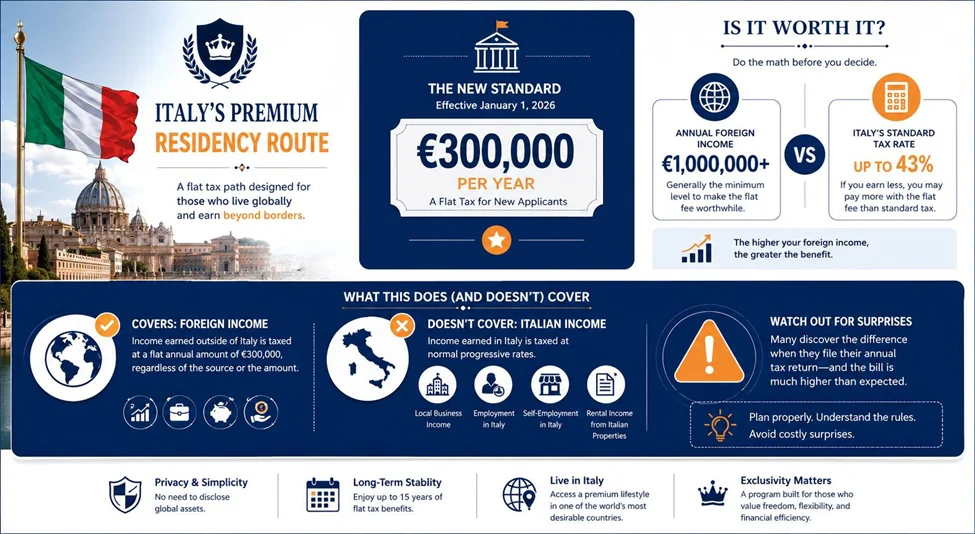
Italy was the first choice for many years. It was the ultimate prestige play. You could pay a simple fee, and the Italian government would ignore your global earnings. But as more people joined the club, the price went up. As of January 1, 2026, the annual flat tax for new applicants rose to €300,000 per year.
Is Italy Worth the Cost?
This is a basic math problem. Italy is no longer for the “merely” wealthy. It is now reserved for the ultra-wealthy. To make a €300,000 annual fee make sense, you generally need to earn at least €1,000,000 in foreign income every year. If you earn less than that, you are likely paying more in the flat fee than you would under Italy’s standard tax rates, which top out at 43%.
A common mistake involves confusing foreign income with local income. This flat fee only shields money made outside of Italy. If you start a new business in Milan or work for an Italian company, that money is taxed at normal rates. Many people discover this too late when they are preparing their annual self-assessment tax returns and realize their tax bill is much higher than they expected.
Book Your Free Italy Business Setup Consultation
Whether you're starting a new venture or expanding into Europe, our experts will guide you through every stage of the Italian company formation process, from choosing the right business structure to tax registration, banking, and compliance.
Bringing the Family Along
Italy still has a great deal for families. You can add your spouse or children to the regime for an extra €50,000 per person. If you have a large family with its own trust funds, this can still be very efficient.
But remember that these family members must live in Italy. You cannot pay the fee for your children while they remain in a UK boarding school or university. The Italian authorities are becoming much stricter about checking physical presence.
The Wealth Tax Benefit
There is a hidden perk in the Italian system. People in this regime do not have to pay the wealth taxes known as IVIE and IVAFE. These are taxes on foreign property and financial assets. In an era where more countries are looking at wealth taxes to fill budget gaps, this exemption is a massive win. It also means you do not have to report every single foreign bank account to the Italian government.
This level of privacy reduces the risk of an accidental HMRC tax investigation or audit regarding your historical disclosures.
Greece and the €500,000 Investment Rule
Greece saw the success Italy was having and decided to offer a cheaper alternative. The Greek High-Net-Worth regime is half the price of the Italian one. It charges a flat €100,000 annually. But Greece wants you to have real skin in the game.
The Investment Anchor
To get the Greek flat tax, you have to invest at least €500,000 in Greece within your first three years. You can buy real estate, stocks, or Greek bonds. If you were already looking for a villa in the islands, this is not a problem.
But you must keep that investment for the full 15 years you are in the regime. If you sell your house and do not buy a new one in Greece, you lose your tax status. This creates a permanent tie to the country that requires careful management of your portfolio.
The Dream for Retirees
If you are not running a global business but are simply looking for a place to retire, Greece has a better option. They offer a 7% flat tax on all foreign pension income. For many UK nationals with large private pensions, this is the best deal in the Mediterranean.
You do not have to make the €500,000 investment for this specific regime. You just need to move there. If you have a £100,000 annual pension, your tax bill would be just £7,000. It is a very simple and effective way to protect your retirement savings.
Lower Costs and Modern Hurdles
Greece is much more affordable than Italy or the UK. Your money goes much further when it comes to dining, rent, and local services. But you have to deal with the local bureaucracy.
While Athens is becoming a modern city, the islands can still feel like they are stuck in the past. High-speed internet and high-quality healthcare can be harder to find once you leave the capital. You are trading some convenience for a much lower cost of living.
Cyprus and the 17-Year Exemption
Cyprus does not use a flat annual fee. Instead, they use a Non-Domicile Regime that lasts for 17 years. It is very similar to the old UK system, but it is much more stable in 2026.
The 0% Dividend Rule
If you are a non-dom in Cyprus, you pay 0% tax on dividends, interest, and rental income for 17 years. There is no €300,000 fee to pay. There is no €500,000 investment you must make. You just move there and establish your tax home. Your passive income becomes tax-free.
You do have to contribute to the local health system, which is called GeSY. But this is capped at about €4,800 per year for most high earners. For an entrepreneur who earns their money through dividends, Cyprus is the clear winner. When you look at the total savings, the capital gains tax impact of moving your company is often a price worth paying.
The 60-Day Rule for Travelers
The 60-day rule is why many people are choosing Cyprus in 2026. Most countries want you to stay 183 days a year to be a tax resident. Cyprus lets you do it in just 60 days. To qualify, you need to stay in Cyprus for 60 days, keep a home there, and have a business tie, such as being a director of a local company.
Most importantly, you cannot spend more than 183 days in any other single country. This is perfect for people who travel constantly between London, Dubai, and the rest of Europe. It gives you an EU tax home without forcing you to stay in one place for half the year.
Real Business and Real Offices
If you move your company to Cyprus, the corporate tax rate is 15%. This is still very low for the European Union. But the days of having a “brass plate” company are over. The Cyprus authorities want to see a real office and real employees. This requires a bit more work to set up, but the personal tax savings usually make it worth the effort.

The Numbers Side-by-Side
Let’s look at how these rules work for three different people.
The High-Earning Founder with €900,000 in Dividends
- Italy: You pay the €300,000 flat tax. You are left with €600,000. You live in Milan where the cost of living is very high.
- Greece: You pay the €100,000 flat tax. You tie up €500,000 in a house. You are left with €800,000 in cash.
- Cyprus: You pay 0% tax on dividends. You pay your GeSY cap. You are left with about €895,000.
Winner:
Cyprus is the best for pure cash. Italy wins on culture and prestige.
The Retired Couple with £140,000 in Pensions
- Italy: You pay normal progressive rates. Your tax bill would be around £50,000.
- Greece: You pay the 7% retiree rate. Your tax bill is £9,800.
- Cyprus: You pay 5% on amounts over €5,000. Your tax bill is around £6,500 plus your health system fees.
Winner:
Greece. While Cyprus might be a few pounds cheaper, the Greek lifestyle for retirees is often considered superior, and the visa process is very simple.
The Trap of the 10-Year Tail
A common mistake is thinking that moving abroad solves all your problems with HMRC. It does not. One of the biggest risks for UK nationals is the Inheritance Tax (IHT).
The UK government brought in a 10-year tail in 2025. This means that if you lived in the UK for at least 10 years, you stay in the UK inheritance tax net for 10 years after you leave. If you move to Italy and pass away within that decade, HMRC will still try to take 40% of your global assets.
This makes inheritance tax and estate planning a vital part of your relocation. You cannot leave. You have to stay away and protect your wealth for ten full years. How to Properly Break Ties with the UK.
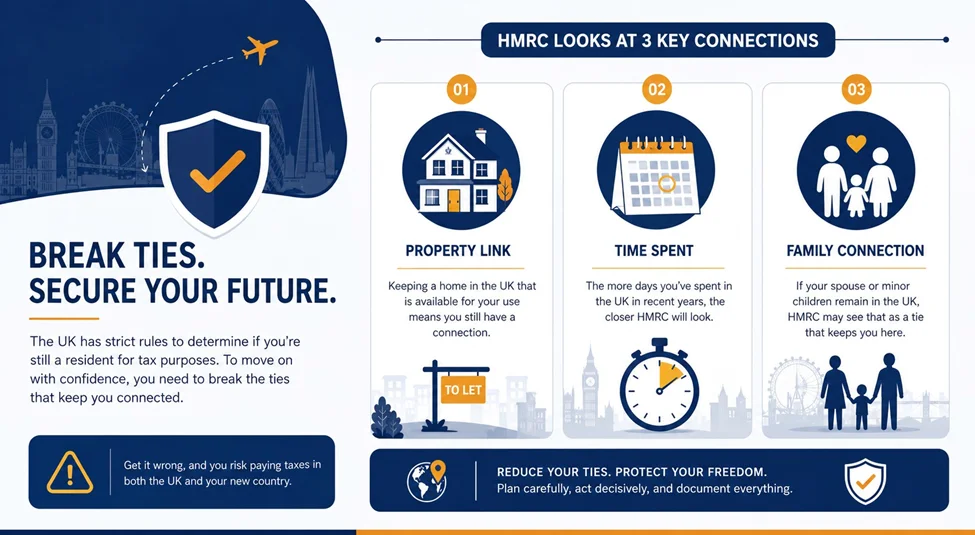
HMRC does not like losing wealthy taxpayers. They use the Statutory Residence Test (SRT) to decide if you have actually left the country.
- The Home Tie: If you keep your house in London and it is available for you to use, you still have a tie to the UK.
- The 90-Day Tie: if you spent more than 90 days in the UK in previous years, you are watching more closely.
- The Family Tie: If your spouse or minor children stay in the UK, HMRC will claim you are still a resident.
To safely claim you are no longer a UK resident, you need to reduce these ties. This often means selling your house or making sure it is rented out, so you cannot just show up and stay there. If you get this wrong, you could end up paying taxes in both the UK and your new home.
How Lanop Can Help You Win the 2026 Tax Race
Moving your life to Italy, Greece, or Cyprus is a massive project. It is not just about picking a country on a map. It is about building a legal structure that protects your money while you move.
At Lanop, we act as the bridge between your old life in London and your new life in the sun. We provide:
- HMRC Exit Strategies: We do a full audit of your life to make sure your break from the UK is clean. This protects you from future HMRC tax investigations or enquiries.
- Repatriation Guidance: We help you use the Temporary Repatriation Facility to bring money into the UK at the 12% rate before you leave. This ensures your capital is clean and ready for your new life.
- Global Compliance: We manage all your remaining UK tasks. This includes filing your final UK self-assessment returns and handling tax on any UK rental property you still own.
- Wealth Protection: We work with partners in the Med to make sure your long-term tax planning and wealth protection plans work in both countries.
The UK non-dom era is over. The Mediterranean era has begun. The only mistake you can make in 2026 is doing nothing. The window to move your money at a low tax rate is closing fast. It is time to stop paying into a system that no longer supports you and start building a future in a country that does.
If you are ready to start your journey, the team at Lanop is here to help you every step of the way. Your new life in the sun is waiting. Let’s make sure you get there safely.
We handle the paperwork and the legal hurdles so you can focus on your move. We ensure there are no surprises waiting for you when you land.
Final Thoughts for 2026
There is no single “best” country. The right choice depends on your specific wealth and your lifestyle.
- Go to Italy if you earn over €1 million and want the very best in culture, art, and prestige.
- Go to Greece if you want a simple flat tax, a lower cost of living, or if you are looking for the perfect retirement spot.
- Go to Cyprus if you are an entrepreneur who wants 0% tax on your dividends and the freedom to travel the world.
The UK non-dom era is over. The Mediterranean era has begun. The only mistake you can make in 2026 is doing nothing. The window to move your money at a low tax rate is closing fast. It is time to stop paying into a system that no longer supports you and start building a future in a country that does.
If you are ready to start your journey, the team at Lanop is here to help you every step of the way. Your new life in the sun is waiting. Let’s make sure you get there safely.
FAQs:
Can I use the UK's 12% TRF after I move abroad?
No. You must be a UK tax resident in the tax year you claim the rate. Clean up your offshore cash before you pack your bags. Once you lose your UK residency status, that door shuts.
Does Italy’s flat tax shield me from the UK’s 10-year inheritance tax tail?
It does not. Italy will ignore your foreign assets when you pass away. However, HMRC will still view you as a UK taxpayer for ten full years. You will need a strong trust or insurance plan to bridge this gap.
What counts as a valid "business tie" for the Cyprus 60-day rule?
You must hold a real, active role. Being a registered director or an employee of a Cyprus company counts. Just owning shares in a quiet shell company will not pass the test.
Can I work or consult under the Greek 7% retiree tax?
The 7% rate only applies to foreign pension cash. If you do active consulting work from your laptop while living in Greece, that specific income faces standard Greek tax rates of up to 44%.
What happens to my UK ISA if I move to Cyprus?
If you are ready to start your journey, the team at Lanop is here to help you every step of the way. Your new life in the sun is waiting. Let’s make sure you get there safely.
If I move to Cyprus, do I still pay tax on UK rental properties?
Yes. The UK always gets first dibs on UK brick and mortar. Cyprus won’t double-tax it, but you must still file a non-resident UK tax return every year.