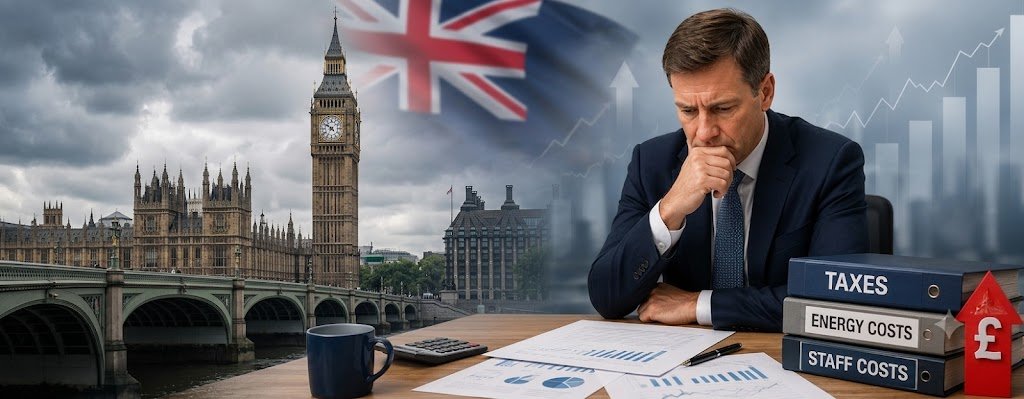
It has been fourteen months now. That is fourteen months of UK small businesses taking hit after hit on costs, with absolutely zero help coming out of Whitehall.
When Rachel Reeves gave her Spring Statement back in March, she cut the UK growth forecast from 1.4 percent down to 1.1 percent. She gave businesses nothing new to work with. No rolled-back rates, no moving thresholds, nothing. Industry trade groups have described this as a huge lost opportunity.
One trade group, the Federation of Small Businesses, is very clear on its lack of feeling supported by the governmen
April 2025: The National Insurance Hit
Start with the National Insurance hit from April 2025. The employer rate bumped up from 13.8 percent to 15 percent. At the exact same time, the threshold where you start paying that tax plummeted from £9,100 down to £5,000 a year.
Deloitte broke down what that means for a normal worker making an average UK salary of £36,036. The employer NI bill shot up from £3,715 to £4,655 in a single year. That is a 25 percent spike for just one employee. If you run a small team of ten people, you are suddenly looking at over £9,000 in extra annual overhead before you even factor in anything else.
Around 940,000 businesses saw their costs spike because of that single change. The CIPD surveyed over 2,000 employers and found that 84 percent noticed a direct hit to their employment costs. On top of that, a third of them said they would have to cut their headcount or just stop hiring completely. It makes total sense why small business confidence dropped to its lowest point since the pandemic.
April 2026: The Wage Bill Went Up Again
Whereas those above 21 received a salary increment from £12.21 to £12.71 in an hour, an increase of 4.1%, the rate of increase among those between the ages of 18 to 20 was extremely high at 8.5% from £10 to £10.85. The compounding effect of these figures is amazing.
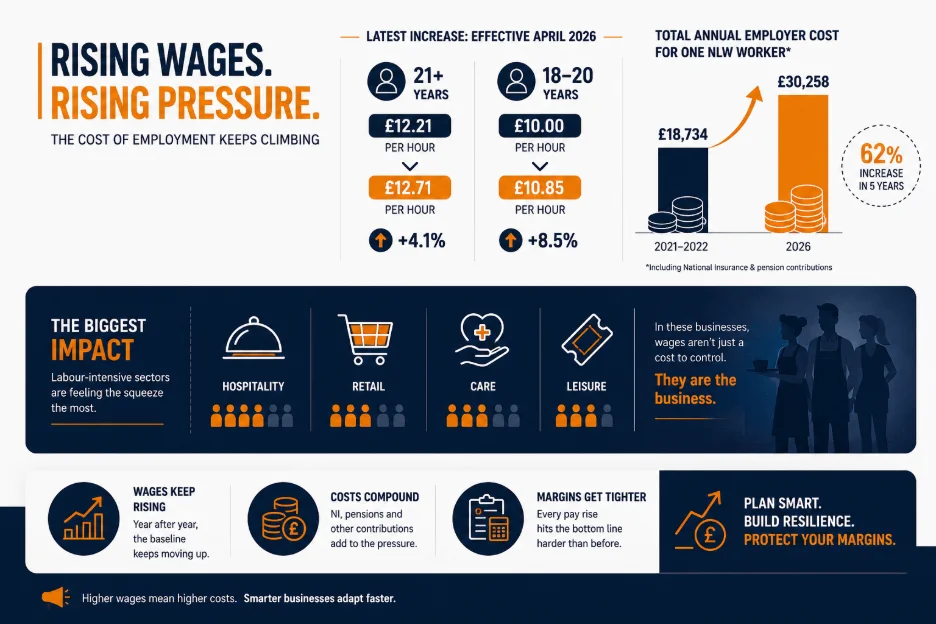
While in the tax year 2021/22, the annual cost of employing a single employee earning minimum wage amounted to £18,734, the very same employee cost £30,258 by 2026. This represents an astounding 62% increase in five years.
High-street sectors like hospitality, retail, care, and leisure are taking the heaviest bruising from this. In those industries, the wage bill is not just some line item you can easily tweak. It is the entire business.
The Costs That Are Not Being Passed On
Here is what makes this story more than a tax policy update.
According to a survey by Simply Business, 82% of small business owners reported an increase in operating costs during the past year while only 12% have increased their prices.
That is the area of tension. Small business owners are not passing on costs to consumers but rather absorbing them at the expense of reduced margins, deferred investments, working hours, and sometimes even layoffs.
The International Monetary Fund lowered its growth outlook for the UK in 2026 to 0.8%. That is the largest downgrade among G7 countries. The OBR’s own Spring Statement forecast came in at 1.1%. Neither number reflects an environment where cost pressures have eased.
The Freeze Nobody Talks About Enough
Running underneath all of this is the personal allowance freeze.
Frozen at £12,570 since 2021 and held there until 2031. As wages rise with inflation, more of every worker’s earnings becomes taxable. For a full-time NLW worker, 52% of their earnings are now subject to tax. In 2022, that figure was 28%. By 2030, it is forecast to reach 61%.
This is fiscal drag. It means employers paying the minimum wage are seeing more of every pay packet pulled into the tax system each year, without any increase in the underlying rates. The cost goes up quietly.
What the Employment Allowance Does and Does Not Fix
The government doubled the Employment Allowance to £10,500 and removed the eligibility cap. Around 250,000 employers saw their NI bills fall as a result.
That is worth acknowledging. For very small businesses and micro-employers, it made a real difference.
But 940,000 businesses still faced higher bills. And the allowance does not scale with the secondary threshold change. Businesses that sit just above the relief boundary carry the full weight of the April 2025 changes with nothing to offset it.
The Spring Statement offered nothing further.
What This Actually Means for Your Business Now
None of the numbers above are going back down. The NI rate stays at 15%. The NLW will rise again next April. The personal allowance freeze runs to 2031.
What you can do is make sure you are not paying more than you owe, and not missing reliefs you are entitled to.
Payroll management that correctly applies the current NI thresholds, claims the Employment Allowance in full, and models salary sacrifice schemes can reduce your exposure. Many businesses are still running payroll on old assumptions.
Where Money Gets Left Behind
Corporation tax is where the most money gets left behind. HMRC’s own data shows 55% of small businesses filed incorrect corporation tax returns with an under-declared liability in 2022 to 2023. In a high-cost environment, overpaying tax you do not owe compounds an already tight situation.
If you have not recently reviewed your available tax reliefs, including capital allowances, R&D credits, and the Employment Allowance, that review is overdue.
And cash flow forecasting built on the actual April 2026 rates, not last year’s, is how you spot a squeeze before it becomes a crisis.
The cost environment has changed. The businesses that adjust their tax and payroll structure to reflect it will be in a better position than those still operating on 2024 assumptions
Lanop’s team works with small businesses to cut through this, not just file returns but plan properly in a changed cost environment. Speak to us today if you want a straightforward conversation about where your numbers actually stand.