
Your French Company, Properly Structured from the Start
Lanop takes care of the tax analysis, entity formation, and French banking preparation so your S.A.S. or S.A.R.L. is commercially ready from the moment it goes live.
- UK and French tax exposure reviewed in parallel
- French bank readiness pack built during formation
- Entity choice grounded in your trading model (S.A.S., S.A.R.L., or Branch)

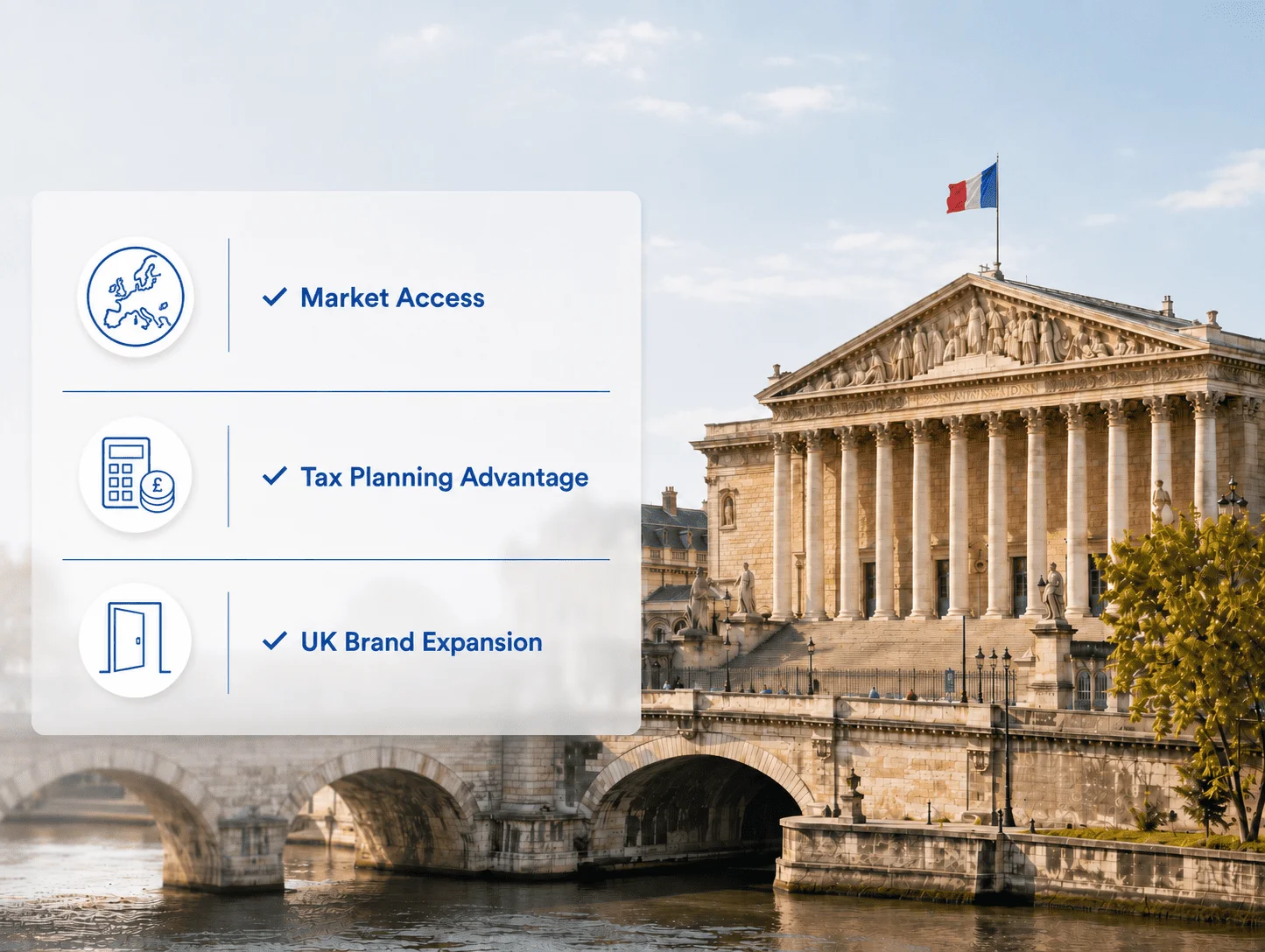
Three Reasons France Deserves Serious Consideration
1. France Is One of Europe's Largest and Most Accessible Markets
With a population of 68 million and deep commercial infrastructure across manufacturing, tech, food and drink, and professional services, France gives registered businesses direct access to clients, partners, and procurement pipelines that are simply not reachable from outside the EU.
2. The Tax Framework Rewards Businesses That Plan Ahead
A 15% reduced corporate tax rate applies to the first €42,500 of profit for qualifying SMEs. The CVAE levy is being abolished in full by 2030. France’s network of over 120 double tax treaties covers virtually every major trading relationship a UK business is likely to have.
3. French Registration Opens Doors That UK Brands Currently Find Closed
Post-Brexit, a French-registered entity restores what many UK businesses lost: a recognised EU legal presence, credibility with European procurement teams, and the ability to hire, invoice, and contract locally without the friction that comes with being an overseas supplier.
How Lanop Helps Businesses in France
Explained in 60 Seconds.
Key Compliance Requirements Every Founder Should Understand Before Filing
Lanop works through each of these with you before a single document reaches the Greffe.
From First Instruction to Fully Operational: How the Process Works
A structured, four-phase approach covering every step from initial planning through to active trading.
France vs the UK: What Changes When You Operate Across Both
Operating From France
20%
Standard TVA Rate
- 120+ double tax treaties in force
- Full EU single market access restored
- CVAE being abolished entirely by 2030
- 25% IS rate with a 15% reduced rate for qualifying SMEs on first €42,500
Operating From The UK Only
25%
Standard Corporate Tax Rate
- Post-Brexit barrier to EU procurement and contracting
- No equivalent SME reduced rate at the same threshold
- Growing friction for UK-only suppliers in European sales cycles
- Increasing documentation burden for cross-border EU transactions
Everything Included in Lanop'French Formation Service
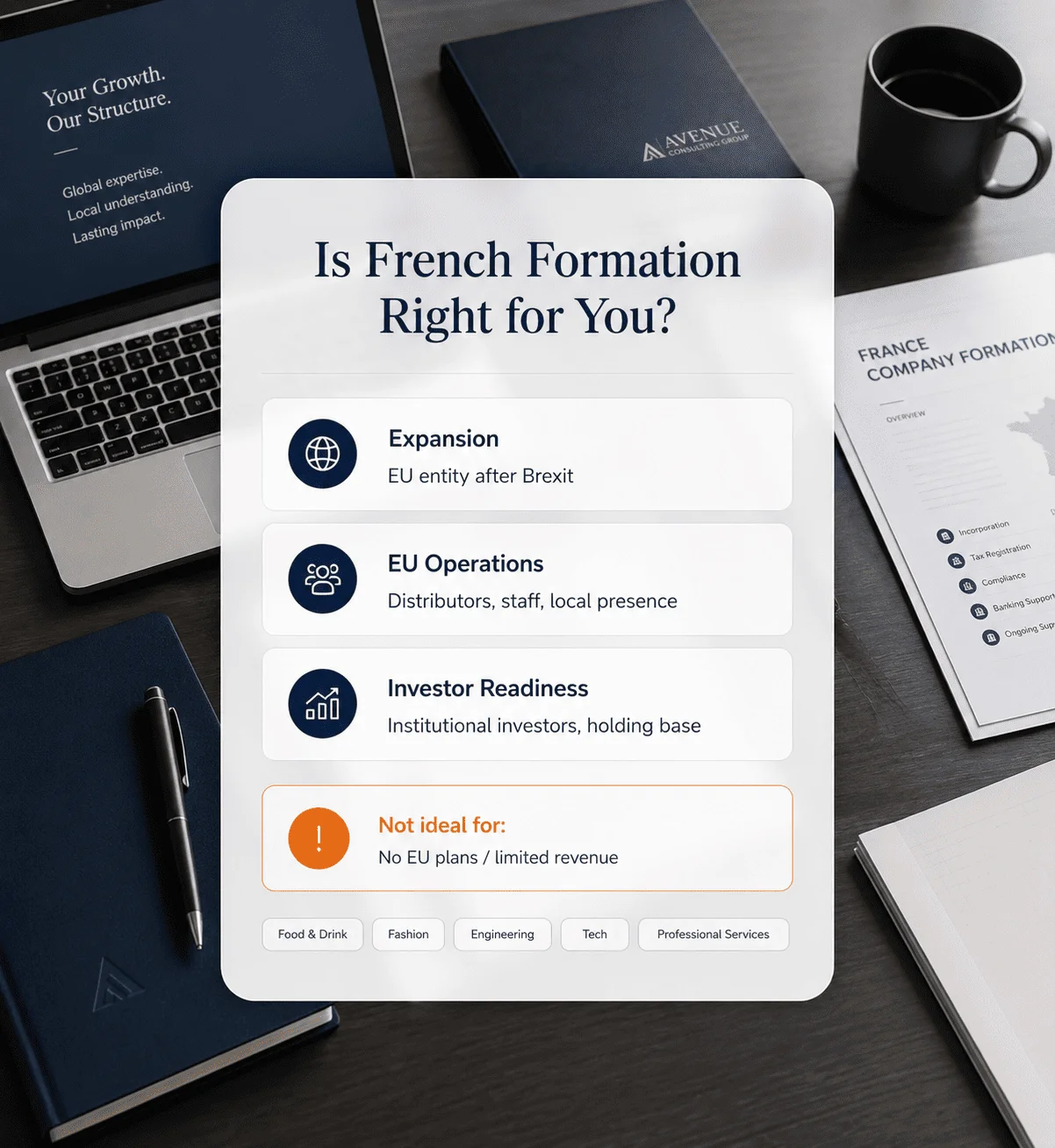
Before any documents are prepared, Lanop reviews your revenue model, cross-border payment flows, and whether an S.A.S., S.A.R.L., or Branch Office best fits your business. Your UK tax position is assessed alongside your French structure from the outset.
Lanop coordinates the preparation of your statuts with your expert-comptable and manages the complete Greffe filing process, including BODACC publication and SIREN/SIRET allocation.
Lanop selects the APE code that accurately reflects your current and planned business activities before the statuts are submitted, helping to avoid TVA complications and bank onboarding delays later.
Your French TVA registration is completed with the Service des Impôts des Entreprises before your first invoice. IS, CFE, and CVAE obligations are mapped from the point of incorporation.
Lanop prepares your business for France's mandatory electronic invoicing requirements by setting up your certified Plateforme Agréée connection before your first mandatory compliance deadline.
Source-of-funds documentation is prepared, your KYC file is built to French compliance standards, and applications are submitted to banking institutions suited to your business activity and ownership structure.
A French registered address is secured for statutory, Greffe, and regulatory purposes, with physical or virtual solutions available depending on your operational needs and visa requirements.
Your chart of accounts, bookkeeping structure, and liasse fiscale calendar are established from day one in line with French statutory accounting requirements.
Lanop continues to support your business with TVA filings, IS returns, annual Greffe submissions, URSSAF declarations, company secretarial services, and ongoing regulatory compliance.
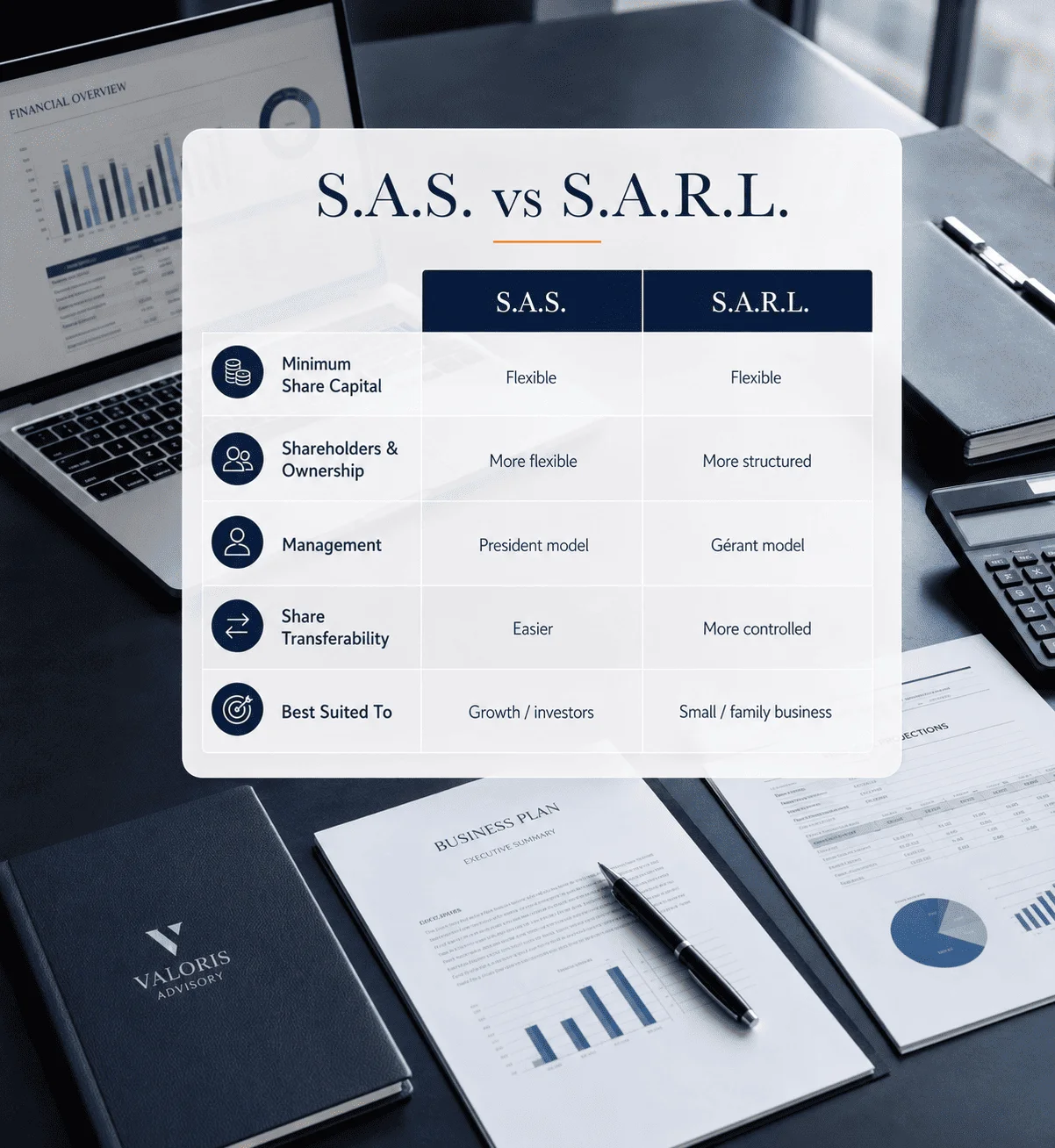
Understanding Which Structure Fits
€1 legal minimum. Banks expect a figure that reflects real working capital.
No minimum or maximum shareholder count. 100% foreign corporate ownership permitted. No French co-shareholder required.
Governed by a President. Classified as assimile-salarie, providing more comprehensive social protection than the TNS regime. No French residency required.
Freely transferable unless the statuts impose specific restrictions. Preferred by French banks and international businesses.
Technology companies, professional service firms, businesses considering future external investment, and UK founders wanting a structure French institutional counterparts recognise and trust.
€1 legal minimum. Practical capital level depends on trading model and bank requirements.
Between 1 and 100 shareholders. 100% foreign ownership permitted. Share transfers require consent from existing shareholders.
Managed by a gerant. A gerant majoritaire contributes under the TNS regime, which carries lower social charges at modest income levels but less comprehensive coverage than the S.A.S. President route.
Can be converted to an S.A. as the business grows and governance requirements increase.
Trading and distribution companies, professional practices, and UK founders entering France without near-term plans for institutional investment.
How Lanop Works Through a French Company Setup
Phase 1 Includes
- 1Choosing between S.A.S., S.A.R.L., or Branch Office
- 2Confirming share capital, shareholders, and director setup
- 3Selecting the correct APE code for your activity
- 4Reviewing UK management and control risk before filing
- 5Securing your French domiciliation address
YOU RECEIVE:
A written formation plan, full document checklist, and clear cost breakdown before any work begins.
Phase 2 Includes
- 1Apostille and certified translation of UK corporate documents
- 2Statuts drafting and expert-comptable coordination
- 3Greffe filing and BODACC legal notice publication
- 4SIREN, SIRET, and TVA number obtained before first invoice
- 5French fiscal identification secured for all foreign shareholders
YOU RECEIVE:
Kbis extract, registered statuts, SIREN and SIRET confirmation, and your active French TVA number.
Phase 3 Includes
- 1French corporate bank account opened with full KYC file
- 2Factur-X e-invoicing set up through a certified Plateforme Agreee
- 3Bookkeeping framework and liasse fiscale calendar established
- 4URSSAF registration for directors and employees receiving French remuneration
- 5Ongoing IS, TVA, CFE, and Greffe compliance managed
YOU RECEIVE:
A fully operational French company with banking, invoicing, and compliance foundations in place and ready to trade.
Is France the Right Jurisdiction for Your Business?
France is one of Europe’s leading business destinations, offering international companies access to a major economy, strong investor confidence, and a gateway to opportunities across the European market.
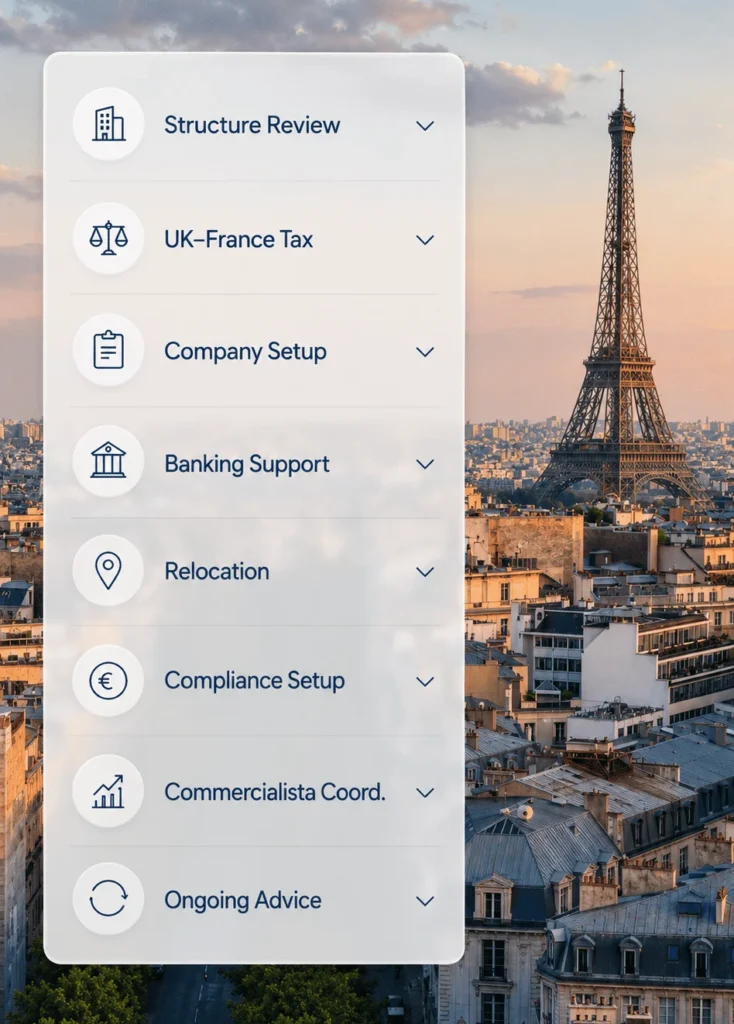
Suitability: Highly Suitable
Why It Makes Sense: France restores full single market access and gives UK businesses a locally registered presence that European clients, distributors, and procurement teams can work with directly.
Suitability: Highly Suitable
Why It Makes Sense: These are among France's strongest commercial sectors, with well-established buyer networks and strong appetite for UK-originated expertise.
Suitability: Highly Suitable
Why It Makes Sense: A registered French entity gives local counterparts the legal and contractual framework they require. Without it, these relationships are difficult to formalise.
Suitability: Suitable
Why It Makes Sense: French entities are well understood by European fund managers. An S.A.S. is the preferred structure for external investment and future capital raises.
Suitability: Suitable
Why It Makes Sense: France's treaty network, EU status, and recognised corporate structures make it a workable choice for international groups needing a European operating subsidiary.
Suitability: Consider Carefully
Why It Makes Sense: Year-one costs for a UK-owned French entity with full advisory, banking preparation, and compliance setup typically run €15,000 to €55,000. Without a clear EU commercial rationale, the ongoing compliance commitment may outweigh the benefit.
FAQs: Setting Up a Business in France from the UK
Will moving to France automatically end my UK tax residency?
No. UK tax residency is determined by the Statutory Residence Test, not simply by relocating. Factors such as the number of days spent in the UK, family ties, accommodation, and work activities can all affect your status. Many entrepreneurs remain UK tax residents unintentionally after moving. Professional planning before relocation can help reduce the risk of dual taxation and unexpected HMRC obligations.
Will I pay tax in both the UK and France?
Possibly, but the UK-France Double Tax Treaty is designed to prevent the same income from being taxed twice. Your tax position depends on where you are resident, where income is earned, and how your business is structured. Careful planning is essential to ensure you claim available treaty reliefs and remain compliant in both jurisdictions.
Does France tax worldwide income?
Yes. French tax residents are generally taxed on their worldwide income, including salaries, dividends, rental income, and investment returns earned abroad. France also has reporting requirements for foreign bank accounts and certain overseas assets. Understanding your obligations before becoming tax resident can help avoid penalties and ensure full compliance.
What happens to my UK company after moving to France?
Your UK company can continue operating, but your move may create French tax implications. If strategic management and decision-making are carried out from France, French authorities could argue that the company has a taxable presence there. Reviewing your structure before relocating can help prevent unexpected corporate tax exposure.
Do I need to notify HMRC when leaving the UK?
In most cases, yes. Individuals leaving the UK often need to complete the appropriate HMRC forms and update their tax records. Depending on your circumstances, you may also need to file a final UK tax return. Taking the correct steps before departure can help avoid future disputes and administrative complications.
What is the most common company structure in France?
The two most popular structures are the SARL (limited liability company) and the SAS (simplified joint stock company). The SAS is particularly popular among international entrepreneurs because it offers greater flexibility for shareholders and future investment. The best choice depends on your business goals, ownership structure, and long-term expansion plans.
Can a UK resident own a French company?
Yes. UK nationals can own shares in French companies and may hold 100% ownership in many cases. There is generally no requirement for a French shareholder. However, directors, tax obligations, and operational requirements should be reviewed carefully to ensure the business complies with French corporate regulations.
How long does it take to set up a company in France?
A straightforward company formation can often be completed within a few weeks once all required documentation is available. The timeline depends on factors such as company structure, shareholder arrangements, banking procedures, and regulatory registrations. Delays are usually linked to documentation issues or account-opening requirements.
Is there a minimum capital requirement?
French company structures generally have low minimum capital requirements. In many cases, businesses can be incorporated with a nominal amount of capital. However, choosing an appropriate capital level can improve credibility with banks, suppliers, and investors while supporting the company’s operational needs during its early stages.
Can I open a branch instead of creating a French company?
Yes. Many international businesses choose between establishing a branch office or incorporating a separate French subsidiary. A branch may offer a simpler setup, while a subsidiary can provide greater legal separation and operational flexibility. The right option depends on your tax position, growth plans, and commercial objectives.
Do I need a French business bank account?
In most cases, yes. A French business bank account is typically required for company registration, tax payments, payroll, and day-to-day operations. While some international banking solutions may be accepted in certain circumstances, a local account often simplifies compliance and improves relationships with suppliers and authorities.
Can I manage my French company from the UK?
You can, but there are important tax considerations. If key management decisions are consistently made in the UK, questions may arise regarding the company’s place of effective management. This can affect tax residency and reporting obligations. Proper governance procedures are important when operating across multiple jurisdictions.
Do I need a physical office in France?
Not always. Depending on your business model, a registered office address may be sufficient during the initial stages. Many businesses use domiciliation services before securing dedicated premises. However, certain regulated activities or visa applications may require additional evidence of genuine business operations within France.
Can I hire employees in France as a foreign business owner?
Yes. Foreign-owned companies can employ staff in France, but employers must comply with French labour laws, social security contributions, payroll regulations, and employment contracts. France has strong employee protections, making it important to establish compliant HR and payroll processes from the outset.
Is France a good base for expanding across Europe?
France offers direct access to the EU single market, a large domestic economy, advanced infrastructure, and excellent transport links. Many international businesses use France as a gateway to wider European expansion. Its strategic location and strong commercial ecosystem make it an attractive option for long-term growth within Europe.