
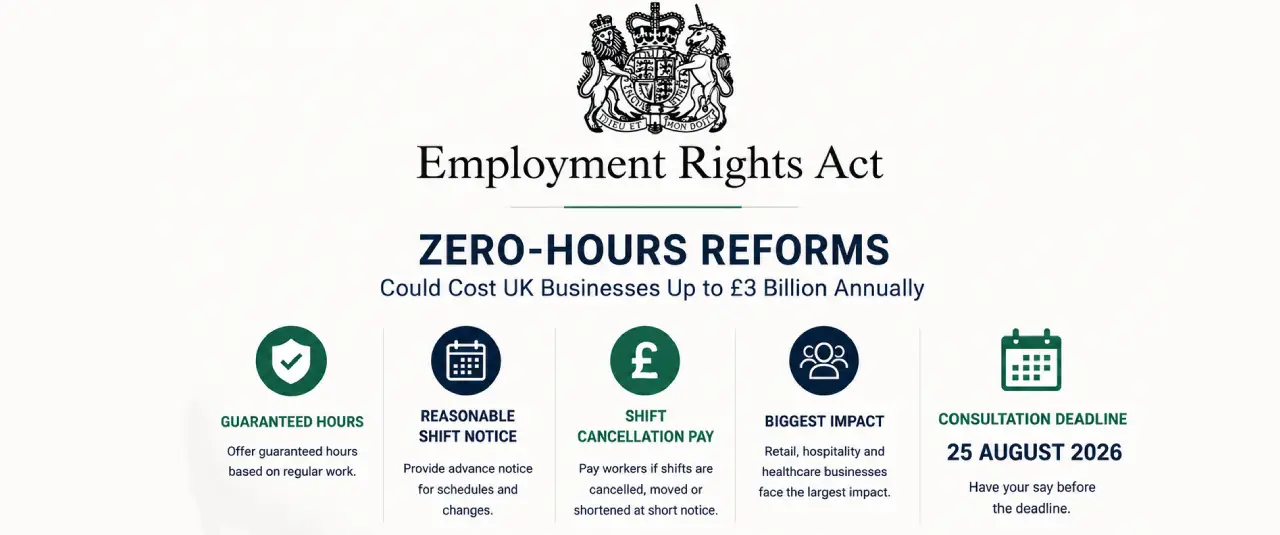
Key Takeaway: Planned changes to zero-hours and low-hours contracts could cost UK businesses up to £2.9 billion each year. The new rules under the Employment Rights Act require guaranteed hours, advance shift notices, and cancellation pay. The government consultation closes on 25 August, making early planning vital for UK employers.
New government figures show that planned reforms to zero-hours and low-hours contracts could cost UK businesses up to £2.9 billion each year.
These figures put a high price tag on changes coming under the Employment Rights Act. Official estimates place the direct annual cost to employers between £350 million and £2.9 billion.
For UK business owners, HR managers, and small businesses (SMEs), these changes are more than a legal update. They will directly impact payroll, staffing schedules, and monthly cash flow.
What Is Changing for Zero-Hours Contracts?
The reforms aim to give workers more job security and end what ministers call “one-sided flexibility.”
Workers will receive three key rights under the proposed rules:
- Guaranteed Hours: Employers must offer guaranteed hours to workers who regularly work steady hours over a set reference period.
- Reasonable Shift Notice: Employers must give reasonable advance notice when scheduling shifts or changing working hours.
- Shift Cancellation Pay: Employers must pay workers if they cancel, move, or shorten shifts at short notice.
These rules will also apply to many low-hours contracts. Businesses without traditional zero-hours staff must still prepare for compliance.
The government is consulting on key technical details. These include the low-hours threshold, the reference period length used to calculate hours, and exemptions for seasonal work.
Why Could the Reforms Cost Businesses £2.9 Billion?
Government analysis estimates total direct costs between £350 million and £2.9 billion per year. The exact cost will depend on the final rules.
Main Drivers of Business Costs:
- Cancellation Pay: Mandatory compensation paid directly to staff for short notice shift changes, cuts, or cancellations.
- System Upgrades: Necessary investments in modern HR and accounting software to accurately track actual hours against contracted hours.
- Reduced Operational Flexibility: Higher baseline wage expenses during quiet trading periods, as businesses can no longer drop hours down to zero without notice.
Retail, hospitality, and healthcare businesses face the largest impact because their staffing needs change quickly.
Business trade groups worry that these costs will hurt small firms and slow down hiring. However, the government argues that predictable hours boost worker well-being, lower stress, and improve overall productivity.
What Should Employers Do Now?
These rules are not final law yet. Employers do not need to make sudden structural changes today. However, waiting until implementation will leave little time to adjust budgets, payroll systems, and workforce models.
Steps to Take Before the 25 August Consultation Deadline:
- Review Shift Patterns: Check how often employees work beyond their contracted hours across all teams.
- Track Short-Notice Changes: Audit how frequently your managers change, move, or cancel shifts at the last minute.
- Assess Low-Hours Contracts: Identify all workers on flexible or low-hours arrangements who may qualify for guaranteed offers.
- Respond to the Consultation: Submit official feedback before the public window closes on 25 August.
Prepare Your Business for Higher Staffing Costs
The final rules will significantly impact profit margins. Changes to shift notices, calculation methods, and cancellation fees will raise overall payroll costs.
At Lanop Business and Tax Advisors, we help UK businesses adapt to tax and regulatory updates with clear financial planning:
- Payroll Data Reviews: We analyze your current working patterns to spot financial risks early.
- Cost Modeling: We model potential workforce cost increases so you can adjust your budgets safely.
- Cloud System Setup: We help integrate payroll and tracking tools in Xero and QuickBooks to simplify compliance.
Proactive planning gives your business the time it needs to safeguard cash flow and protect profit margins.
Unsure how zero-hours contract reforms will affect your payroll?