

HMRC has opened the second phase of its Mandatory Tax Adviser Registration (MTAR) process, and it pulls more accountants and tax agents into the system. The aim is straightforward: HMRC wants a clearer view of who gives tax advice, stronger protection for taxpayers, and a proper record of the professionals who represent clients.
Phase two opened on 18 August 2026 and closes on 18 November 2026. It mainly affects advisers who already hold a Self-Assessment or Corporation Tax account but have not yet set up an Agent Services Account (ASA).
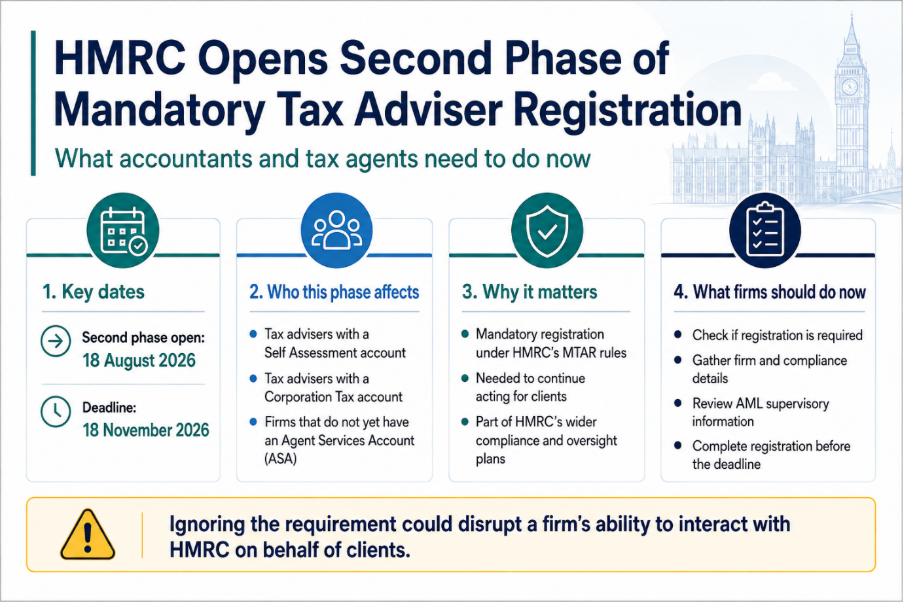
For many firms, this is more than housekeeping. Registration is becoming a condition of dealing with HMRC on a client’s behalf.
A New Compliance Step for the Tax Advice Sector
The rules apply to anyone who provides paid tax services or acts as an agent for taxpayers. In practice, that covers:
- Accountants, tax advisers and other professionals who help clients meet their tax obligations
- Firms that supply information HMRC relies on when deciding a taxpayer’s position
- Individuals and businesses acting as agents, not just filing their own returns
What HMRC gains from it:
- Clearer visibility of who is offering tax services
- Confirmation that advisers meet the required conditions before they represent clients
If your firm sits in any of those categories, review your position now and confirm whether you need to register before the deadline.
Who Needs to Review Their Position Now?
Phase two matters most for advisers who have existing tax accounts but never completed registration through an ASA. Ask yourself:
- Do we give tax advice or handle tax matters for clients?
- Do we currently deal with HMRC as an agent?
- Do we have what registration needs, including anti-money laundering supervisory details where they apply?
You will be asked for accurate information during the process, such as Government Gateway access, business identification, and the relevant compliance details.
The Risk of Waiting Until the Last Moment
Miss registration when it applies to you, and the knock-on effects land on your clients. HMRC has confirmed that advisers who should register but do not may lose the ability to act on a client’s behalf. That can affect:
- Dealing with client queries
- Handling day-to-day communication with HMRC
For a busy firm, losing agent access at the wrong moment is not a minor inconvenience. It can stall service and pile on pressure just as tax deadlines close in.
Preparing Before HMRC’s Deadline Arrives
Treat this as an early task, not a November scramble. A short review now saves disruption later. Practical steps:
- Check HMRC’s registration requirements and confirm whether you fall inside the current phase
- Gather your business and compliance information before you start the application
- Review your internal processes so your HMRC agent access stays fully compliant
Supporting Businesses Through Changing Compliance Requirements
HMRC keeps tightening its controls across the tax advice sector, so firms need dependable ways to keep pace. At Lanop, we help businesses and advisers make sense of shifting HMRC requirements, maintain their compliance standards, and stay on top of the admin that comes with them. Our team provides clients with clear guidance and practical processes that reduce compliance risk.
Regulatory change is now a regular feature of the tax landscape. With the right support behind you, the focus can stay where it belongs: giving good advice and meeting your obligations.