
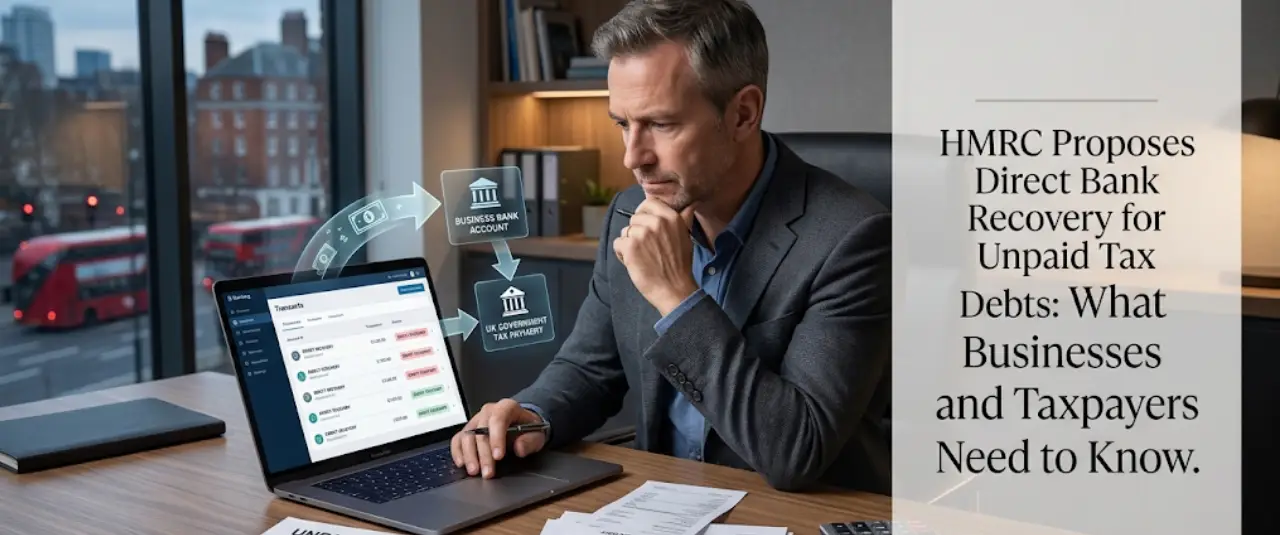
HMRC wants new enforcement powers to pull overdue tax directly from bank and building society accounts using recurring monthly deductions. The move takes aim at individuals and company directors who have the cash to settle their liabilities but refuse to engage.
A public consultation launched on 23 June 2026 and runs until 28 August 2026. It isn’t statutory law yet. Still, it signals a massive operational shift toward automated, swift debt collection.
Key Takeaways
- A new approach: HMRC wants to collect small debts through monthly bank debits, not one big payment.
- Proposed limits: The plan covers debts up to £5,000 for individuals and £10,000 for companies.
- A warning first: HMRC will not take funds without notice. It plans to send a 14-day warning letter first. You get time to object, pay up, or set a payment plan.
What Is HMRC Proposing?
HMRC already possesses Direct Recovery of Debts (DRD) powers to collect unpaid tax straight from bank accounts. After pausing the program during the pandemic, tax authorities reactivated DRD in late 2025 before ramping up enforcement in April 2026.
The current DRD rules need manual work and take one lump sum, which HMRC says does not work well for many small, overdue debts.
To solve this, the new framework introduces automated monthly account deductions. The proposed caps cover:
- Up to £5,000 for personal tax accounts
- Up to £10,000 for corporate liabilities
Note: These figures remain consultation proposals, not final legal thresholds.
Who Will Be Affected?
The proposed rules target taxpayers with established debts who possess the financial capacity to pay but consistently ignore HMRC outreach.
| Included Tax Liabilities | Excluded Scenarios |
| Self-Assessment Income Tax | Debts under formal appeal or active enquiry |
| Corporation Tax | Matters under compliance review |
| Value Added Tax (VAT) | Accounts with an active Time to Pay (TTP) plan |
| Pay As You Earn (PAYE) | Taxpayers experiencing severe financial hardship |
HMRC calculations show that over 750,000 lower-value debts, totalling more than £2 billion, remain uncollected every year after nine months and over 10 failed contact attempts.
Will HMRC Take Money Without Warning?
No, they won’t. HMRC must exhaust standard debt collection routes and make repeated attempts to contact you before initiating direct recovery.
Where a case meets enforcement criteria, HMRC plans to follow a set procedure:
- Pre-Deduction Notice: HMRC issues a formal 14-day warning notice before any bank deductions begin.
- Objection Period: Taxpayers receive a 14-day window to settle the debt, submit a formal objection, or request financial support.
- Credit Data Matching: HMRC intends to partner with Credit Reference Agencies to trace active accounts and verify affordability.
- Joint Accounts: If no sole account exists, HMRC may target joint accounts, subject to specific safeguards and appeal rights.
Risks of Ignoring HMRC
Failing to respond to HMRC means forfeiting control over how your tax debt gets settled. Should these proposals pass into law, non-responsive businesses and individuals will face automatic bank deductions instead of choosing their own repayment schedule. Ongoing non-engagement could also trigger broader legal enforcement under HMRC’s statutory powers, including a formal HMRC tax investigation in more serious cases.
Practical Steps to Take Now
Businesses and sole traders should address tax liabilities early rather than waiting for formal recovery action:
- Verify Your Numbers: Log into your HMRC online account to ensure all debt calculations are accurate, cross-checked against your own Self-Assessment or Corporation Tax records.
- Keep Up-to-Date Books: Ensure management accounts, cash-flow forecasts, and bookkeeping records stay current.
- Request a Time to Pay Plan: If full payment isn’t possible right away, contact HMRC early to negotiate an affordable Time to Pay (TTP) arrangement.
- Maintain Open Communication: The system targets persistent non-engagement. Simply communicating prevents automated bank recovery.
How Lanop Can Help
Unresolved tax liabilities quickly pile up when cash flow is tight or official letters go unanswered.
Lanop Business & Tax Advisors assists businesses and sole traders with reviewing outstanding liabilities, handling HMRC correspondence, and structuring manageable payment plans. Our team prepares clear financial documentation to present a solid case to tax authorities.
With the consultation ending on 28 August 2026, these enforcement mechanisms are moving forward quickly. Contact Lanop today to resolve your tax position and protect your financial independence; book a free consultation with one of our chartered accountants.