
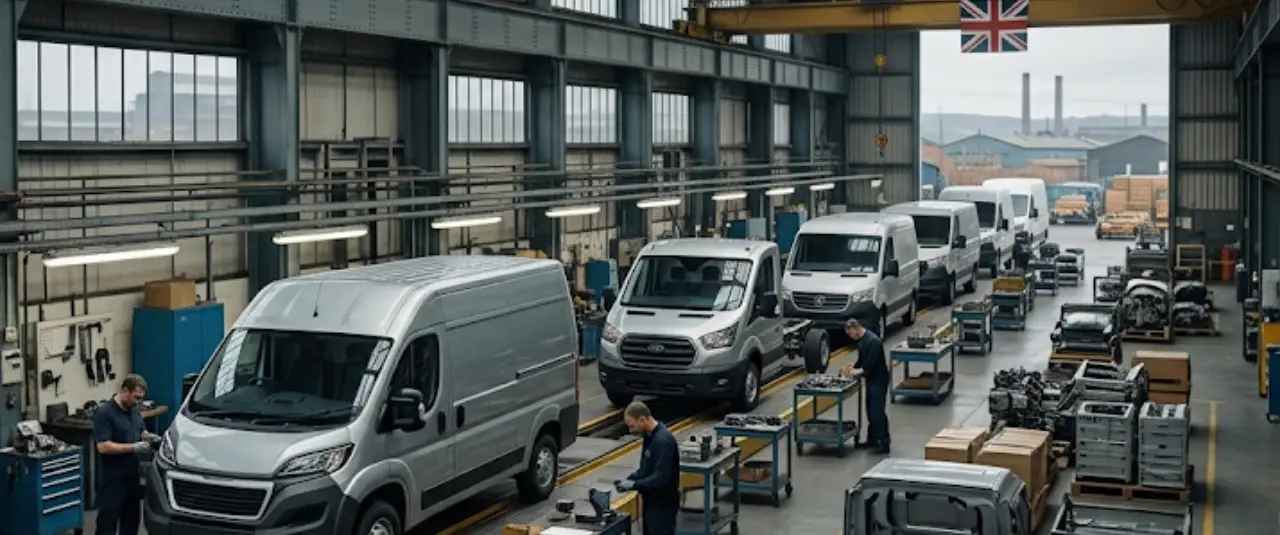
UK commercial vehicle production fell sharply in July 2026. This drop adds to growing concerns about the country’s manufacturing sector.
New figures from the Society of Motor Manufacturers and Traders (SMMT) show that overall production fell 34.4% year-on-year to 1,888 units. Production for UK buyers dropped even faster at 49.6%, while exports fell 18.5%.
The July drop is part of a larger trend. Output for the first seven months of 2026 fell 53% compared to the same period last year.
For firms that rely on vans and trucks, this slump signals wider industry shifts, particularly for logistics and distribution businesses that depend on reliable fleets. The sector faces changing electric vehicle (EV) rules, high energy costs, and new trade barriers with Europe.
Why Has UK Commercial Vehicle Production Fallen?
The SMMT attributes the drop to several main causes:
- Factory Closures: Early summer maintenance shutdowns reduced operating days.
- Model Updates: Retooling plants for new vehicle models slowed output.
- Market Pressures: Slower overseas demand and global competition lowered total orders.
The industry is also undergoing a regulatory shift. The government opened a review of the Zero Emission Vehicle (ZEV) Mandate in August 2026. Current rules set rising sales targets for new zero-emission vans. While electric van sales are growing, they still lag mandated targets. Industry leaders are calling for reforms that match real market demand.
Energy prices add further pressure. SMMT reports that UK industrial electricity costs remain higher than those in Europe. Relief from the British Industrial Competitiveness Scheme will not take effect until 2027.
UK-EU Trade Pressures Are Growing
Trade rules present another challenge for vehicle makers:
- Rules of Origin: Temporary UK-EU trade rules for electric batteries expire on 31 December 2026. Stricter rules take effect on 1 January 2027.
- European Competition: Proposed “Made in the EU” policies may reduce the competitiveness of UK exports in European markets.
Because British factories export a large share of their commercial vehicles, these trade changes directly affect overall production volumes.
What Does This Mean for UK Businesses?
The operational impact varies by industry sector:
| Business Sector | Key Impact | Recommended Action |
| Vehicle Manufacturers | High energy costs and strict export rules | Review long-term UK investment and energy support eligibility |
| Fleet Operators & Logistics | Potential lead-time delays for new vehicles | Audit fleet lifespan and plan replacement schedules early |
| SMEs & Commercial Buyers | Shifting vehicle prices and tax incentive timelines | Review cash flow, leasing options, and tax timing |
The year-to-date decline of 53% shows that supply chains remain under pressure. Delaying fleet updates without reviewing tax and trade rules could raise operating costs, so many small business owners are being urged to plan.
What Should Businesses Do Now?
- Review Fleet Timelines: Check vehicle replacement dates early to prevent operational delays.
- Compare Funding Options: Weigh the cash flow benefits of leasing versus buying assets outright.
- Check Tax Allowances: Confirm which Capital Allowances apply to new vehicle purchases.
- Evaluate EV Incentives: Review the lower tax treatment and lower Benefit-in-Kind (BiK) rates for electric commercial vehicles before buying.
How Lanop Can Help
Vehicle purchases directly affect your cash flow, Corporation Tax, and long-term financial plans as part of wider tax planning. At Lanop, we help UK business owners navigate capital expenditure, tax relief, and asset funding.
If your company is planning to buy new vehicles, upgrade a fleet, or switch to electric vans, Lanop can help you assess the financial impact before you make a commitment. Contact our advisory team today to align your fleet decisions with current tax rules.