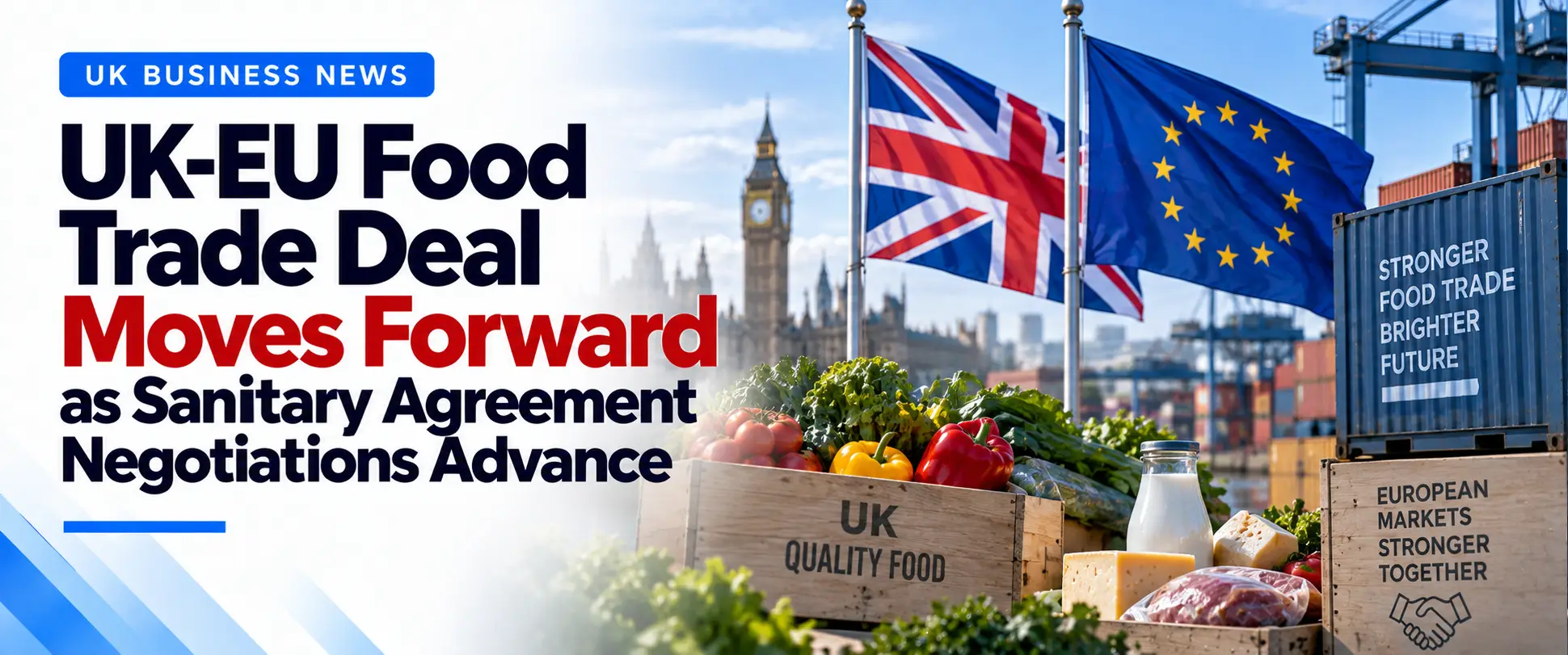
The UK and European Union are moving ahead with talks on a new Sanitary and Phytosanitary, or SPS, agreement that could make food and agricultural trade much easier.
The UK Government is working towards a mid-2027 implementation target. However, the final date still depends on the outcome of negotiations.
For UK food, drink, farming and agricultural businesses, the deal could cut some of the biggest post-Brexit trade costs. At the same time, it could bring new compliance duties that reach far beyond companies exporting directly to the EU.
Border Costs Could Fall for UK Food Businesses
One of the biggest changes would be the removal of many Export Health Certificates and routine border checks for eligible agrifood products.
These certificates can currently cost businesses up to £200 per consignment. Removing them could reduce paperwork and help meat, dairy, seafood, egg, plant and other food businesses move eligible goods across borders with less friction.
Businesses may also benefit from faster transport and fewer delays for perishable goods.
Great Britain to Northern Ireland food movements could also become easier under the proposed arrangements, with much of the current SPS-related paperwork expected to reduce. However, these benefits come with a trade-off.
UK Businesses Could Face Wider EU Rule Alignment
Under the proposed agreement, Great Britain would align more closely with relevant EU food safety, animal health and plant health rules.
This means the impact may not be limited to businesses that export to Europe.
Companies selling only within Great Britain could still be affected by changes covering areas such as food labelling, ingredients, product approvals, pesticides and compliance systems.
Defra’s recent information-gathering exercise showed how wide the impact could be. Around 71% of respondents expected some form of operational change.
Some businesses expected changes to labelling and packaging, while others highlighted compliance processes, IT systems and wider operational requirements.
At the same time, 68% identified lower compliance costs as a possible benefit.
FSA Applications Create Another Risk
Businesses developing regulated food and feed products also need to watch the UK’s market authorisation system.
The Food Standards Agency has warned that a substantial number of applications already in the GB system may not reach a ministerial decision before the proposed SPS agreement takes effect.
If the new alignment model goes ahead, EU authorisation could become more important for products sold in Great Britain.
This does not mean every pending UK application will stop. However, businesses with applications in progress should review their regulatory plans now and consider whether an EU authorisation route may also be relevant.
What Should UK Businesses Do Now?
The agreement has not yet been finalised, so businesses should avoid making unnecessary changes based on assumptions.
However, waiting until the final rules arrive could also create pressure.
Food manufacturers, importers, exporters and agricultural businesses should start reviewing their supply chains, product approvals, labels, suppliers and expected compliance costs, particularly those already managing import VAT and customs obligations since Brexit.
They should also compare possible savings from lower border costs against any one-off spending needed for new systems, packaging, staff training or operational changes.
Businesses relying on imports from outside the EU should pay particular attention, as some rest-of-world products could face different inspection requirements under closer UK-EU alignment. Firms that also export into the EU should review their post-Brexit VAT position alongside any new sanitary requirements.
How Lanop Can Help
The real issue for businesses is not simply whether border paperwork falls. It is whether the financial benefit outweighs the cost of adapting to new rules.
At Lanop, we help UK businesses assess compliance costs, forecast cash flow, review supply-chain spending and plan for regulatory changes before they affect margins.
With negotiations still moving forward and mid-2027 remaining the Government’s intended target, businesses have time to prepare. But that preparation should start with understanding where the proposed agreement could affect costs, products and operations. Contact Lanop today to review how these changes could affect your supply chain and compliance costs.