
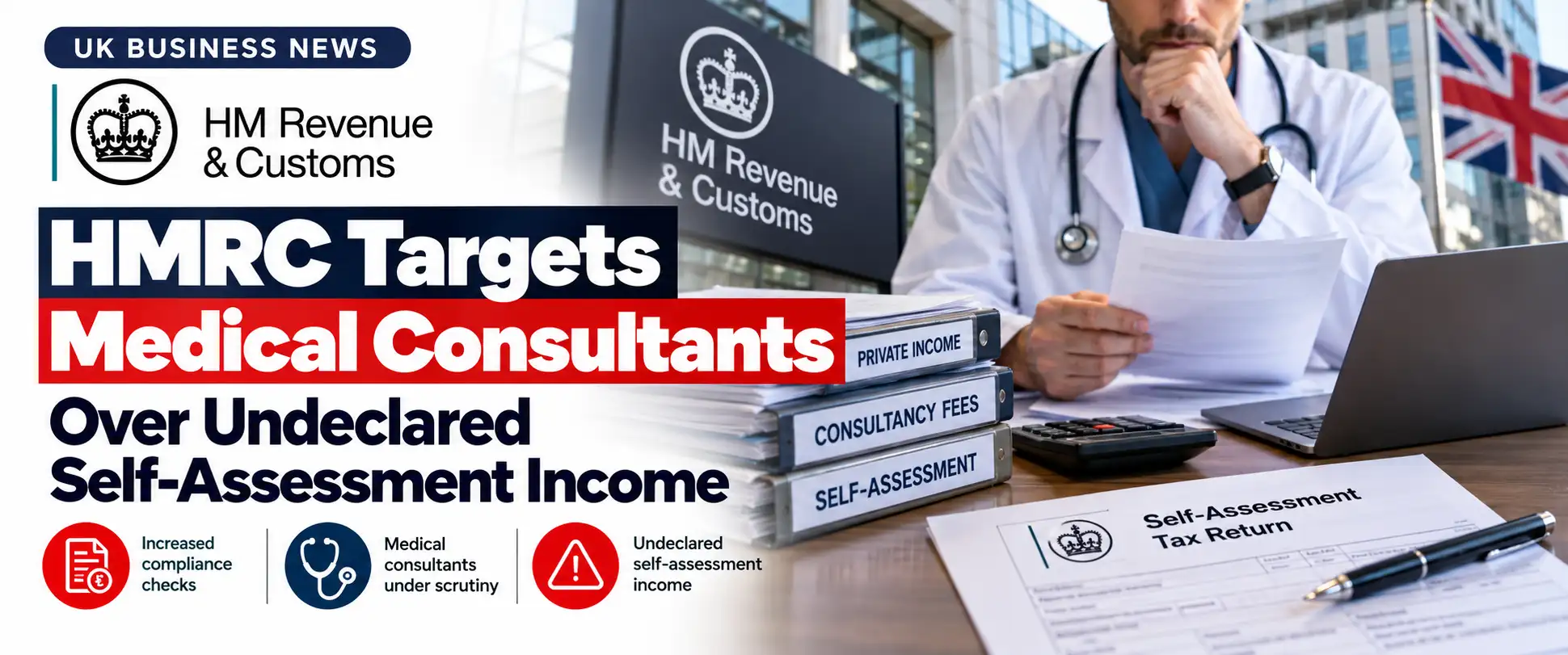
HMRC is taking a closer look at the tax affairs of medical professionals. Its focus is on professional fees that may be missing from Self-Assessment returns.
HMRC updated its compliance guidance on 29 September 2026. It explains that checks on medical professionals can involve financial records when HMRC believes fees have been understated or left out. Accurate reporting matters most for consultants who earn income outside their main NHS job.
If you have private practice, locum work or other professional earnings, the message is simple. PAYE on your NHS salary does not cover your other taxable income. You still need to report it through Self-Assessment.
Who Should Pay Attention to the HMRC Guidance?
This mostly affects medical consultants and other healthcare professionals with more than one source of income.
Many consultants get their main salary through PAYE. They may also earn separate fees from private medical work or other professional services, similar to how a self-employed professional would report additional income streams. If that extra income belongs on a Self-Assessment return, your figures must match your actual financial records.
HMRC’s guidance notes that medical professionals may store financial information alongside other records. Medical information itself usually has strong privacy protection. But HMRC may still need to see relevant financial documents when it checks your tax position. That is why clear, separate record-keeping matters more than ever.
Why Do Expense Claims Need a Careful Review?
Income is not the only thing to check. Employment expenses must meet the tax rules before you can claim relief. HMRC has also tightened its evidence rules for some employment expense claims. You may need receipts or other proof to back up your figures.
Review your travel costs, professional expenses and other deductions. Don’t assume every work-related cost qualifies for relief. Poor records make it harder to explain a claim if HMRC asks questions later, and this is where consistent bookkeeping throughout the year makes a real difference.
How Does Making Tax Digital Affect Consultants in 2026?
Timing matters here. Making Tax Digital (MTD) for Income Tax now applies to the first group of taxpayers.
Since 6 April 2026, you must use MTD if you are registered for Self-Assessment and have more than £50,000 of qualifying income from self-employment and property. Exemptions apply in some cases. From September 2026, HMRC has also started signing up eligible taxpayers who had not registered themselves.
If you are a consultant with qualifying self-employed income, you need organised digital records all year using MTD-compatible accounting software. Don’t wait until the filing deadline to rebuild your income and expense figures.
What Happens If You Miss Income?
An undeclared fee does not disappear just because PAYE already taxed your NHS salary. If HMRC finds a gap, it may ask for more information as part of a compliance check or investigation. You may then owe extra tax. Interest or penalties may also apply, depending on the case.
Think your earlier returns may have missing income or wrong expense claims? Don’t ignore it, and don’t wait for HMRC to get in touch.
What Should Medical Consultants Do Now?
Take these steps:
- Compare your Self-Assessment figures with bank receipts, private-practice records, locum payments and other professional fees.
- Check your expense claims against your supporting evidence and the tax rules.
- If MTD applies to you, make sure your digital records and accounting software are ready.
- If you are a high earner, review your pension tax exposure as part of wider tax planning.
For 2026/27, the standard pension Annual Allowance is £60,000. The tapered allowance rules use a £200,000 threshold-income limit and a £260,000 adjusted-income limit.
How Can Lanop Help Medical Professionals?
Medical consultants often have tax affairs that go well beyond one PAYE salary. Lanop Business & Tax Advisors can review your private and professional income, Self-Assessment records, expense claims, digital bookkeeping and wider tax duties. If your figures don’t match, or past reporting needs attention, an early review can catch the problem before it gets harder to fix.
HMRC scrutiny, digital reporting and mixed income streams now overlap. Accurate records are no longer something to leave until the end of the tax year. Contact Lanop today to review your position before HMRC does.