
Build Your Business in Germany on the Right Foundation
Germany offers strong opportunities for UK and international businesses, but the setup needs the right structure from day one. You need to consider ownership, tax, banking, and how the German operation will fit with your existing business. Lanop supports you from choosing a GmbH or UG, including a subsidiary, or a branch through to registration, VAT, accounting, and reporting. The goal is to create a setup that works smoothly once your business starts trading.
- Choose the right German structure before you register
- Set up company, tax, VAT and banking requirements together
- Keep UK, German and international reporting connected
Why Germany Is a Strong Market for UK and International Businesses
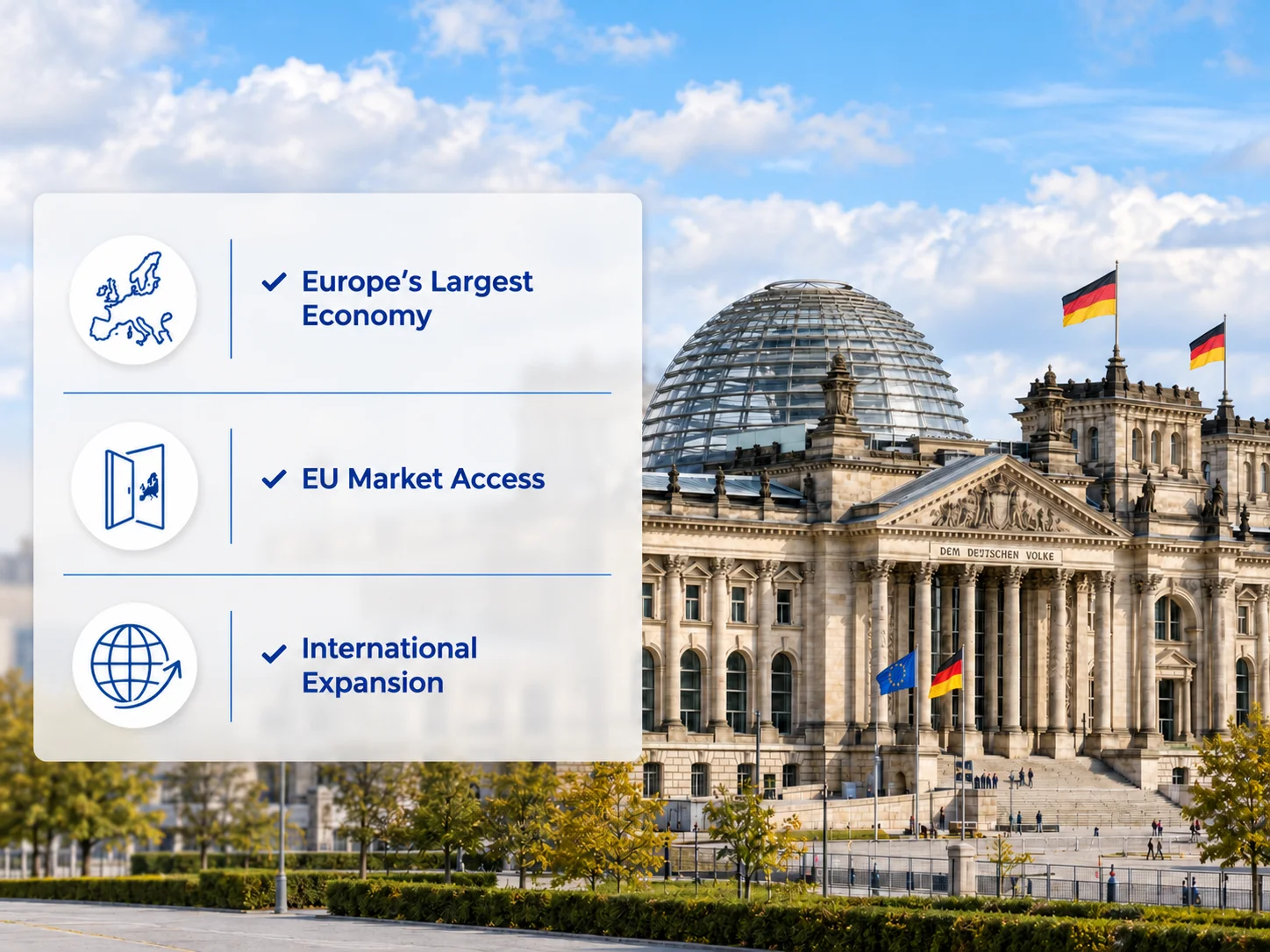
1. Access to Europe’s Largest Economy
Germany gives UK and international businesses access to a large, mature market with strong demand across manufacturing, technology, professional services, retail, and B2B sectors. It can also provide a solid base for building customer and supplier relationships across Europe.
2. A Practical Route Back into the EU Market
For UK businesses, Germany can be especially valuable after Brexit. A local presence may make it easier to serve EU customers, manage contracts, build partnerships, and operate closer to key European markets without relying only on a UK-based structure.
3. Strong Potential for International Expansion
Germany is well connected to the wider European economy and attracts businesses from across the world. For international groups, it can work as a regional base for sales, operations, hiring, and long-term expansion into neighbouring EU markets.
How Lanop Helps Businesses in France
Explained in 60 Seconds.
Before You Start a Business in Germany: 5 Things to Plan First
A smooth setup starts before any forms are filed. These five areas shape your costs, registrations, tax position, and how easily the German business can operate once it launches.
What Changes When Your Business Enters Germany?
A German presence can affect tax, payments, payroll, and reporting across your wider business.
Germany and the UK: Two Different Business Environments
GERMANY BUSINESS ENVIRONMENT
30%
Average Combined Corporate Tax Burden (2026)
- 15% corporate income tax, plus solidarity surcharge and trade tax.
- Trade tax varies by municipality.
- Germany has 90+ double tax agreements.
- Local VAT, payroll, and reporting rules apply. Corporate income tax cuts begin in 2028.
UK BUSINESS ENVIRONMENT
19%–25%
Corporation Tax Range
- 19% small profits rate; standard threshold £50,000.
- 25% main rate; standard upper threshold £250,000.
- Marginal Relief may apply between these thresholds.
- Thresholds reduce for associated companies and short accounting periods.
What’s Included in Our Business Setup in Germany Service?
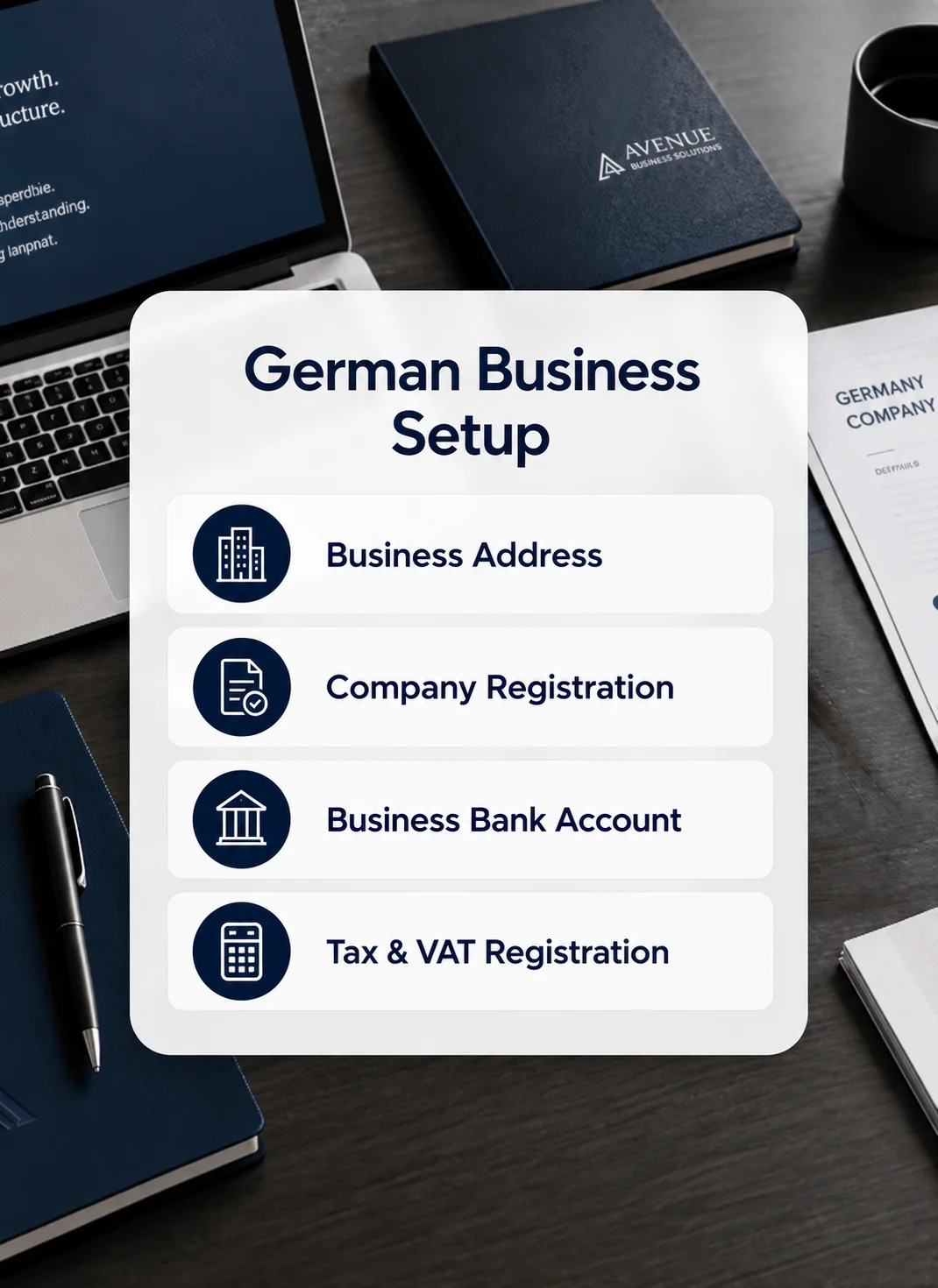
A German business address is required for business registration in Germany and for official correspondence. We help you understand what local presence is needed and how it fits into your setup.
A GmbH needs at least one shareholder and one managing director. Foreign ownership is allowed, and we help structure the ownership around your wider UK or international business.
Your company name and business activity must be clearly defined. We help prepare the key company details needed before business registration in Germany begins.
Articles, ownership details, identification, and parent-company documents may be required. We help coordinate the paperwork, including certified or translated documents where needed.
GmbH formation requires a German notary and registration with the Handelsregister. We guide you through these steps and help keep the process on track.
A standard GmbH requires €25,000 in share capital, with at least €12,500 generally paid before registration in a cash formation. We help you plan this as part of the wider setup.
For a cash GmbH formation, a suitable business bank account is needed to deposit share capital. We help you prepare for banking checks, especially where overseas shareholders are involved.
A GmbH needs registration with the local trade office and German tax authorities. We support the tax registration requirements, including information needed for ELSTER.
German GmbHs and UGs must report their beneficial ownership details to Germany’s Transparency Register and keep them updated. We help make sure the ownership structure is clear and properly documented.
Foreigners can own German companies, but ownership does not automatically give the right to live or work in Germany. Where relevant, we help identify any immigration issues that need separate specialist advice.
Which German Business Structure Fits Your Expansion Plan?
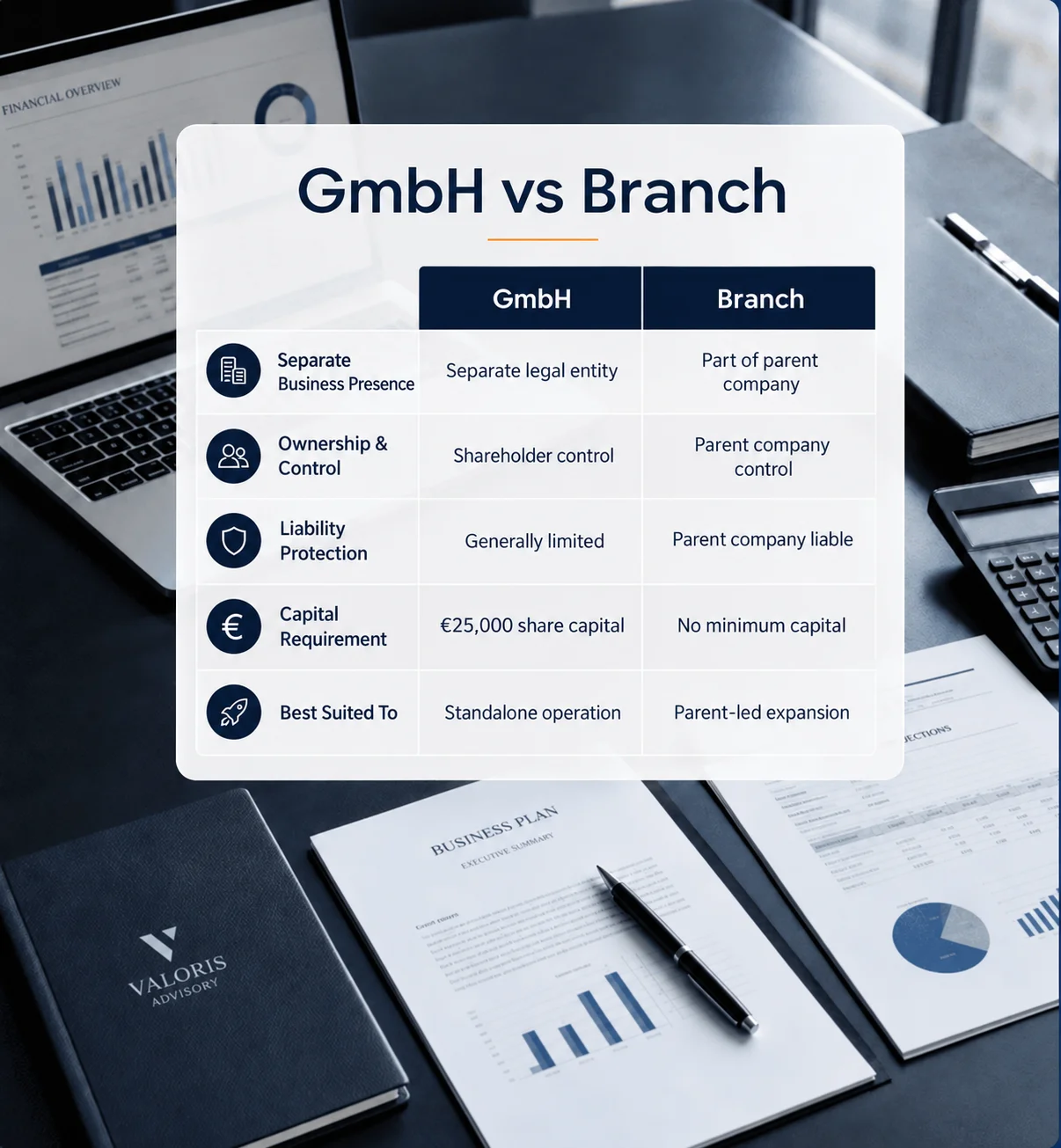
A GmbH gives you a standalone German company with its own legal identity. This works well when Germany will become a serious, long-term part of your business.
The company can be owned by you, your UK company, or another overseas parent, while day-to-day management sits with the German entity.
Business liabilities generally stay with the GmbH rather than flowing directly back to the overseas parent.
A standard GmbH requires €25,000 share capital, with at least €12,500 generally paid before registration for a cash formation.
Businesses planning to hire locally, sign larger contracts, build a German brand, or create a permanent base in the EU.
A branch lets your UK or overseas company operate directly in Germany without creating a separate legal entity.
There is no statutory €25,000 GmbH capital requirement, which can make the initial setup lighter.
Because the branch is part of the overseas business, its liabilities remain linked to the parent company.
A branch can still require German registration, tax, accounting, and local reporting, so it should not be treated as a “no-admin” option.
Established companies testing or extending their German presence while keeping operations closely tied to the head office.
How Lanop Handles Your Business Setup and Expansion in Germany
Phase 1 Includes
- 1Understanding your business model and expansion goals
- 2Reviewing your existing UK or international structure
- 3Comparing GmbH, UG, branch, or other suitable routes
- 4Identifying tax, VAT, ownership, and setup risks early
PURPOSE:
To make sure your German setup fits the way you plan to operate before money, documents, or registrations are committed.
Phase 2 Includes
- 1Preparing company and shareholder information
- 2Coordinating formation documents, translations, and notary steps
- 3Supporting Commercial Register, trade, tax, and ownership registrations
- 4Planning banking, share capital, and initial tax setup
PURPOSE:
To move the business from an agreed structure to a properly established German entity without disconnected setup steps.
Phase 3 Includes
- 1Setting up accounting, VAT, and financial reporting
- 2Aligning the German operation with the UK or overseas parent
- 3Planning intercompany costs, payments, and reporting flows
- 4Supporting payroll, compliance, and future European expansion
PURPOSE:
To make sure the German business does not operate in isolation but works as a clear part of your wider international structure.
Who Is Business Setup in Germany Best Suited For?
Germany can work well for different types of businesses, but the setup should match how each one plans to operate, invest, hire, and grow. Lanop adjusts the structure, tax planning, and compliance support around the business model.
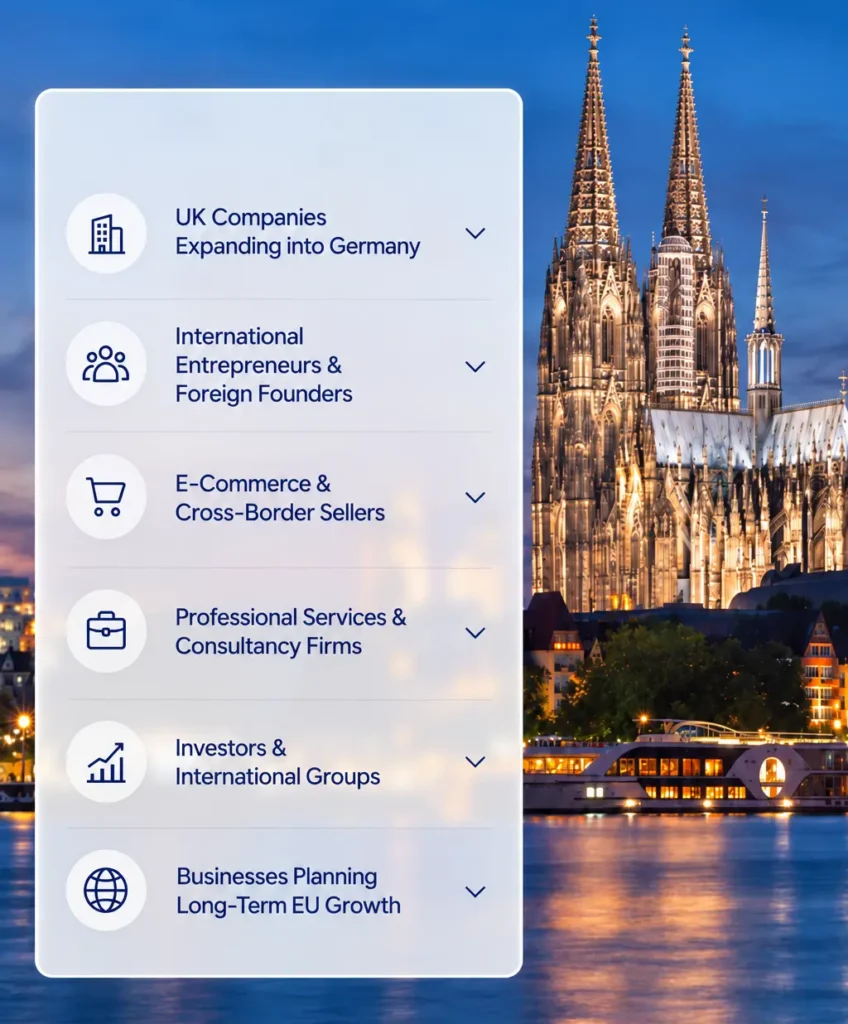
Best for: Established UK businesses entering the German or wider EU market.
We help assess whether a German GmbH or UG subsidiary, or a branch, makes more sense, then align the setup with the UK parent company.
Best for: Non-German founders starting a new business in Germany.
We guide you through ownership, managing director requirements, registration, banking, tax, and the practical issues that overseas founders often face.
Best for: Businesses selling products or services into Germany and across the EU.
We focus on VAT, business structure, banking, accounting, and cross-border reporting so that the setup supports how sales flow.
Best for: Agencies, consultants, tech firms, and service businesses building a German client base.
We help structure the business around local contracts, invoicing, tax, staffing, and reporting without overcomplicating the setup.
Best for: Overseas companies, holding groups, and investors creating a German presence.
We look at ownership, intercompany transactions, funding, reporting, and how the German entity fits into the wider group.
Best for: Companies using Germany as a base for wider European expansion.
We help build a setup that can support future hiring, additional markets, group reporting, and cross-border growth rather than just the initial registration.
FAQs: Setting Up a Business in Germany from the UK
1. Can a UK or foreign company set up a business in Germany?
Yes. Foreign founders and overseas companies can establish a German business. They can create a local subsidiary, often as a GmbH, or operate through a German branch.
2. Do I need to live in Germany to own a German company?
No. GmbH shareholders and managing directors can generally live outside Germany. However, the company still needs a German business address and local representation.
3. Should I open a GmbH or a German branch?
A GmbH creates a separate German legal entity, while a branch remains part of the overseas parent company. The right choice depends on liability, investment, tax, control, and long-term plans.
4. How much share capital is required for a GmbH?
A standard GmbH requires €25,000 minimum share capital. At least €12,500 is generally contributed before registration in a cash formation.
5. Do I need a German business address?
Yes. A GmbH needs a German business address for registration and official correspondence. This should be arranged before the setup process moves forward.
How do I register a business in Germany?
For a GmbH, the process usually includes preparing formation documents, notarisation, paying the required capital, Commercial Register registration, and local trade registration.
What documents are needed for German company formation?
Requirements vary by structure. Founders may need identification, ownership details, formation documents, and overseas company records where a foreign parent is involved.
Does a German company need tax registration?
Yes. A new company or permanent establishment generally needs to complete tax registration with the German tax authorities. This is usually handled through the ELSTER system.
What business taxes apply in Germany?
German companies can face corporate income tax, solidarity surcharge, and municipal trade tax. VAT may also apply depending on the business activity.
How much does business setup in Germany cost?
There is no single fixed cost. Fees can cover notarisation, registration, translations, banking, and professional support. Share capital is separate company funding, rather than a setup fee.
Can I set up a German company from the UK?
Yes. UK businesses can establish a German subsidiary or branch. The setup should consider ownership, banking, tax, and reporting across both countries.
Do I need a German business visa to own a company?
Not necessarily. Owning a German company and having the right to live or work in Germany are separate matters. Visa or residence rules may apply if you plan to move there.
Can I start a business in Germany without speaking German?
Yes, but some official processes, tax systems, registry documents, and correspondence are handled in German. This can make local support useful during setup.
Can a UK company own a German GmbH?
Yes. A UK company can own shares in a German GmbH, making this a common option for businesses expanding into Germany through a subsidiary structure.
Can Lanop support the business after company formation?
Yes. Lanop can continue with tax, VAT, bookkeeping, payroll, financial reporting, and cross-border accounting after the setup is complete.