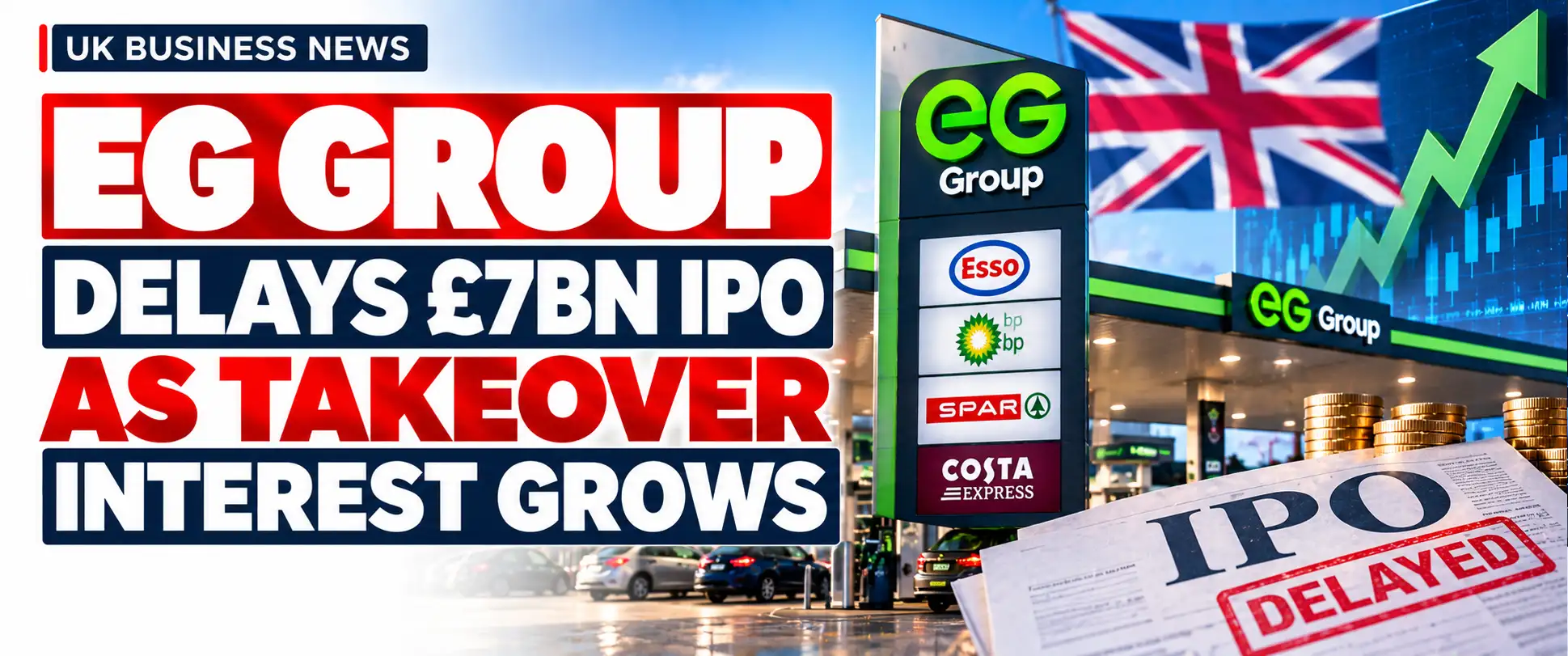
EG Group has put off its plan for a major US stock market listing. Takeover interest in the business is growing.
The petrol station and convenience retail group planned to list its Cumberland Farms business on Nasdaq. The deal was meant to raise about $1 billion. It would have valued the business at around $9 billion, or roughly £6.7 billion to £7 billion.
Now the listing is likely to slip into 2027. Reports suggest EG Group fears current market conditions could make it hard to reach the valuation it wants. Meanwhile, interest from potential buyers has opened up another route.
Why Has EG Group Delayed the IPO?
Market timing is the main reason. A public listing can bring in new investors and capital. But the final valuation depends on investor demand and wider market conditions.
EG Group had already taken formal steps. Cumberland Farms Limited filed an amended registration statement with the US Securities and Exchange Commission on 3 September 2026. It had also applied to trade on Nasdaq under the ticker CMBY.
The delay does not mean the IPO is cancelled. A listing is still an option if markets improve. The company is also looking at other ways to realise value.
How Does Takeover Interest Change the Picture?
Takeover interest has appeared while the IPO is on hold. Reports say infrastructure investment firm Stonepeak is among the parties interested in EG Group. No takeover has been agreed, and no sale is confirmed.
Still, this gives EG Group a second route alongside a public listing. A private sale could let the owners realise value without relying on public-market demand on IPO day. For business owners, the lesson is clear. Don’t build your exit plan around one option.
Why Does Debt Still Matter?
EG Group still carries a large debt, reported at around $5.8 billion. In recent years, the group has sold major assets as part of its restructuring.
- 2023: EG Group completed the £2 billion sale of most of its UK and Ireland operations to Asda. It said it would use the proceeds to repay debt and reduce net leverage.
- June 2026: The Australian Competition and Consumer Commission approved Ampol’s acquisition of EG Australia, subject to the sale of 41 retail fuel sites.
These moves show how debt, asset sales and valuation can all shape a major corporate deal.
What Should Business Owners Take from This?
The EG Group story matters if you are considering a sale, investment, restructuring or future exit.
A strong business can still struggle if the market does not support its expected valuation. High debt can also change how investors judge a deal.
Before you start negotiations or prepare to exit, review:
- Your balance sheet, supported by accurate bookkeeping
- Your debt position
- Your financial records
- A realistic valuation of your business
Skipping these steps can weaken your negotiating position. It can also make it harder to close a deal on fair terms.
How Can Lanop Help with Business Valuation and Exit Planning?
Lanop supports businesses with financial planning, business valuation, restructuring and corporate advice, including group structuring where a sale or reorganisation is involved.
Good preparation helps you understand your financial position before you speak with investors, buyers or lenders. It also makes it easier to spot financial issues before they block a deal.
If you are considering a sale, investment or wider restructuring, early tax planning gives you a clearer view of your options. It also helps you make better-informed decisions. Contact Lanop today to book a free consultation with our team.