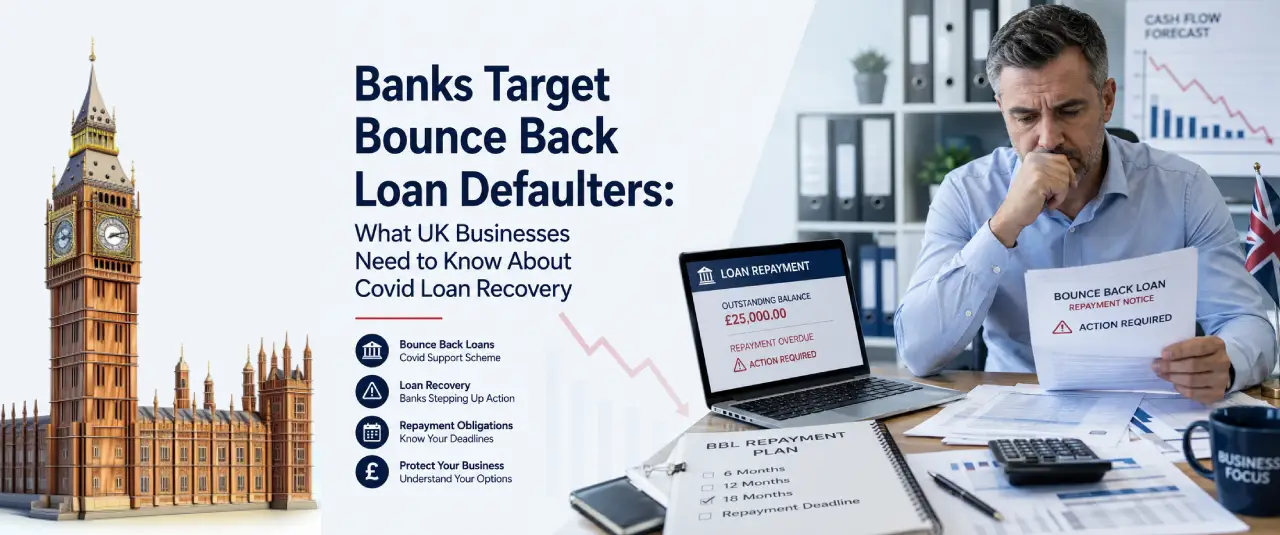
UK banks are cracking down on firms that never repaid their Bounce Back Loans. Barclays, Starling Bank, and HSBC have filed roughly 70 winding-up petitions since June, according to reports. It’s a clear sign that Covid loan recovery is entering a harder phase in 2026.
Here’s the one thing every director with an unpaid Bounce Back Loan needs to understand: the 100% government guarantee doesn’t cancel your debt. That guarantee protects the lender, not you. Your business can still be chased for what it owes.
Why Bounce Back Loan Recovery Matters Now
The Bounce Back Loan Scheme handed out £46.47 billion to UK businesses during the pandemic. Government figures up to 31 March 2026 show 46.95% of loans were still being paid on time. Another 3.87% sat in arrears, and 0.70% had defaulted but hadn’t yet been passed to lenders as a claim.
Most Bounce Back Loans came with six-year terms. So, some of the earliest loans, taken out back in 2020, are now hitting their original end dates.
But not everyone’s in the same boat. Pay As You Grow lets borrowers stretch a loan out to 10 years instead of six. Borrowers can also take up to three six-month stretches of interest-only payments, plus one six-month payment holiday. If you’ve already used up these options, you may have less flexibility left if cash flow tightens further.
Banks Can Still Recover the Money
A government-backed loan isn’t a forgiven loan.
By 31 March 2026, the government guarantee had been pulled from 14,121 Bounce Back Loans worth £499.68 million. That happens for a few different reasons, including disputes over scheme rules or simple data errors. It doesn’t mean a lender did anything wrong.
Banks can still chase the debt through their usual recovery process, and that can include winding up a company.
But one missed payment won’t trigger a winding-up petition on its own. British Business Bank guidance says lenders shouldn’t jump to insolvency action just because a Bounce Back Loan wasn’t repaid. They can still take that step, though, once the facts justify it.
Struggling to Repay Isn’t the Same as Fraud
Can’t repay a legitimate loan? That’s not fraud on its own.
Things look very different when there are red flags, like inflated turnover figures, duplicate applications, or money that wasn’t used for its intended purpose. In those cases, directors face far more serious consequences.
The Insolvency Service reported in July that Bounce Back Loan cases had already produced £12.69 million in civil compensation orders and undertakings. By 30 June 2026, £3.49 millions of that had been recovered. Misconduct doesn’t just mean a director ban; it can hit your wallet too.
What Should UK Businesses Do Now?
Don’t ignore arrears letters, formal demands, or court papers, no matter how tempting that is. Go back through your loan terms and figure out which Pay As You Grow options you’ve already used. Hold on to your loan application, bank statements, and any records showing how the money was spent.
Struggling to keep up with repayments? Talk to your lender before things get worse. A revised repayment plan is often still on the table, and reviewing your position with a virtual finance director can help you build a clearer picture before you negotiate.
At Lanop Business and Tax Advisors, we work with directors to review their accounts, cash flow, tax position, and business records, so you can see exactly where things stand and plan your next move. And if you end up needing legal or insolvency advice, getting ahead of it early buys you more time and better options.
Contact Lanop today to review your Bounce Back Loan position and plan your next move with confidence.