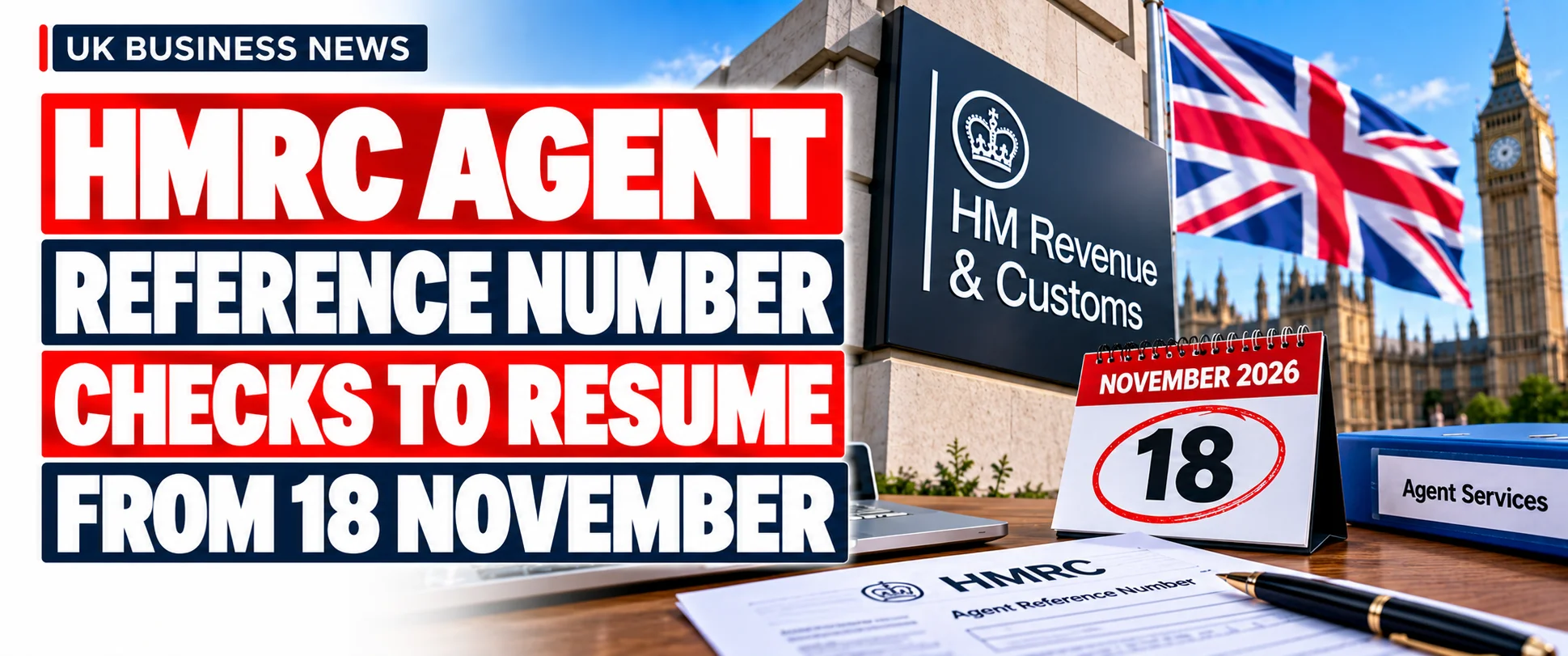
Quick Answer: HMRC will restart Agent Reference Number (ARN) checks on 18 November 2026 for tax advisers covered by the new registration rules. If you use HMRC’s phone or webchat services, HMRC may ask for your ARN to check your registration status. Advisers who don’t meet the rules may face limits when they deal with HMRC for clients.
HMRC will restart Agent Reference Number (ARN) checks on 18 November 2026. The date is a key compliance point for tax advisers and the businesses they represent. The checks began on 18 August, earlier this year. HMRC then paused them to give advisers more time to understand and meet the new registration rules. From 18 November, relevant tax advisers who contact HMRC by phone or webchat may again need to give their ARN. The ARN links to a firm’s Agent Services Account. It helps HMRC confirm that the adviser has met the registration rules.
Why Does 18 November Matter?
The date matters for two reasons.
First, a registration window closes. Some advisers have Self-Assessment or Corporation Tax agent accounts but no Agent Services Account. For them, the current registration window closes on 18 November 2026. Affected firms should finish registering before then. Staff who deal with HMRC should also know the firm’s ARN.
Second, a new registration phase opens. Advisers who only provide third-party payroll services can register from 18 November 2026 to 18 February 2027.
So, 18 November is a key turning point in HMRC’s wider adviser registration process.
Who Does the ARN Rule Apply To?
The change mainly affects tax advisers, accountants and firms that deal with HMRC for clients and fall under the new registration rules.
But it can also reach business owners, company directors, landlords and other taxpayers who rely on an adviser for their tax affairs.
If an adviser must register and doesn’t, HMRC may limit their ability to act for clients. That could make it harder for them to answer tax queries, fix issues or speak to HMRC for you.
What Happens If Advisers Ignore the Rules?
HMRC has made it clear that advisers who must register need to meet the conditions.
If they don’t, HMRC may restrict how they deal with HMRC for clients. In some cases, sanctions may also apply.
For businesses, the main risk is disruption. If the person who represents you can’t deal with HMRC as expected, tax matters may take longer to resolve, which can be especially costly if you’re in the middle of an HMRC tax investigation. Important messages may also arrive late.
What Should Tax Advisers and Businesses Do Now?
If you are an adviser:
- Finish the registration process before 18 November if the current window applies to you.
- Make sure staff know the correct ARN before they contact HMRC.
If you are a business owner:
- Check that your accountant or tax adviser is registered, where required.
- Confirm they are ready for the return of the checks.
This matters most if you rely on an adviser for Corporation Tax, Self Assessment, payroll or other HMRC matters.
How Can Lanop Help with HMRC Representation?
HMRC’s new adviser registration rules add another compliance step for firms that handle tax matters for clients.
Lanop helps businesses manage tax, accounting and HMRC duties with clear advice and structured support, as part of wider tax planning.
Not sure if your tax representation is ready for the 18 November changes? Contact Lanop today to book a free consultation; we can help you understand your position, review your tax affairs and make sure you get the right professional support. The ARN checks are returning soon. Now is the time to make sure your HMRC representation is ready.