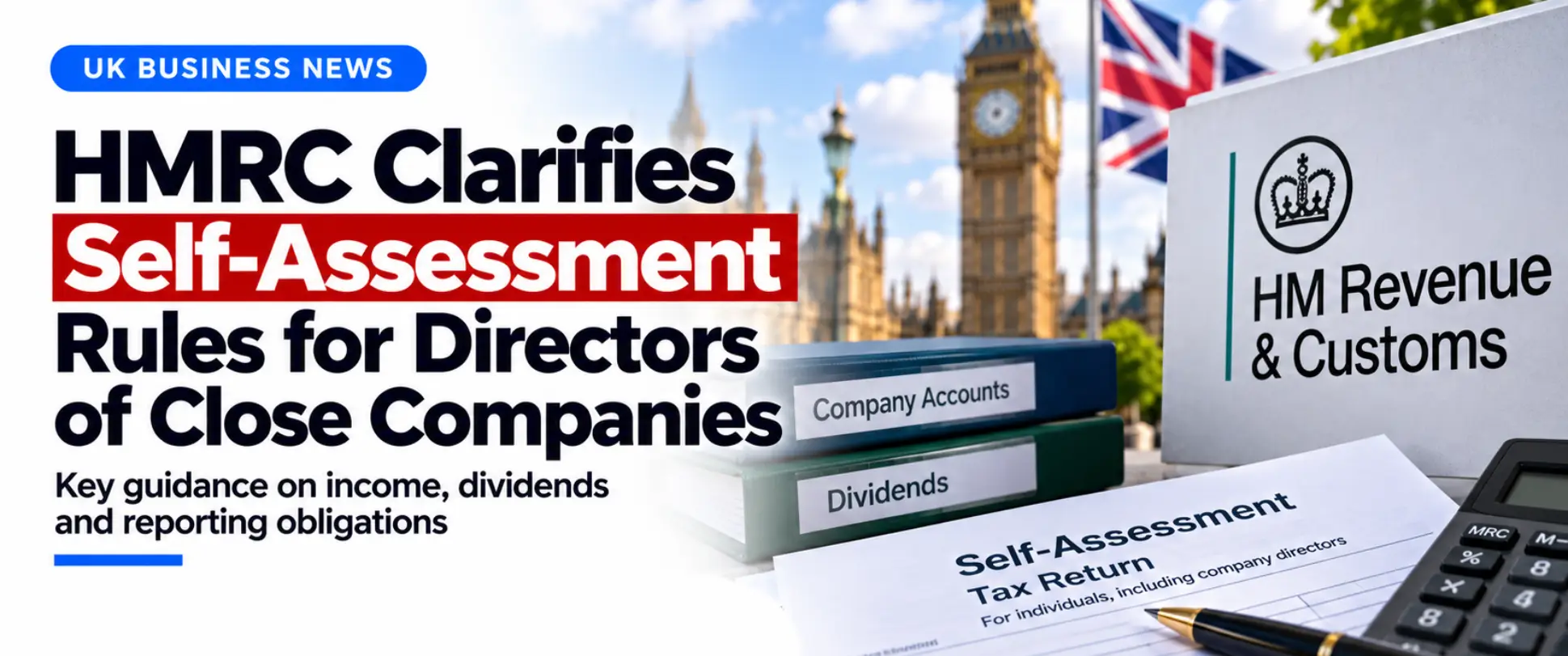
HMRC has clarified how directors of close companies need to fill out their Self-Assessment returns for the 2025/26 tax year. There’s a new reporting requirement for company-specific details on form SA102, and it applies more broadly than many directors might expect.
This matters if you’re a director of an owner-managed limited company, a family company, or any other close company that already files a Self-Assessment return.
Here’s the key point: you can’t leave the new close company fields blank just because you didn’t receive a dividend, don’t hold shares, or work as an unpaid director.
What Close Company Directors Must Report
If you’re a close company director completing the SA102 Employment Pages for 2025/26, you now need to include some extra details about the company itself.
That means providing:
- The company’s full name
- Its Companies House registration number
- Any dividend income you received from that company
- The highest percentage shareholding you held during the tax year
That last point trips people up. HMRC wants your highest shareholding at any point during the year, not just where you ended up. So, if your ownership changed partway through, don’t just report your year-end percentage.
These rules apply to Self-Assessment returns covering the 2025/26 tax year. The usual online filing deadline still stands: 31 January 2027.
What If You Received No Income?
This is where HMRC’s clarification really matters, especially if you’re an unpaid director or received nothing from your company last year.
You still need to complete the close company section. If you didn’t receive a dividend or don’t hold shares, put zero in the relevant box. Don’t leave it blank.
And here’s something worth flagging: writing an explanation in the “Any other information” box doesn’t count as completing the required fields. HMRC wants the actual SA102 boxes filled in, not a note explaining why they’re empty.
Directors of dormant companies aren’t automatically off the hook either. You’re still expected to report.
There is one exception. Directors of registered charities and Community Interest Companies may be exempt, but only if they didn’t receive (and weren’t entitled to receive) employment income, dividends, or any other distribution from the company.
What Happens If You Miss This?
Get it wrong, and HMRC can charge a £60 penalty for missing or incorrect information.
The good news: that penalty doesn’t multiply just because you hold several directorships or missed multiple boxes. Still, accuracy matters, particularly if you’re a director of more than one company.
One practical headache worth knowing about: some filing software caps the number of employment pages you can submit, which has caused problems for directors juggling multiple directorships.
What You Should Do Now
Before filing your 2025/26 Self-Assessment return, take a proper look at your company records.
Check your Companies House registration number, confirm your dividend records, and note any changes to your shareholding during the year. If you hold any unpaid or dormant directorships, check whether those need reporting too.
Keeping your dividend vouchers, share records, and company details lined up will save you from errors when you sit down to complete the return, and this is where accurate ongoing bookkeeping really pays off.
This clarification also lands alongside a wider shift. HMRC ran a 2026 consultation looking at future reporting requirements for payments between close companies and their owners, covering things like loans, cash withdrawals, dividends, asset transfers, and write-offs. In other words, this isn’t just a one-off tweak. It’s worth treating the new SA102 disclosures as something more than a box-ticking exercise, and part of wider tax planning for how you draw income from your company.
Need Help Getting This Right?
Lanop Business & Tax Advisors helps company directors and owner-managed businesses prepare accurate Self-Assessment returns and review their broader tax position. If you’re unsure how the new close company reporting rules apply to your 2025/26 return, Lanop can help you check what’s needed before you file.