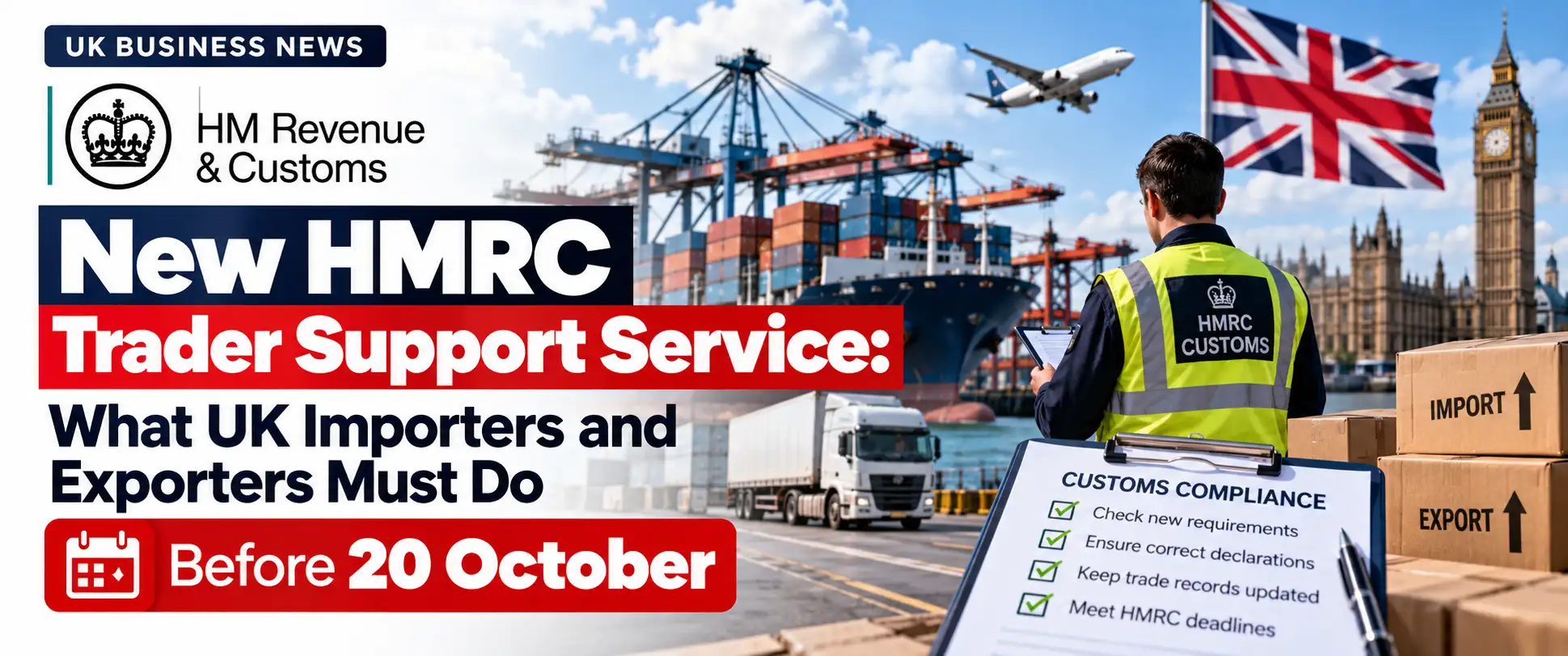
HMRC is moving the Trader Support Service to a new digital platform this October. The change affects businesses moving goods between Great Britain and Northern Ireland through TSS.
From 20 October 2026, all new goods movements must use the new platform. The outgoing TSS system will stop accepting new movements from that same date. HMRC is therefore urging registered users to prepare before the switchover takes place.
What Changes for TSS Users From 20 October 2026
The Trader Support Service helps businesses manage customs requirements for GB–NI goods movements. The service remains free, but the platform used to access it is changing.
Existing users have started receiving instructions explaining how to access the new system. Businesses should log in early and check that migrated information remains accurate.
This includes company details, EORI information, users, permissions, and relevant business authorisations. Businesses should also check connected agents, intermediaries, and their existing payment arrangements.
Waiting until 20 October could create avoidable problems when new movements need to be submitted. If access or permissions are incorrect, traders may face delays in processing their movements.
Businesses Should Test the New Platform Before Go-Live
HMRC has also provided a new TSS Practice Environment for registered users. This allows traders to explore the system before live movements begin. Businesses can practice submitting declarations and test features such as CSV file uploads.
Using the practice system early can help identify access or workflow issues sooner. Businesses with several users should also confirm that the correct permissions remain in place. This provides time to fix problems before the new system becomes mandatory.
Outstanding Declarations Still Need Action on the Old System
Businesses must also review unfinished work held within the outgoing TSS platform. This includes Supplementary Declarations showing Draft or Input Required status. Pending Payment declarations and other unresolved items should also receive prompt attention.
These declarations will not simply disappear when the new platform starts operating. Businesses should continue checking their old account while completing the migration process.
Any Supplementary Declaration should reach the correct completed status wherever action remains outstanding. Ignoring unfinished declarations could create customs, payment, or record-keeping problems later.
The Old TSS Portal Closes on 30 November
The transition does not finish when the new platform launches on 20 October. Access to the outgoing TSS portal ends completely on 30 November 2026. Businesses should therefore download any information they still need before that deadline.
They should also complete outstanding declarations while the old portal remains accessible. Customs records may be needed later for tax, VAT and compliance purposes. Keeping complete records is therefore important throughout the migration between both systems.
What Businesses Should Do Before the HMRC Deadline
TSS users should begin preparing now rather than waiting for the final deadline. Check out the new account, business profile, permissions, and connected payment arrangements.
Review UKIMS, NIRMS, and other relevant information shown within the business profile. Use the Practice Environment before submitting live goods movements after 20 October.
At the same time, review all outstanding declarations on the outgoing platform. Businesses should also save required customs records before old-system access ends in November. These steps can reduce disruption during an important change in customs administration.
How Lanop Can Help Businesses Prepare for TSS Changes
The TSS migration also connects directly with customs, VAT, and business record-keeping responsibilities. Errors within declarations can affect duties, VAT records, and wider compliance processes.
Lanop Business & Tax Advisors can help businesses review these areas before migration deadlines. Our team can support businesses with VAT, customs records, and related compliance requirements.
Businesses moving goods between Great Britain and Northern Ireland should act before 20 October 2026. Early preparation gives businesses more time to correct problems before the new system becomes mandatory.