
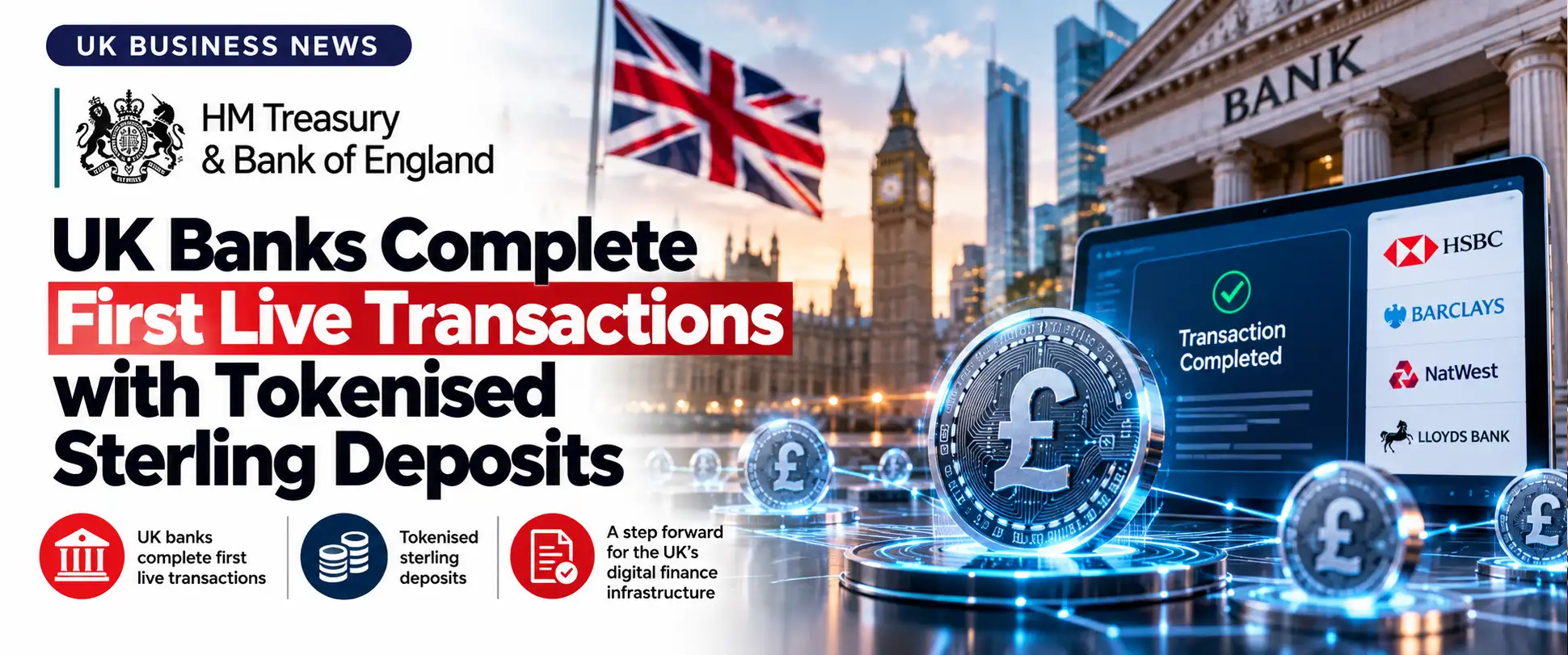
Seven major UK banks have completed the first live customer transactions using tokenised sterling deposits. It is a key step for digital payments in Britain.
Barclays, HSBC UK, Lloyds Banking Group, Monzo, Nationwide, NatWest and Santander took part through the Great British Tokenised Deposit (GBTD) initiative. UK Finance leads the project, and Quant built the shared platform.
The transactions used real customer money, not a test-only setup. For businesses, property owners and consumers, this shows how ordinary bank deposits could one day support faster, more automated payments.
What Are Tokenised Sterling Deposits?
Tokenised deposits are digital versions of money held in commercial bank accounts. They are not cryptocurrency.
They keep the trust and regulatory protections of normal bank deposits. They also add new digital features, such as programmability. This means money can move automatically once agreed conditions are met.
The technology can also make settlement more efficient. It can give customers more control over when funds are released.
This does not mean tokenised deposits are now open to all UK businesses or consumers. The transactions are part of the GBTD live pilot.
How Did the Banks Use Tokenised Deposits in Live Transactions?
Two of the transactions were remortgages. The funds were locked before completion. They were then released automatically once the required stage was reached. This cut down on manual checks and helped limit settlement delays.
The pilot also tested digital links with HM Land Registry. UK Finance says this kind of system could make future property transactions more efficient.
Another transaction was a consumer buying an item from a private seller. The buyer’s money stayed locked until the goods changed hands. Only then did the funds move to the seller. This shows how conditional payments can lower risk and give both sides more confidence.
Why Does This Matter for UK Businesses?
The news does not mean you need to change how you pay today. What matters is that programmable bank money has now moved into live customer transactions.
If the model grows, it could change how businesses manage payments, settlement and cash flow. Conditional payments may also cut manual work when money should only move after a set stage.
Property businesses and investors should pay close attention to the remortgage trials. They show how funds could be held and released more efficiently during a deal.
Also, don’t treat tokenised deposits as another form of crypto. They are commercial bank money in digital form. That difference matters when you compare future payment options, though it’s a useful reminder to keep your crypto tax position separate from any digital banking developments.
What Should Businesses Do Now?
You don’t need to move to tokenised deposits yet. For now, keep up with how UK payment systems are changing. Then assess new services with care as banks roll them out.
UK Finance expects more pilots in the coming months. These will test digital-asset settlement by linking tokenised customer money with digital assets.
Ignoring these changes could leave you less ready when new payment and settlement options arrive. But base your financial decisions on services you can use today. The current pilot is not a full market launch, so it’s worth keeping your cash flow forecasting grounded in your existing payment setup for now.
How Can Lanop Help?
Changes in banking technology affect more than how money moves. They can also shape cash-flow planning, property deals, financial controls and wider business choices.
Lanop is a firm of chartered accountants and business advisers. We help businesses understand financial developments in practical terms and see how they may affect daily operations as part of wider tax planning.
If you are reviewing your cash-flow strategy, planning a property deal or preparing for changes in digital banking, Lanop can help you understand the financial impact and make informed decisions.