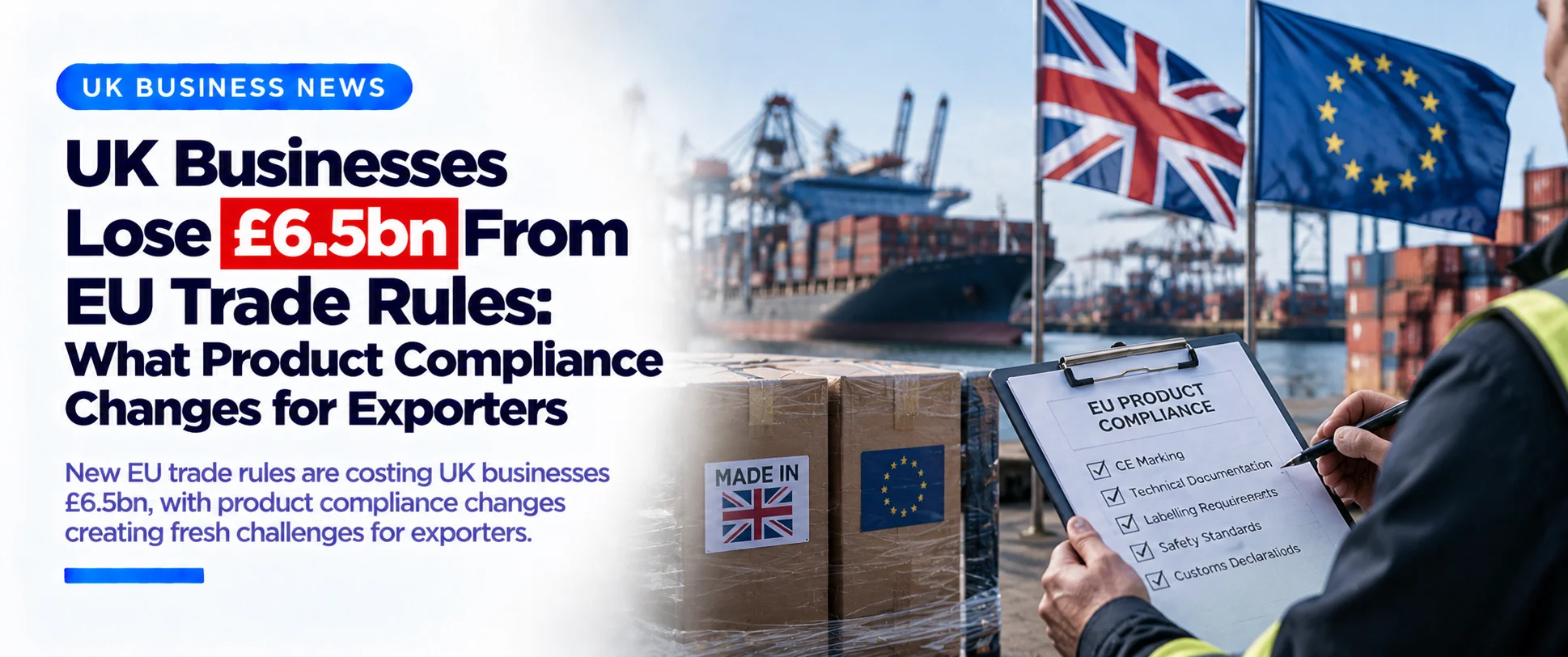
UK businesses could be missing out on up to £6.5 billion in EU exports every year, and the culprit isn’t tariffs. It’s product compliance barriers left behind by Brexit.
New research from the Institute for Public Policy Research (IPPR) estimates UK goods exports to the EU could have been £3.7 billion to £6.5 billion higher each year between 2021 and 2024, if the UK and EU had a mutual recognition agreement for conformity assessments.
So, what’s driving the gap? Product testing, certification, and two separate regulatory systems are all adding extra costs for businesses trying to sell into Europe. For UK manufacturers and exporters, product compliance is quickly becoming one of the bigger costs of doing business with the EU.
Why Product Testing Is Creating Extra Costs
Since Brexit, UK conformity assessment bodies generally aren’t recognised for EU market access anymore, at least not where EU rules call for third-party testing. In practice, this means some UK businesses now have to use an EU-recognised assessment body before their products can even enter the Single Market.
Things get more complicated once you factor in CE and UKCA marking. Great Britain still recognises CE marking for many products, but here’s the catch: UKCA marking doesn’t give you the same access to the EU market. It works one way, not both.
Not every exporter ends up testing the same product twice. It really depends on the product and which rules apply to it. But where third-party conformity assessment is required, UK businesses can end up facing extra testing, certification, and admin costs they didn’t have before. For smaller exporters especially, these added costs can hit profit margins much harder than they might expect.
New EU Compliance Rules Are Adding More Pressure
And it’s not just product testing. The compliance burden is spreading into other areas too. Under the EU General Product Safety Regulation, relevant consumer products now need an EU-based economic operator responsible for certain product safety duties. Depending on how your supply chain is set up, that could be an importer, an authorised representative, or another qualifying operator.
Digital Product Passports are also rolling out. The EU’s Digital Product Passport Registry went live in July 2026, and product-specific requirements will be introduced gradually from there.
If you export to affected sectors, you may soon need to share more detailed digital information about your products, materials, and sustainability credentials as these rules kick in.
On top of that, the EU Carbon Border Adjustment Mechanism entered its definitive phase in January 2026. It mainly targets carbon-intensive sectors, but it can create extra reporting requirements that ripple across supply chains. New EU packaging rules started applying from August 2026 as well, with more requirements set to phase in over time.
What Happens If Exporters Ignore These Changes?
If you don’t fully understand which rules apply to your products, you risk higher costs, shipment delays, or real problems accessing EU customers.
The level of risk isn’t the same for every exporter. It comes down to your product, sector, supply chain, and destination market.
Either way, it’s not worth waiting until goods get stopped at the border or compliance costs start eating into your margins before you act.
What UK Exporters Should Do Now
Start by reviewing which conformity assessments apply to your products, and whether you need an EU-recognised body to sign off on them.
From there, check your CE and UKCA position, work out who’s responsible for product safety obligations in the EU, and look into whether upcoming Digital Product Passport, packaging, or carbon reporting rules affect your sector, particularly if you rely on logistics and distribution networks to move goods across borders.
The goal is simple: understand these costs before they start disrupting your exports, not after.
How Lanop Can Help
Product compliance doesn’t just sit in isolation. It touches customs, VAT, supply chains, and your overall profitability too. Lanop Business & Tax Advisors helps businesses work through the financial and tax side of cross-border trade, understand international and offshore accounting obligations, and build more efficient export structures, including support with VAT returns on cross-border sales.
If you’re selling into Europe, getting your numbers and compliance position right early can save you avoidable costs and help protect your access to valuable EU markets. Contact Lanop today to book a free consultation with one of our advisors.