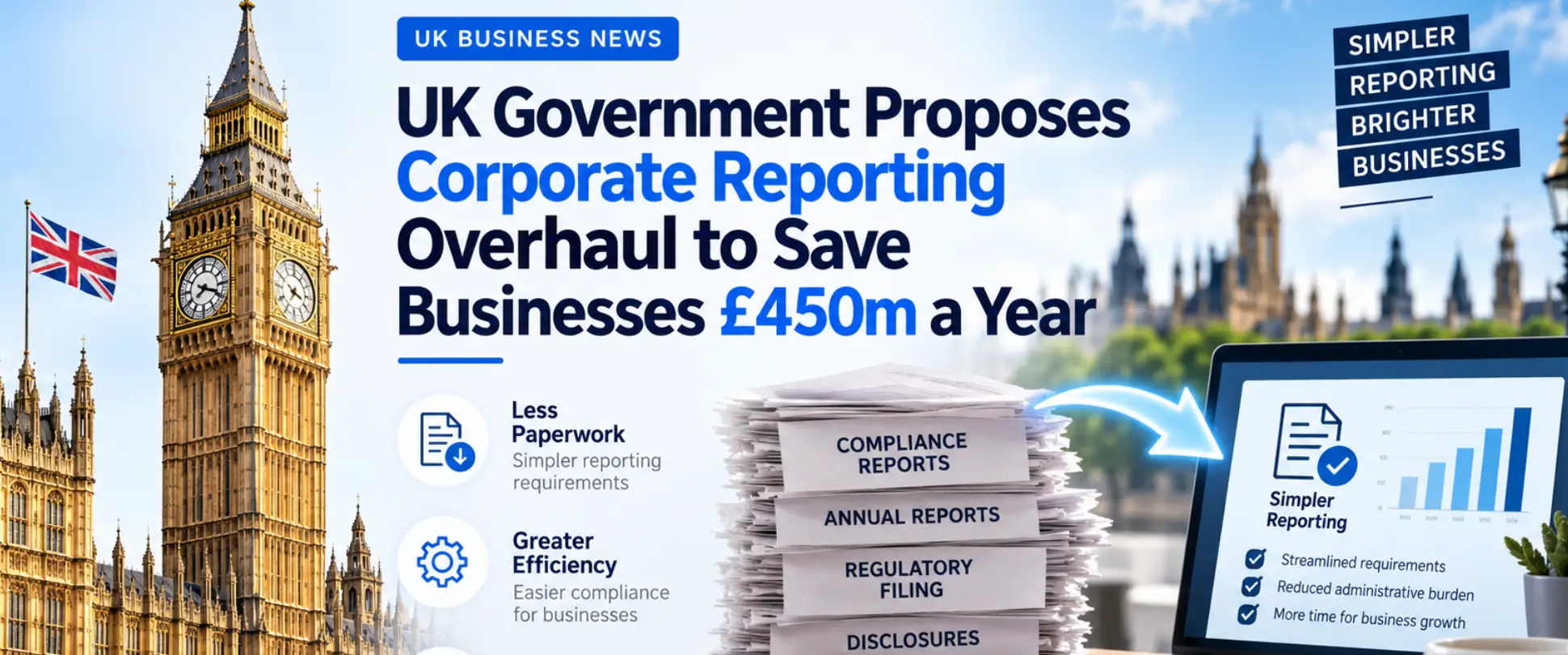
The UK Government has announced a major shake-up of corporate reporting, with plans to make the rules simpler and potentially save businesses over £450 million a year in paperwork.
The overhaul, to be announced on 6 September 2026, aims to ensure that the reporting requirements are more proportionate, especially for SMEs. The Government claims that needs have been duplicated, complicated, and costed unnecessarily because they must be met across several areas of company law, accounting standards, and regulatory rules.
The consultation was launched on 7 September and will remain open for submissions until 30 November 2026. Although not yet law, companies will still have to adhere to existing reporting, filing, and audit requirements.
At a Glance
| Figure | What it represents |
| £450m+ | Estimated annual savings from existing and planned reforms |
| £230m | Potential savings from proposed strategic-report exemptions |
| 44,000 | Medium-sized private companies potentially benefiting |
| 7,000 | Qualifying subsidiaries potentially benefiting |
| 30 November 2026 | Consultation response deadline |
What the £450m Saving Really Represents
The headline figure is an official estimate of administrative savings from existing and planned corporate reporting reforms. It does not mean every business will receive a direct or equal financial benefit.
One major part of the package is the proposed removal of strategic-report requirements for approximately 44,000 medium-sized private companies and around 7,000 qualifying subsidiaries. The Government estimates this measure could save businesses about £230 million annually.
Its calculation uses an estimated inflation-adjusted cost of £4,556 for an unquoted company to prepare a strategic report. Earlier reforms involving company-size thresholds and reporting requirements were separately assessed as delivering approximately £185 million in relevant annual administrative savings.
Fact-check note: The £450 million figure is a government estimate covering existing and planned corporate-reporting reforms. It is not a guaranteed saving for individual businesses and does not arise solely from the latest consultation.
Which Businesses Could Benefit?
The overhaul could affect companies of almost every size, but SMEs and corporate groups may experience the most immediate changes:
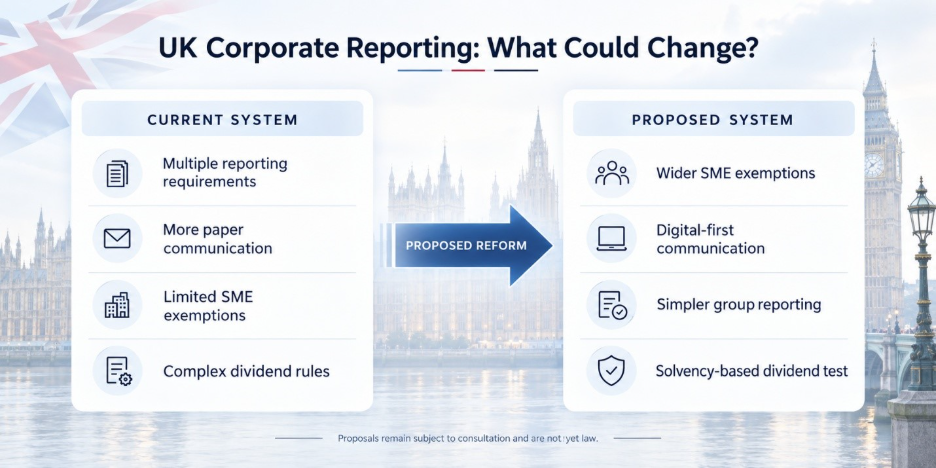
- Medium-sized companies could receive exemptions currently available to small businesses.
- Certain SMEs may qualify for statutory audit exemption, subject to the final eligibility rules.
- Qualifying businesses may no longer need to prepare a cash-flow statement.
- SME groups could be exempt from producing consolidated accounts.
- Eligible subsidiaries may face fewer obligations where the relevant information is already reported at parent-group level.
- Large and quoted companies could benefit from simplified strategic, remuneration and corporate-governance reporting.
The Government is also examining whether some non-financial reporting obligations remain justified for private companies, particularly where ownership and management are closely connected.
Reporting Moves Further into the Digital Age
A central objective is to replace paper-based processes with more efficient digital communication. The proposals include:
- Making electronic communications to shareholders the default
- Removing the general expectation that annual reports must be posted
- Allowing fully virtual annual general meetings where shareholders consent
- Moving suitable disclosures to company websites or digital portals
- Improving electronic tagging within reports and accounts
- Exploring how artificial intelligence could support reporting efficiency
The review also considers replacing the existing rules governing distributable profits and capital maintenance with a solvency-based system. Under this approach, companies may need to confirm that paying a dividend would not threaten their ability to continue operating.
What Businesses Should Do Now
No immediate reporting requirements have changed. But this may not allow businesses to be ready for radical changes in their audit, reporting and governance duties.
Directors and finance teams should continue to follow current rules, review whether the proposed exemptions may apply to their organizations, and assess how their accounting systems support digital reporting. Businesses and advisers can also submit relevant evidence before the consultation closes at 11:59 pm on 30 November 2026.
Lanop can help companies understand their existing obligations, assess the potential effect of the reforms and remain compliant as the proposals develop. Its support across statutory accounts, audit readiness and business reporting can help organisations prepare without acting prematurely on measures that have not yet become law.