
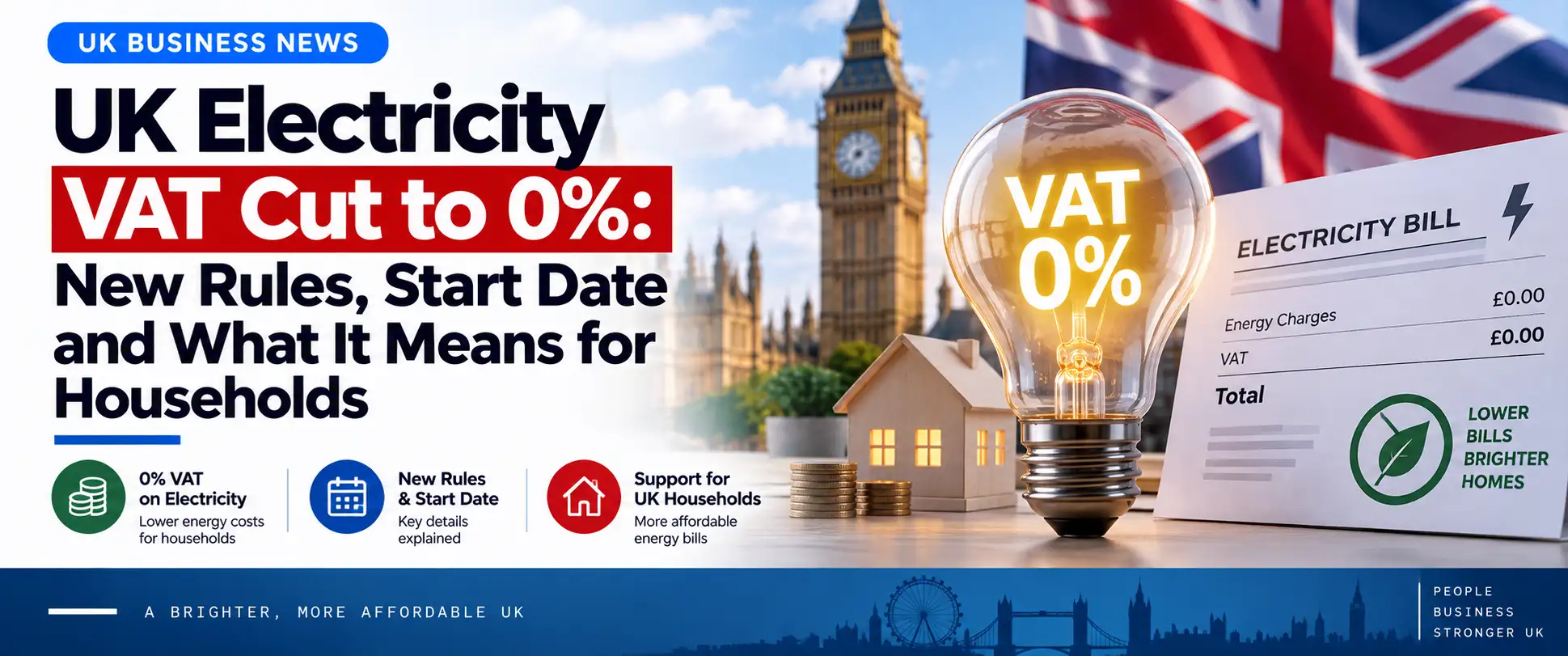
Starting October 1, 2026, UK households will pay 0% VAT on qualifying electricity. The government confirmed this temporary six-month tax cut for Great Britain, covering England, Scotland, and Wales.
This drops VAT on qualifying domestic electricity from 5% to 0% through March 31, 2027. Gas and other domestic fuels still carry 5% VAT.
But there’s a catch: the VAT cut alone won’t guarantee a lower energy bill this winter.
Electricity VAT Falls as Ofgem Price Cap Rises
The VAT cut takes effect the same day Ofgem raises its energy price cap.
From October 1 to December 31, 2026, the typical annual dual-fuel price cap rises 4%, from £1,663 to £1,723 for Direct Debit customers. That’s a £60 annual increase if the new rate holds for a full year.
This new cap already factors in the VAT removal. So, the government’s estimated £45 annual savings from the VAT cut won’t show up as a straight £45 drop in your bill. Rising energy costs, especially gas, can offset much of that saving.
If you’re on a fixed-rate tariff, the October price cap change doesn’t affect you the same way.
Who Qualifies for the 0% Rate?
Most households don’t need to do anything. Energy suppliers will automatically remove the 5% VAT charge from qualifying electricity bills, covering both usage and standing charges.
The zero rate also extends to other electricity supplies that already qualify for VAT relief. This includes:
- Charities
- Residential care settings
- Certain small or mixed-use premises
HMRC confirmed this change doesn’t alter which supplies qualify for relief. It simply reduces the VAT rate on those supplies to 0% for the temporary period.
Rules for Mixed-Use Properties and Businesses
Landlords and businesses still need to follow existing VAT rules closely.
If 60% or more of an electricity supply goes toward qualifying domestic or charitable use, the entire supply gets the relief. If qualifying use falls below 60%, the bill may need to be split between qualifying and non-qualifying portions, and getting this apportionment right matters just as much for landlord accounting as it does for the VAT return itself.
Small electricity supplies also qualify under existing de minimis rules if they don’t exceed:
- 33 kWh per day on average, or
- 1,000 kWh per month
Standard commercial electricity that doesn’t meet qualifying-use rules will typically stay at the standard VAT rate.
If you’re a landlord or business with mixed-use supplies, check how your electricity account is classified. Make sure any VAT declarations or information given to your supplier stay accurate, and that your VAT return reflects the correct treatment each period.
What Households Should Do Now
Most households don’t need to contact their supplier or file anything.
Instead:
- Check electricity bills from October onward to confirm the correct VAT treatment was applied
- Remember gas stays at 5% VAT, so your overall energy costs could still rise despite the electricity VAT cut
This 0% rate is temporary and currently set to end March 31, 2027.
For landlords, businesses, and organizations with more complex electricity setups, the applicable rules often depend on how the property is used and how the supply is billed, particularly for small business owners managing mixed commercial and residential premises.
At Lanop, we can help you review your VAT treatment, sort out mixed-use electricity costs, and organize your business records so you know exactly which charges qualify and avoid applying the wrong VAT treatment. Contact Lanop today to review your VAT position ahead of the October change.