
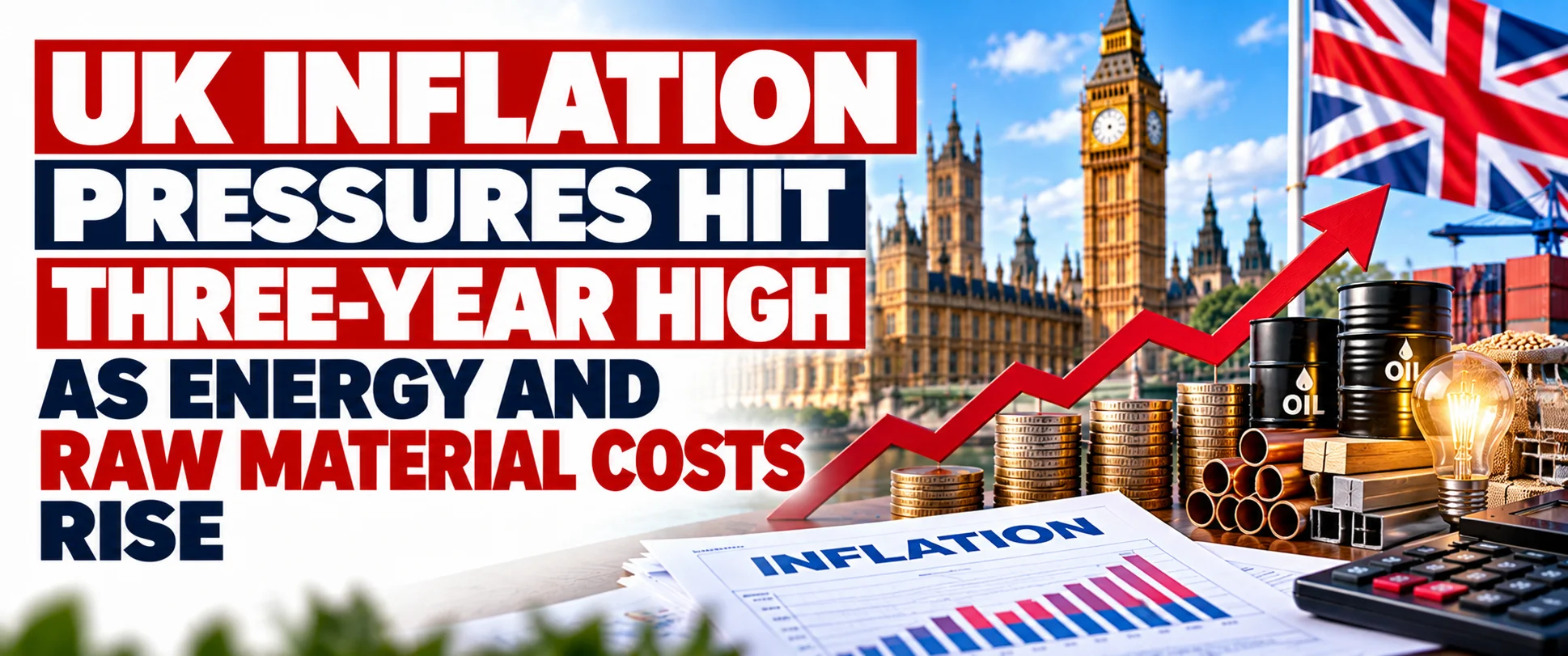
UK firms face a fresh rise in costs as fuel, energy and raw materials get more expensive. The latest survey from the Office for National Statistics (ONS), released on 8 October 2026, shows growing concern.
Around 72% of firms were worried about energy prices, while 73% raised concerns about fuel. Both figures were the highest since these survey questions began earlier this year.
The findings come as firms face higher costs and seek to protect their profits ahead of winter.
What Does the Latest UK Inflation Data Show?
UK inflation rose to 3.1% in August 2026, up from 2.9% in July, according to the ONS Consumer Prices Index (CPI). The wider CPIH measure reached 3.3%.
Raw material costs also increased. Producer input prices rose by 6.1% in the year to August. Factory gate prices rose by 3.7%.
This means many firms now pay more for the goods and materials they need. If they cannot pass on these costs, their profit margins may fall.
Why Are Energy and Fuel Costs Rising?
Ofgem raised its household energy price cap by 4% from 1 October 2026. For a typical home paying by Direct Debit, the annual bill figure rose from £1,663 to £1,723.
The cap does not cover business energy contracts. Firms pay rates based on their own supplier terms and energy use. Fuel prices have also climbed. In August, petrol reached an average of 161.3p per litre, while diesel rose to 181.8p.
Petrol was at its highest level since November 2022. The Bank of England has linked higher energy prices to the conflict in the Middle East. These costs can also affect transport and the price of goods.
Why Has the Bank of England Held Interest Rates?
On 17 September 2026, the Bank of England kept its base rate at 3.75%. The Bank warned that high energy prices could keep inflation above its 2% target.
This leaves firms facing two key pressures: higher running costs and the cost of borrowing. For businesses with loans or overdrafts, this can place more strain on cash flow.
Which UK Businesses Are Most Affected?
Small firms, manufacturers, contractors and delivery businesses may face higher costs for fuel, materials and energy.
Sole traders may also pay more for travel and workspace costs. Landlords who cover energy bills may face higher property costs.
If firms fail to review their prices, old quotes may no longer cover the full cost of a job. Poor cash flow plans can also leave them short of funds when bills fall due.
What Should UK Businesses Do Now?
Business owners should review their costs and plan ahead.
Key steps include:
- Check cash flow: Update forecasts using the latest bills and supplier prices.
- Review prices: Make sure new quotes cover rising costs.
- Check contracts: Review energy, supplier and loan terms.
- Track expenses: Keep clear records of fuel, travel and business costs.
- Plan tax claims: Check which costs qualify for tax relief under HMRC rules.
These steps can help firms spot risks early and make better spending decisions.
How Can Lanop Help Businesses Manage Rising Costs?
Lanop Business & Tax Advisors helps UK firms with accounting, cash flow planning and tax advice. Our accountants can help business owners review rising expenses, check profit margins, and plan for future payments.
With clear financial records and sound advice, firms can make informed choices as costs change. Contact Lanop to review your business costs and plan your next steps.