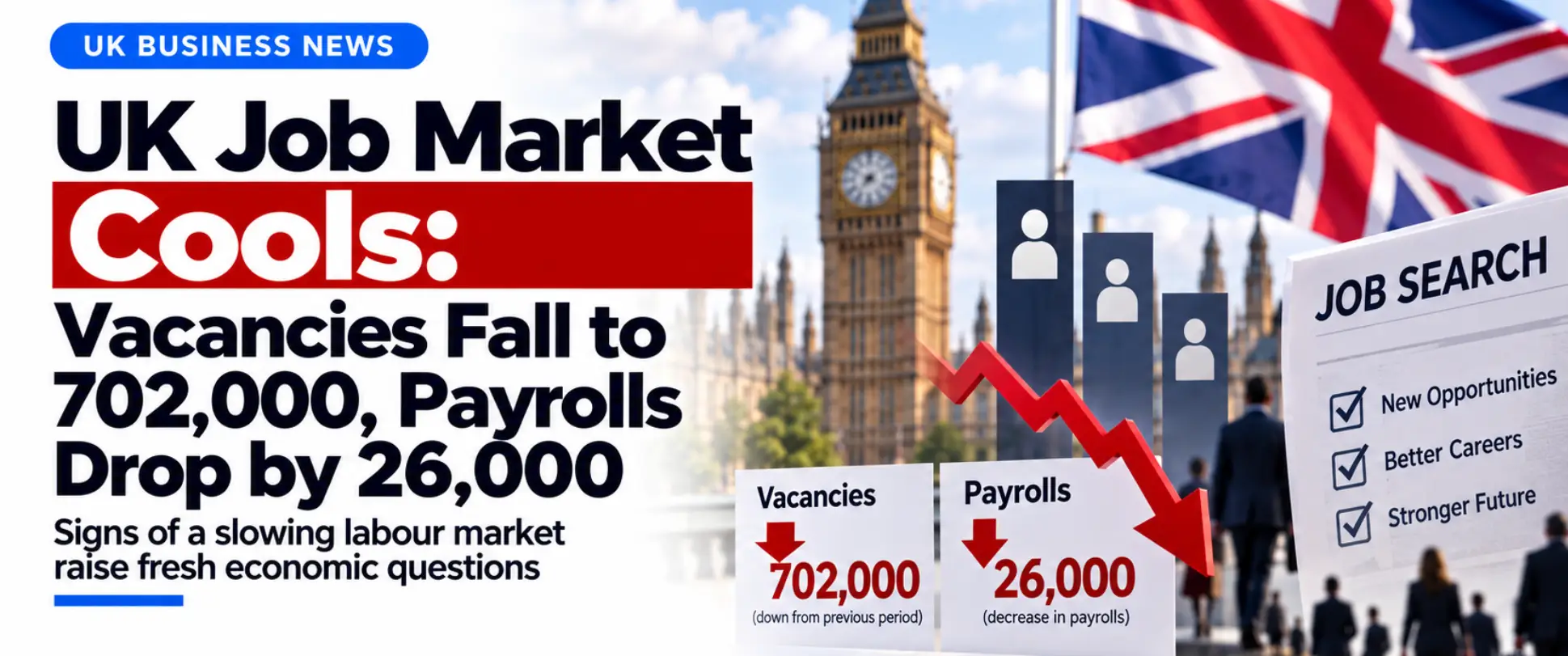
The UK job market is losing steam. Job vacancies have dropped to 702,000, and payrolled employment fell by an estimated 26,000 in August 2026.
Vacancies Are at Their Lowest Point in Years
New figures from the Office for National Statistics show vacancies fell by 8,000 between June and August 2026. That’s the lowest level since early 2021. If you leave out the pandemic years, you’d have to go back to 2014 to see numbers this low.
Payroll data backs up the trend. Early estimates from HMRC show payrolled employment dropped by 26,000 between July and August. Compared to a year ago, there are now 145,000 fewer people on payroll.
These August numbers are still provisional, so they could shift slightly once revised. Still, the direction is clear. Employers are pulling back on hiring.
Small Businesses Are Feeling It Most
Smaller employers are cutting jobs faster than anyone else. Businesses with one to nine employees dropped 7,000 vacancies, the biggest fall of any size group.
Rising labour costs seem to be the main driver. When you’re a small business, every new hire adds weight to your payroll, your cash flow, and your day-to-day running costs, often all at once. Bigger companies can usually absorb that. Smaller ones often can’t.
The slowdown isn’t limited to small firms either. Vacancies fell across 10 of the 18 industry sectors tracked by the ONS, with education taking the hardest hit at 5,000 fewer roles.
And the balance between jobseekers and jobs has shifted too. There are now 2.5 unemployed people for every vacancy, with unemployment sitting at 4.9%.
Pay Growth Is Slowing Down
Wages are cooling as well, though not evenly. Across the economy, regular pay grew by 3.5%, and total pay (including bonuses) rose 3.9%. But look closer at the private sector, and growth is much softer. Private sector pay rose just 2.9%, well behind the public sector’s 6.3%.
For employers, this fits the wider pattern. Hiring is slowing, and so is the pressure to raise wages.
The Bank of England Held Rates at 3.75%
This jobs data lands right after the Bank of England’s latest decision.
On 17 September 2026, the Bank’s Monetary Policy Committee voted 6 to 3 to keep interest rates at 3.75%. It pointed to a softer labour market and easing wage pressure as part of the reasoning.
But there’s a catch. Inflation rose to 3.1% in August, so businesses won’t get quick relief on borrowing costs anytime soon, even with hiring slowing down.
That leaves employers stuck between two pressures: weaker hiring demand on one side, and borrowing and cost pressures that haven’t really eased on the other.
What This Means for Your Business
It’s tempting to see this as just another economic headline, but it’s worth taking seriously if you’re making hiring or budgeting decisions right now.
Before you commit to any new fixed costs, take a proper look at your planned hires and current payroll spending. Make sure your cash-flow forecasts reflect the full cost of employing someone, not just their salary. And it’s worth double-checking that you’re using the right payroll setup and claiming any reliefs you’re entitled to.
Skip these checks, and you could end up carrying higher fixed costs at exactly the moment when hiring conditions, wages, and borrowing costs are all moving at once, so it’s worth stress-testing your cash flow forecast against these pressures first.
Why Work with Lanop?
Lanop Business & Tax Advisors works with UK businesses, directors, and SMEs on payroll planning, cash-flow forecasting, and the bigger financial decisions behind them as part of wider tax planning.
As the labour market shifts, the answer isn’t to freeze hiring altogether. It’s to understand exactly what each hiring decision costs you, and how it affects your margins and cash flow, before you make it.
If you’re reviewing recruitment plans, payroll costs, or workforce budgets, Lanop can help you work through the numbers and plan your next step with more confidence.