
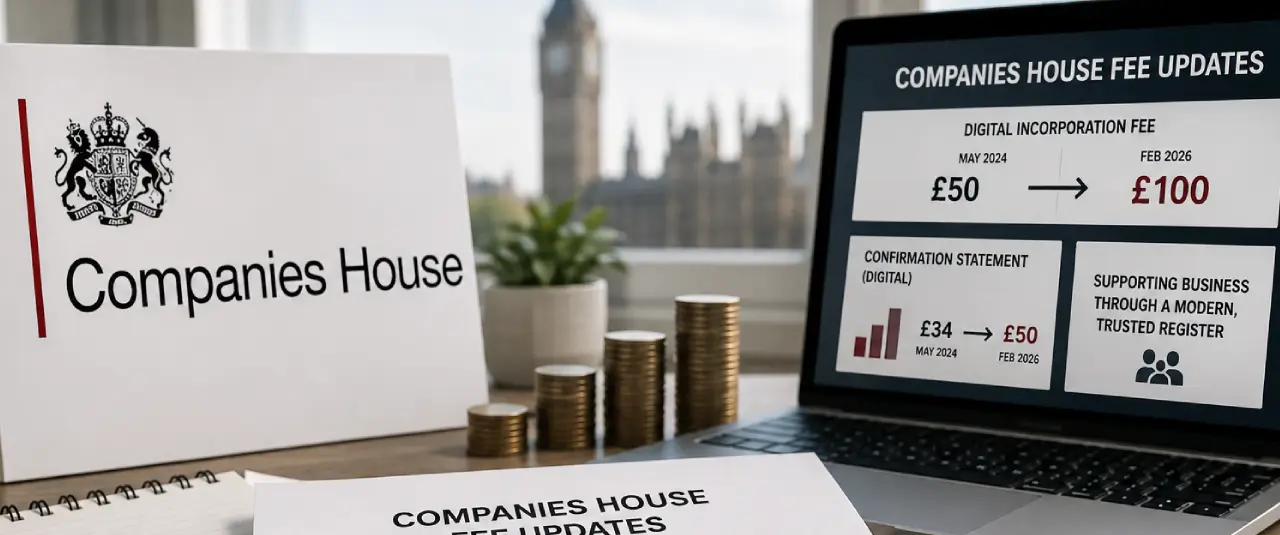
In May 2024, it cost £12 to register a company in the UK. By February 2026, that same registration cost £100.
Eighteen months. A 733% increase. And Companies House has confirmed it reviews fees annually.
That trajectory is what companies are now sitting with, and it is prompting a broader look at the real cost of incorporation and annual compliance in the UK.
What Changed and When
The February 2026 increases were the second round in less than two years.
The first came in May 2024, when the digital incorporation fee jumped from £12 to £50. That was the first change in nearly a decade. Companies House framed it as necessary to fund its expanded powers under the Economic Crime and Corporate Transparency Act 2023.
The second round landed on 1 February 2026. The digital incorporation fee doubled again, from £50 to £100. The confirmation statement fee rose from £34 to £50. Paper filing costs moved further still: a paper confirmation statement now costs £110, up from £34.
One fee moved the other way. Voluntary strike-off dropped from £33 to just £13 for digital filing. Closing a dormant or unused company is now considerably cheaper than it was twelve months ago.
The Numbers Behind the Headline
The incorporation jump is the most striking, but the confirmation statement change is what most companies feel year after year.
Digital confirmation statements now cost £50, up from £34. Paper confirmation statements cost £110. For a business filing one statement per year, the increase is £16. For an accountant or company secretary managing fifty companies, that is an additional £800 in annual filing costs for that task alone.
Same-day incorporation online now costs £156. A charge registration costs £14. Administrative restoration costs £341. Reduction of share capital filings start at £20 for standard digital upload and £89 for same-day digital.
The February 2026 updates targeted high-volume digital filings specifically, with a mix of increases and reductions based on operational cost assessments.
Why Companies House Says It Is Doing This
Companies House said it is focusing on modernising and improving services, boosting its enforcement approach with more people, more sophisticated tools, and faster action against fraudulent companies.
Companies House confirmed the additional funding supports its enhanced powers under ECCTA 2023, which allow it to query and remove false and misleading information from the register. The Insolvency Service’s company investigation and enforcement activity is also funded through the same fee income, covering director disqualifications and fraud prosecutions.
Identity verification, which became mandatory from 18 November 2025 for new directors and Persons with Significant Control, adds ongoing operational cost that also feeds into the fee calculation.
Where UK Fees Sit Internationally
UK company formation fees remain low by international standards even at £100. Bulgaria charges €28 to €56, Estonia €265, Ireland €150, and typical EU registration costs run from €700 to €2,500.
The UK register remains among the most accessible in the developed world. But the comparison that stings for UK founders is not with Luxembourg. It is with eighteen months ago. A startup incorporating in early 2024 paid £12. Today it pays £100. The absolute cost is still low. The rate of change is not.
The Question the Startup Sector Is Asking
Fees were £12 just eighteen months ago. Doubling company formation fees is another tough blow to startups and small business owners, with many in the startup ecosystem wondering if further increases are on the horizon.
Companies House has confirmed it conducts annual fee reviews. It has not signalled what the 2027 review will produce. But two consecutive increases, both linked to ECCTA implementation costs, suggest the upward pressure is structural rather than a one-off correction.
Some fees remain comparatively low compared to eurozone jurisdictions, and the increased fees alongside identity verification will play some role in discouraging the fraudulent use of UK companies. However, the messaging that the UK is open for business is made harder where fees for forming companies are doubled at the same time.
What This Means for Your Company Now
For anyone incorporating a new company, the £100 fee is simply the current reality. It is worth building into any startup cost projection alongside registered office requirements and the now-mandatory director identity verification through GOV.UK One Login.
For existing companies, the confirmation statement fee of £50 needs to be in your annual compliance budget. Underpaying the new fee will breach compliance. The date of your next confirmation statement is the date to plan around.
The one area where the fee structure has moved in your favour is dissolution. If you have dormant or unused companies sitting on the register, closing them now costs £13 digitally, down from £33. For businesses that incorporated multiple entities during a period of growth and no longer need all of them, that is worth acting on.
Lanop’s limited company team handles Companies House filings, confirmation statements, and compliance submissions. If you are setting up a new company or reviewing your existing structure considering the updated fees, speak to us today.