Could Your German Business Qualify for Cash-Back Incentives?
Your business could be missing out on tax relief for work it already does. Germany offers R&D tax credits for eligible research, product development, and new technology. Under the German R&D tax credit, qualifying SMEs can claim up to 35% of eligible costs. Some businesses may also qualify for regional investment grants. Lanop helps you find out what applies, review your costs, and prepare for the claim process.
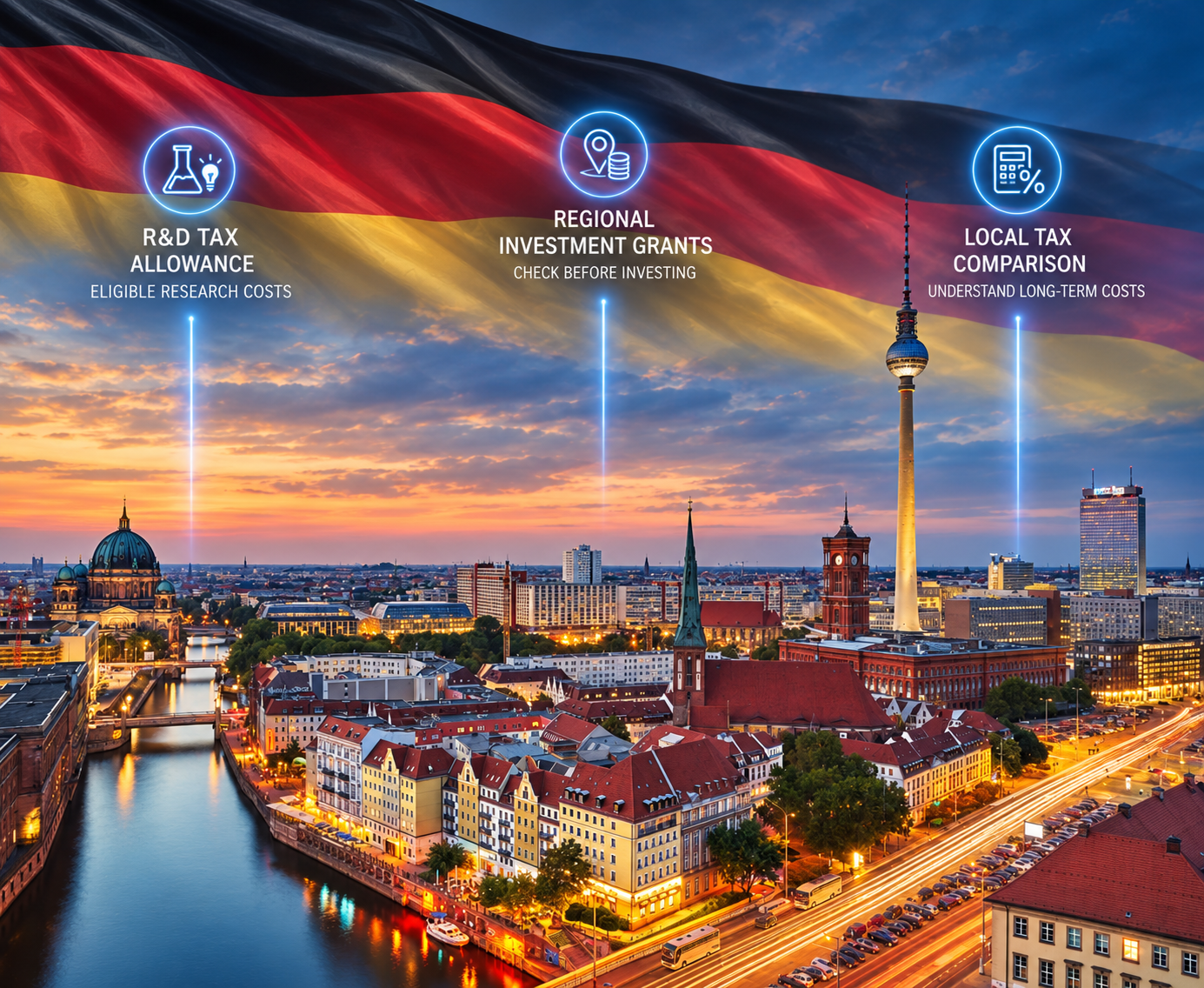
- Recover eligible R&D costs through Germany's research tax allowance.
- Check regional grant options before spending on new projects.
- Compare local tax rates to understand your long-term costs.

What Financial Incentives Are Available to Businesses in Germany?
R&D Tax Credits (Forschungszulage)
Germany’s Forschungszulage helps businesses recover part of their research costs. Eligible companies can claim 25% of qualifying expenses, rising to 35% for approved SMEs. The allowance covers certain staff costs, research projects, and other eligible expenses. Even businesses making a loss may receive a cash payment.
GRW Regional Investment Grants
Thinking about building a new factory or expanding your current one? GRW grants can help pay for it. Germany offers them for eligible projects in designated regions. The amount depends on your company size, your location and the type of project. Timing matters too. You must apply before the investment begins.
Location-Based Tax Savings
Where your business operates can affect its tax bill. German municipalities set their own trade tax multipliers, so rates differ by location. The trade tax component starts at 7%, and can be much higher. Comparing sites before committing to one may help you avoid unnecessary long-term costs.
How Lanop Helps Businesses in France
Explained in 60 Seconds.
Forschungszulage Explained: 5 Things Your Business Should Know
Germany's R&D tax credit can help cover the cost of eligible research and development. Here are five key things to check before making a claim.
How Much R&D Tax Relief Can Your Business Claim in Germany?
Germany's Forschungszulage offers relief on eligible R&D costs. Your allowance depends on company size, project dates, and qualifying expenses.
Germany vs UK: How Do R&D Tax Credits Differ?
GERMANY R&D TAX CREDIT
25%–35%
Forschungszulage Research Allowance
- 25% relief, rising to 35% for qualifying SMEs.
- Covers eligible staff costs, research contracts, and other approved expenses.
- Cash refunds are possible even when a business makes a loss.
- Projects need BSFZ certification before the tax allowance is approved.
UK R&D TAX RELIEF
20%
Merged R&D Expenditure Credit
- Offers a 20% taxable credit on eligible R&D spending.
- Covers qualifying staff, software, and certain research costs.
- Eligible loss-making, R&D-intensive SMEs may receive enhanced support.
- HMRC requires claim details and supporting records, with advance notice in some cases.
How Lanop Helps You Claim German R&D Tax Credits and Incentives

We look at your research and development work and tax position to identify projects that may qualify for Germany’s Forschungszulage (R&D tax allowance).
We review your staff costs, contracted research, equipment depreciation, and overheads. You’ll see which expenses may qualify under the German R&D tax allowance scheme.
We estimate your German R&D tax allowance using your eligible costs, company size, and applicable relief rates. You’ll get a clearer picture of the potential value of your claim.
We help you organise project details and gather the technical evidence needed for BSFZ certification. This assessment helps establish whether your research and development activities meet the scheme’s requirements.
We help you prepare financial records and coordinate with German tax specialists on your claim, including the application to the tax office and the supporting documentation required.
We assess whether your planned facilities, equipment, or other investments could qualify for GRW investment grants, considering your project type, location, and the applicable funding criteria.
We compare municipal trade tax rates and assess how your chosen German location may affect your tax bill. This helps you make more informed decisions about where to establish or expand your operations.
We review cross-border research costs, foreign ownership, and tax reporting requirements. UK businesses gain a clearer understanding of their German R&D incentive position and related compliance obligations.
We review filing deadlines and historical research spending to identify potential retroactive Forschungszulage claims. This helps you understand which past periods may still be eligible before the relevant deadlines expire.
We help you maintain accurate records, track eligible expenditure, and monitor applicable grant conditions. Ongoing support helps strengthen future claims, maintain compliance, and reduce the risk of errors.
Forschungszulage vs GRW Grants: Which Incentive Fits Your Business?
Germany’s R&D tax allowance supports qualifying research, product testing, and new technology development, even when a project does not succeed commercially.
Eligible expenditure can include R&D staff costs, contracted research, and certain other project expenses, subject to German tax rules and the scheme’s requirements.
You can apply for BSFZ certification before, during, or after your research project. However, your tax allowance application must comply with the applicable filing deadlines.
The German R&D tax allowance generally provides a 25% benefit on eligible costs, rising to 35% for qualifying SMEs. A cash payment may be available when the allowance exceeds the tax due, subject to the applicable rules.
The scheme may suit startups, software developers, manufacturers, and other businesses undertaking projects that meet Germany’s legal research and development criteria.
The GRW investment grant supports business investments that create or safeguard jobs and strengthen economic activity in designated German regions.
Depending on regional funding rules, eligible investments may include buildings, machinery, equipment, and certain job-related investment costs.
You generally need to apply before starting the project or making binding commitments. Signing contracts or beginning work too early may affect your eligibility for funding.
GRW grants can provide non-repayable financial support for approved investments. Funding rates depend on the region, company size, eligible costs, and applicable programme conditions.
GRW funding may suit manufacturers and eligible service businesses planning new facilities, major upgrades, or expansion projects in designated German funding regions.

How Our German R&D Tax Credit & Incentive Review Process Works
Phase 1 Includes:
- 1Getting to know your research activities, projects, and investment plans.
- 2Checking whether you may qualify for Forschungszulage and GRW grants.
- 3Assessing your company size, German tax position, and project locations.
- 4Identifying eligible costs, potential missed opportunities, and claim risks.
PURPOSE:
Identify which German incentives may apply to your business before you invest time or money in an application.
Phase 2 Includes:
- 1Reviewing R&D staff costs, contracted research, and other potentially eligible expenses.
- 2Estimating your potential R&D tax allowance and regional grant benefits.
- 3Preparing financial records and supporting project documentation.
- 4Coordinating with German specialists on BSFZ certification and eligibility checks.
PURPOSE:
Understand what you may be able to claim and gather the evidence needed to support an accurate application.
Phase 3 Includes:
- 1Coordinating with German specialists on R&D tax claims and grant applications.
- 2Checking claim deadlines, grant conditions, and applicable funding limits.
- 3Tracking eligible expenditure and maintaining accurate supporting records.
- 4Reviewing future research projects to identify additional incentive opportunities.
PURPOSE:
Support compliant claims, reduce avoidable errors, and help your business make informed use of future incentive opportunities.
Who Can Benefit from German R&D Tax Credits and Business Incentives?
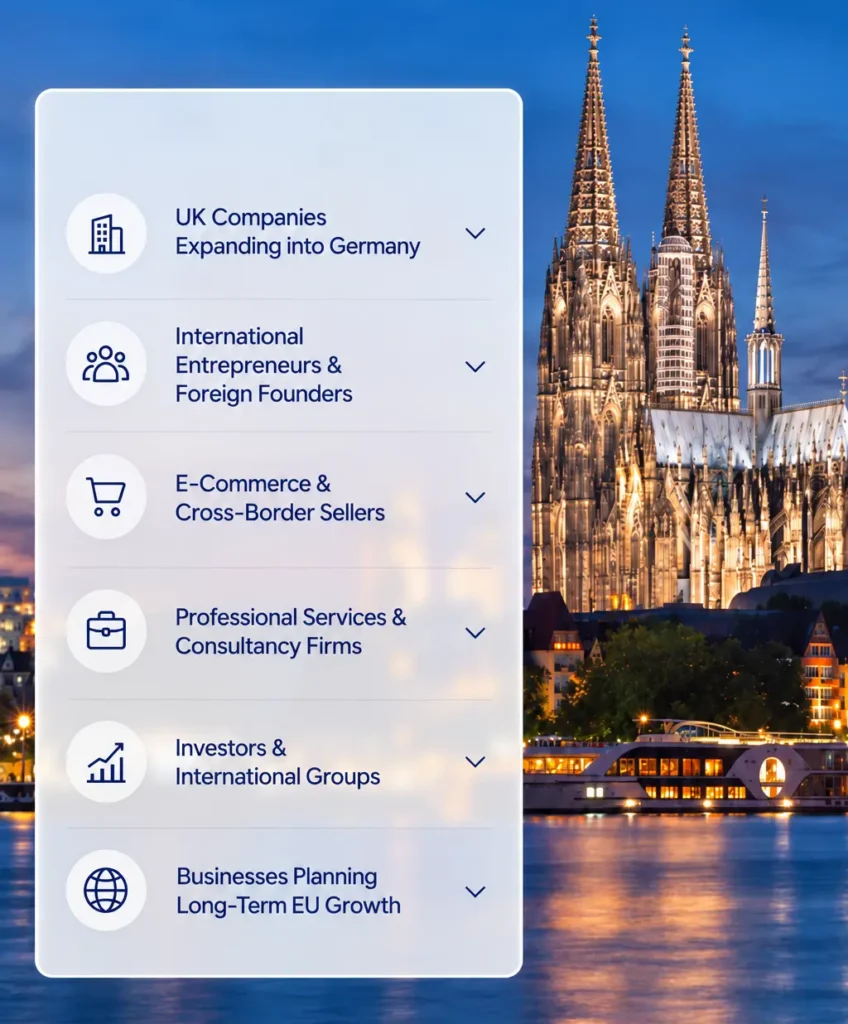
Your business may qualify for German tax relief or grants on research and investment costs. Lanop helps you find suitable incentives, check eligibility, and assess potential savings.
Best for: Businesses building new software, digital tools, or advanced technology.
Research that addresses technical challenges may qualify for Germany’s R&D tax allowance (Forschungszulage). Lanop reviews your projects, staff costs, and potential relief.
Best for: Firms that design, test, or improve products and technical processes.
Qualifying R&D work may be eligible for Forschungszulage relief. We help identify eligible costs and assess whether your projects meet the applicable research and development criteria.
Best for: Manufacturers investing in new facilities, equipment, or production capacity.
GRW regional investment grants may support eligible projects in designated German funding areas. Lanop helps assess potential funding options before major investment commitments are made.
Best for: Early-stage businesses funding research while managing tight cash flow.
Qualifying SMEs may benefit from an enhanced R&D tax allowance. Eligible businesses may also receive a cash payment when the allowance exceeds their tax liability, subject to the scheme’s conditions.
Best for: Foreign-owned businesses funding eligible research or investment in Germany.
Your German tax position, research costs, and project location can all affect eligibility. Lanop helps assess cross-border incentive opportunities and coordinate specialist advice where required.
Best for: Companies comparing German locations or planning multi-year investment projects.
Municipal trade tax rates vary by location, and Germany’s corporate income tax rate is scheduled to decline in stages through 2032. We help assess how these factors may affect your future operating costs and investment decisions.
FAQS: German R&D Tax Credits & Business Incentives
1. Can failed or unfinished R&D projects qualify for Forschungszulage?
Yes. A project doesn’t have to succeed to qualify. What counts is whether the work meets Germany’s R&D criteria. Keep records of the technical problems you faced, the tests you ran, and the research you did.
2. Can software development qualify for Germany’s R&D tax credit?
Yes, if the work involves real technical uncertainty. Building new software methods or solving complex technical problems may qualify. Routine website builds, updates and standard software changes usually don’t.
3. Can I claim R&D costs for work done outside Germany?
Some overseas research costs may qualify. Contract research in the EU or EEA can be eligible if it meets the legal conditions. Overseas staff costs and payments to foreign contractors need their own checks.
4. Does Forschungszulage cover projects funded by customers?
It might. Eligibility depends on who does the research, who pays for it and how the contract is set up. A customer-funded project doesn’t automatically give both sides a claim.
5. Can I claim R&D tax relief for several projects in one year?
Yes. You can include costs from several eligible projects in one annual claim. Each project needs solid technical evidence, and you must split shared costs correctly.
1. Can I claim Forschungszulage for research done in previous years?
Yes, often you can. You just need to be within the legal time limit. Germany generally uses a four-year assessment period, and special rules decide when it starts. Lanop can look at your past spending and tell you which deadlines apply.
2. Does BSFZ certification guarantee an R&D tax refund?
No. The certificate only shows that your project meets the technical research criteria. After that, the tax office reviews your costs and the other claim conditions before it approves anything.
3. Will I get my R&D tax allowance right after approval?
Not straight away. The tax office usually applies the allowance when it issues your next income or corporate tax assessment. If the allowance is bigger than your tax bill, you get the difference back as a refund. So, your payment date depends on that assessment.
4. Can I use the same R&D expenses for grants and tax credits?
Not for the same costs. Germany doesn’t allow double support, so any grant-funded spending may need to come out of your Forschungszulage calculation. It’s worth reviewing each funding source on its own.
5. Do I need to submit a new R&D tax claim every year?
Yes, if your research runs across several financial years. You file a separate tax allowance application for each year. Certification covers the project, while the annual claim covers your costs for that year. You need both.
1. Can foreign investors get the same GRW grants as German businesses?
Yes. Foreign ownership doesn’t automatically rule you out of GRW grants in Germany. You face the same programme conditions as any other investor, including location, project type, company size, and investment requirements.
2. Can I apply for a GRW grant after signing an investment contract?
It depends on whether the contract counts as the start of your project. Binding commitments can affect your eligibility, so check the grant rules first. Do this before you sign any contract or order equipment.
3. Are regional grants available for energy-efficient equipment?
Potentially. Certain GRW programmes support investments that improve energy efficiency or environmental performance. Eligible costs, technical standards, and grant rates depend on the project and region.
4. Can I choose a low-tax German municipality without moving my operations?
Simply changing a registered address does not guarantee lower trade tax. German tax liability depends on the location of genuine business establishments and relevant activities. Lanop can help assess the financial implications.
5. How can Lanop help if I'm unsure which German incentives apply?
Lanop can review your research spending, planned investments, and German tax position. We help compare relevant incentives, identify documentation needs, and coordinate specialist advice before you proceed.