

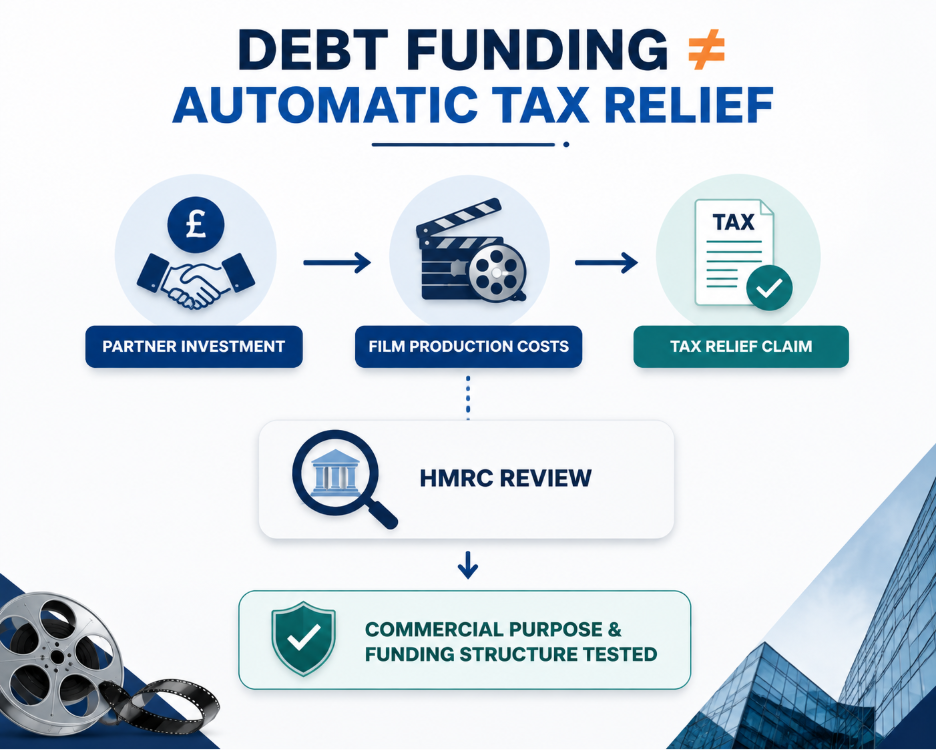
A recent First-tier Tribunal decision has highlighted the risks involved in using debt-funded structures to increase tax relief claims linked to film production costs. The ruling confirms that while genuine commercial activity may qualify for relief, financing arrangements designed mainly to maximise tax advantages may face challenges from HMRC.
The case involved several film partnerships that claimed tax relief on production expenditure. The Tribunal accepted that the partnerships were carrying on a genuine trade, but it found that not all expenditure qualified for relief. Costs funded through borrowing were treated differently from amounts funded through direct partner contributions.
The Key Issue Was Not the Film Investment, But How It Was Funded
The Tribunal examined whether the expenditure claimed by the partnerships met the requirements for tax relief. The investors had contributed funds directly, but additional funds were raised through loan arrangements and used for film production costs.
The decision made an important distinction:
- Equity-funded expenditure: Amounts funded directly by partners were accepted as qualifying expenditure.
- Debt-funded expenditure: Amounts financed through borrowing were not accepted where the Tribunal found that the arrangements were primarily intended to increase the available tax relief.
The ruling shows that the structure behind an investment can be just as important as the investment itself. A transaction linked to a genuine business activity does not automatically mean every related cost will receive tax relief.
Who Needs to Pay Attention?
The decision is particularly relevant for investors, businesses and advisers involved in structured tax arrangements, especially where financing methods are used alongside relief claims.
Film and creative industry businesses should review whether their funding arrangements have genuine commercial substance and whether expenditure can be clearly linked to qualifying activities.
It also serves as a reminder to advisers that tax relief claims must be supported by strong evidence of the commercial purpose behind transactions, rather than relying solely on the intended tax outcome.
HMRC Scrutiny Could Increase for Similar Arrangements
The ruling reinforces HMRC’s focus on arrangements where borrowing or other structures appear to be introduced mainly to enhance tax benefits.
If businesses ignore these risks, they could face:
- HMRC enquiries into previous claims.
- Adjustments to tax returns where relief is not supported.
- Potential repayment of tax benefits is incorrectly claimed.
- Additional costs involved in defending unsupported positions.
The decision does not remove access to legitimate tax reliefs. Instead, it highlights the importance of ensuring that claims are based on genuine commercial activity and correctly structured transactions.
What Businesses Should Consider Now
Businesses and investors should review existing and future arrangements carefully. Key areas to consider include:
- Whether funding structures have a clear commercial purpose.
- Whether claimed expenditure directly relates to the trading activity.
- Whether appropriate records and supporting documents are maintained.
- Whether professional advice has been obtained before making complex tax claims.
Early review can help identify potential weaknesses before HMRC raises questions.
Strengthening Confidence Through Expert Tax Support
Complex tax relief claims require careful analysis of both commercial arrangements and tax legislation. At Lanop, we help businesses and investors understand their tax obligations, review risk areas and ensure their positions are supported by appropriate documentation.
The latest Tribunal decision highlights a broader message for taxpayers: legitimate tax planning requires more than a tax benefit; it requires commercial substance, accurate reporting, and a clear understanding of HMRC’s expectations.
With experienced tax advisers supporting the process, businesses can make informed decisions and reduce the risk of unexpected challenges.