
Enter the German Market with a Clear Expansion Plan
Expanding into Germany brings new customers, but also new costs and responsibilities. Selling across borders, moving stock, hiring local teams, and managing payments can affect your UK operations. Lanop helps established businesses plan their German market entry, identify hidden costs, and manage cross-border risks before they affect growth.
- Sell in Germany with fewer customs and delivery surprises
- Identify tax exposure before hiring or signing contracts
- Plan German operations around your existing UK business
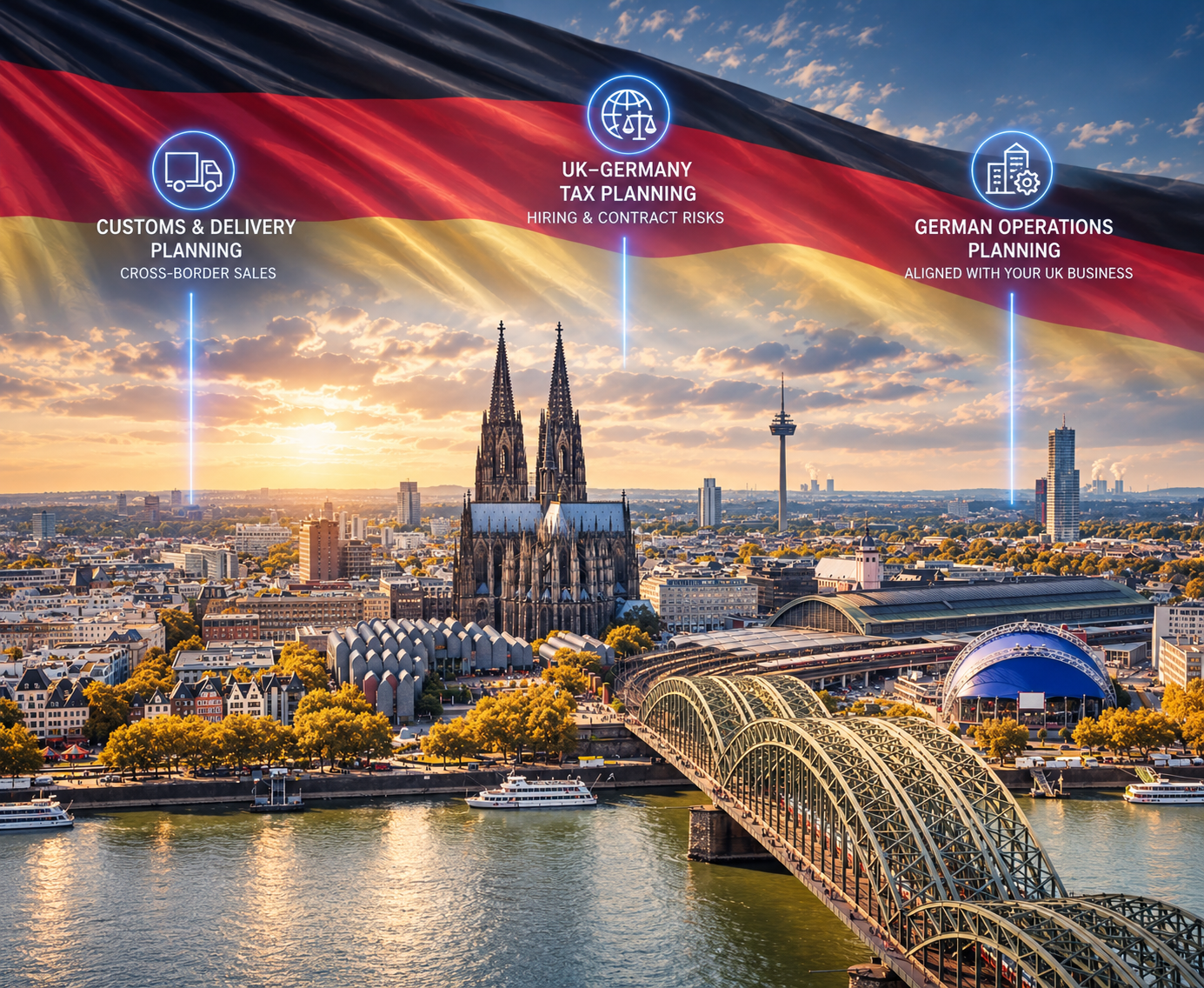

Why Expanding into Germany Requires More Than Market Entry
Protect Your UK Business While Entering Germany
Expanding abroad can put pressure on cash flow, staff, daily operations. New delivery costs, payment terms and local expenses may affect your UK business. A clear expansion plan helps you manage these demands before committing resources.
Build a Supply Chain That Works Across Borders
Moving goods between the UK and Germany involves customs checks, delivery terms and import costs. Poor planning can delay orders and reduce margins. We help assess how these requirements affect your pricing, stock movement and distribution plans.
Understand the Real Cost of Serving German Customers
More sales do not always mean higher profits. Shipping, returns, local staffing and currency movements can change your margins. Lanop helps you assess these costs so you can make informed decisions about German market entry.
How Lanop Helps Businesses in France
Explained in 60 Seconds.
5 Key Decisions Before Expanding Your Business into Germany
Expanding into Germany raises important questions about trade, tax, and operations. Making the right decisions early can prevent costly mistakes and protect your UK business.
Make Your Germany Expansion a Smarter Investment
Lanop helps established UK companies turn expansion plans into practical, cost-effective operations.
UK–Germany Trade: A Growing Opportunity for British Businesses
UK EXPORTS TO GERMANY
£62.9bn
Grow Your Business in an Established Export Market
- Reach German customers with your existing products or services.
- Explore demand across technology, consulting and other sectors.
- Assess market-entry costs before investing.
- Plan your expansion around realistic financial goals.
UK–GERMANY BILATERAL TRADE
£155.4bn
Build Stronger Cross-Border Business Operations
- Explore new trading and distribution opportunities.
- Plan payments and cash flow across both markets.
- Manage UK–Germany tax and reporting responsibilities.
- Keep your international growth aligned with your UK business.
Our Germany Market Entry & Expansion Advisory Services

Unsure how to enter Germany without disrupting your UK business? We assess your trading plans, operating costs, and financial risks to help you choose a practical expansion strategy.
Selling to Germany from the UK after Brexit brings new trade obligations. We help you assess German import VAT, EORI requirements, customs costs, and applicable OSS or IOSS arrangements.
Hiring employees or managing contracts in Germany may create local tax obligations, even without a registered company. We assess your activities to identify potential permanent establishment risks.
Operating across two countries can create complex tax responsibilities. We assess German corporate tax exposure, the UK–Germany Double Taxation Agreement, and available relief to help prevent unnecessary double taxation.
Payments between your UK parent and German operations need proper treatment. We help review transfer pricing requirements for management fees, shared services, and other group transactions.
Returning German profits to the UK may trigger withholding taxes. We help assess dividend payments, treaty relief, and tax-efficient options for moving profits between your businesses.
Funding German operations through your UK company requires clear financial arrangements. We help review intercompany loans, interest charges, and related tax obligations to support effective group funding.
Bringing goods into Germany, storing them, and getting them to customers all cost money. Before you commit to a new setup, we assess the financial implications and compliance obligations to help you plan effectively.
Your first German hire brings payroll, social security, and employment rules with it. We help you understand which requirements apply and coordinate with local specialists where needed.
Managing finances across two countries requires consistent reporting. We help coordinate financial records, intercompany balances, cash flow, and ongoing compliance to give you better visibility over your operations.
Which German Business Presence Fits Your Expansion Plans?
Research German customer demand, connect with potential partners, and assess business opportunities before expanding.
Manage your German representative activities through your existing UK company without forming a separate German company.
Focus on market research and business contacts. Regular commercial operations may require a different business structure.
Check whether your activities create German registration requirements or a taxable permanent establishment.
Suitable for UK companies testing the German market before committing to full commercial operations.
Conduct sales, manage contracts, and deliver services locally through your existing UK company.
Expand without forming a separate legal entity. Your UK company remains responsible for the branch's obligations.
Register an autonomous branch with the German Commercial Register and the local trade office. Additional permits may apply.
Assess German taxes on branch profits, reporting requirements, and available UK–Germany tax treaty relief.
Suitable for UK businesses planning ongoing commercial activities and a long-term presence in Germany.

How We Plan, Coordinate and Support Your German Expansion.
Phase 1 Includes:
- 1Reviewing your existing UK business and German market plans.
- 2Identifying customers, products, staffing, and trading activities.
- 3Assessing expected costs, investment needs, and financial risks.
- 4Understanding how Germany will fit into your wider business.
PURPOSE:
To build an expansion plan around your commercial goals and existing operations.
Phase 2 Includes:
- 1Weighing up direct trading, a branch, or a subsidiary.
- 2Reviewing German VAT, customs, and EORI requirements.
- 3Checking permanent establishment and double taxation risks.
- 4Identifying transfer pricing and intercompany funding needs.
PURPOSE:
To pick the entry route that suits your business and understand your obligations before committing funds.
Phase 3 Includes:
- 1Preparing banking information, including ownership and funding details.
- 2Working with local specialists on German tax, customs, and regulatory advice.
- 3Supporting payroll, employer registration, and any required licences.
- 4Setting up German accounting, group reporting, and ongoing tax compliance.
PURPOSE:
To help your German operations work alongside your UK business, with clear financial oversight and coordinated compliance.
When Is Your UK Business Ready to Expand into Germany?
Germany expansion is not just for companies starting from scratch. Lanop supports established businesses reaching important growth stages, where the next investment needs careful planning.

Best for: Companies with rising German orders but limited capacity to serve them.
We help evaluate whether demand justifies dedicated sales resources, increased stock, or a larger investment.
Best for: Businesses securing long-term supply agreements or major German clients.
We help assess contract profitability, payment schedules, and working capital needs before commitments are made.
Best for: Businesses generating German sales but earning less than expected.
We help examine landed costs, pricing gaps, and currency exposure to identify where margins are being lost.
Best for: Established companies looking to acquire or invest in an existing German business.
We can help assess financial records, purchase assumptions, and potential liabilities, with specialist due diligence where required.
Best for: Companies already active in Germany but lacking clear financial results.
We help review country-level profitability, shared expenses, and cash performance so management can make better decisions.
Best for: UK businesses planning larger contracts, new locations, or further European investment.
We help test expansion forecasts, funding capacity, and expected returns before further resources are committed.
FAQs: Expanding Your UK Business into Germany
1. Can my UK company sell in Germany without opening a local business?
Yes. You don’t need a German company to sell goods or services to customers there. What changes is your paperwork. VAT, customs, and tax duties all depend on how you trade, so it’s worth checking before your first sale. Lanop can help you decide if selling direct suits your business.
2. Can hiring a German sales representative create tax obligations?
It can. Say your rep in Germany regularly signs contracts for you or does most of the work to close them. Tax authorities may then treat that as a permanent establishment. The rep’s authority, their day-to-day activities, and the relevant tax treaty all play a part.
3. Can I use a liaison office to explore the German market?
You can, though Germany doesn’t see a liaison office as a legal form of its own. It’s useful for testing demand and meeting potential customers. How it gets registered and taxed comes down to what the office does.
4. Do I need a German business licence to expand my UK operations?
Not always. Your industry and your plans decide it. Some sectors need permits, professional recognition, or other approvals before you can operate. At Lanop, we can show you where you’ll need local regulatory advice.
5. How can I tell if expanding into Germany will be profitable?
Begin with the costs. List your delivery costs, staffing, taxes, and the cash you’ll need to keep things running. Then compare that total with a revenue forecast you believe. Lanop can go through the financial impact with you before you commit.
Do I need German VAT registration to sell from the UK?
Not always. It depends on your sales model, your customers, where your stock sits, and who handles the imports. Some sales may fall under special VAT schemes. Lanop can help you check which rules apply to your business.
Can UK businesses use the EU One-Stop Shop (OSS) scheme?
Yes, for qualifying sales. A UK business can register for the non-Union OSS to report VAT on eligible goods sold to EU consumers. But OSS won’t cover every case. You may still need a German VAT registration.
When does the Import One-Stop Shop (IOSS) apply?
IOSS can apply to goods imported into the EU in consignments worth €150 or less. It makes VAT collection simpler on qualifying consumer sales. Whether you’re eligible, and how you register, depends on your situation.
Are UK exports to Germany automatically free from customs duties?
No. Lower tariffs under the UK-EU Trade and Cooperation Agreement only apply if your goods meet the rules of origin. Shipping from Britain doesn’t make a product qualify on its own.
Does storing products in Germany change my VAT responsibilities?
It can. Holding stock in Germany may trigger local VAT registration and reporting. Before you open a warehouse, review your import VAT, stock transfers, and any onward sales within the EU.
Can my UK business pay tax in Germany without a German subsidiary?
Yes. Some activities can create a permanent establishment in Germany, even if you never set up a local company. Your tax duties depend on German law and the tax treaty rules that apply. An early review helps you spot any exposure before it grows.
How does the UK-Germany Double Taxation Agreement protect my business?
The treaty sets out which country can tax certain income. It also offers ways to claim relief, so you don’t pay tax twice on the same profit. It won’t remove every tax duty, though. What you get depends on your activities, your income, and whether you qualify.
How can I transfer profits from Germany to my UK parent company?
Profits may be transferred through dividends or other genuine commercial payments, depending on the business structure. German withholding tax, treaty relief and UK tax treatment must be assessed before making payments.
Do transfer pricing rules apply to transactions between my UK and German companies?
They may. Related-party transactions generally need arm’s-length pricing, subject to applicable rules and exemptions. This can include management fees, services, and intercompany loans. Suitable records help support the pricing used.
Can Lanop help with German bank requirements and ongoing financial operations?
Lanop can help prepare ownership, source-of-funds and transaction information for banking reviews. We can also support cross-border accounting and financial coordination. Bank account approval remains at the bank’s discretion.