
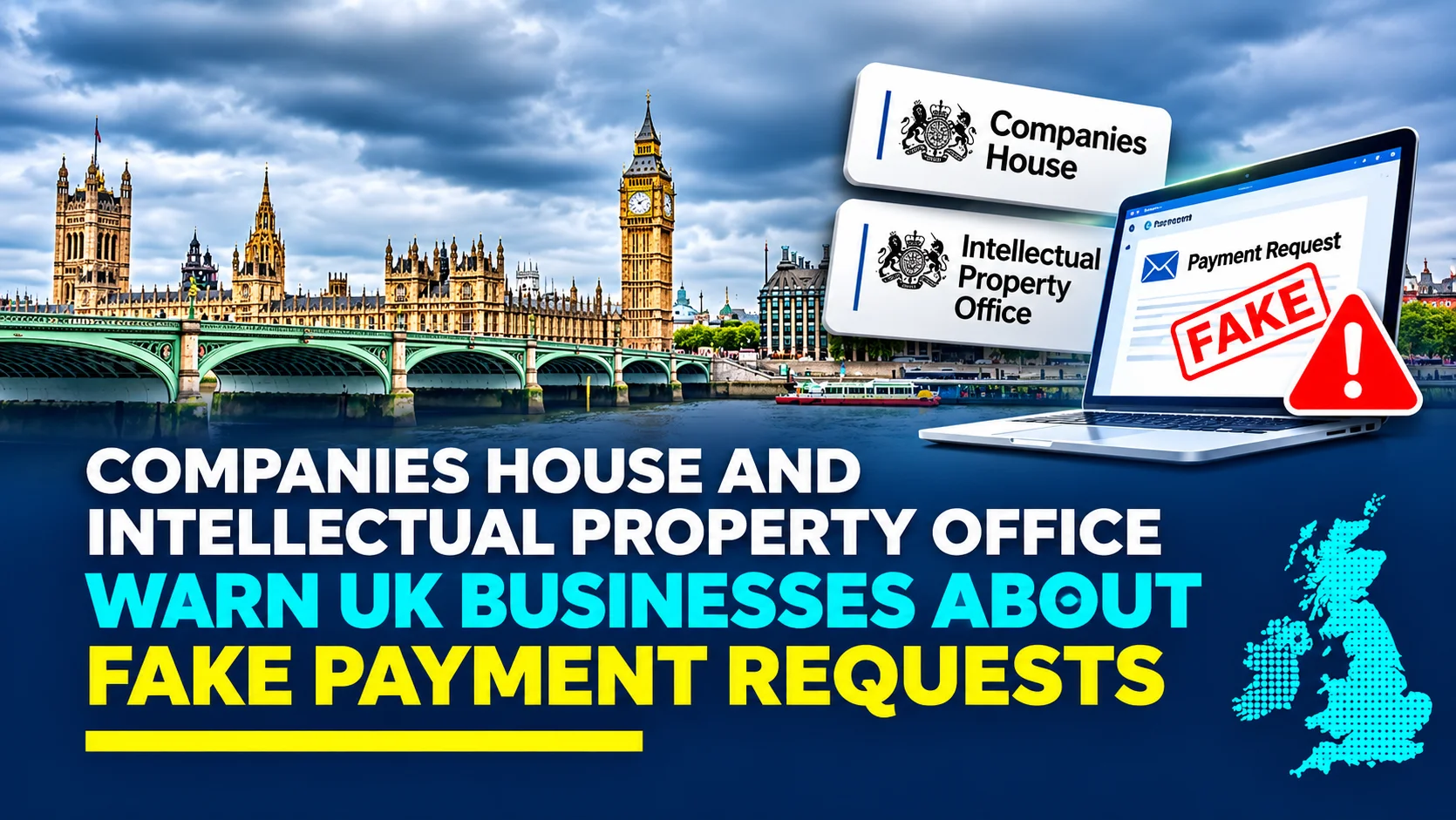
Got an invoice you weren’t expecting? Check it before you pay a penny. Companies House and the Intellectual Property Office (IPO) put out a joint warning on 21 May 2026 about misleading payment requests. The senders have no connection to the government, but their letters and emails often look like they do.
The warning still applies. Businesses can easily end up paying for services they never needed, because these requests are built to look official.
Both agencies give the same advice. Check the demand first, then decide whether to share any details or send money.
What Are Companies House and IPO Warning Businesses About?
The warning is about unsolicited invoices that seem to relate to company or intellectual property services. Some companies charge steep fees for things you can get free, or far cheaper, through the official route. They might post the request to your registered office or send it by email.
Not every third-party service is a scam. But before you pay, ask yourself three things. Is the service real? Do I need it? Is the fee fair?
How Are UK Businesses Being Targeted?
Companies House has seen several kinds of suspicious requests. Some letters ask you to pay for company registration, account access, or verification.
One example asks for £48 for “Enhanced Web Filing Access”. Companies House doesn’t charge that fee. Other messages include QR codes, payment links, or requests for your company details.
The IPO has seen misleading invoices too, linked to trademarks, patents, and registered designs. They may offer renewal monitoring, publication, or protection through an unofficial register.
These services can cost much more than the official option. Paying one doesn’t mean you’ve done a required government filing.
How Can Businesses Identify Fake Payment Requests?
Both agencies suggest you look closely at any invoice that surprises you.
Watch for these signs:
- The email doesn’t come from an official government address.
- You’ve never heard of the organisation asking for payment.
- The letter copies government logos or official wording.
- A QR code or link sends you to a website you don’t know.
- The sender pushes you to pay quickly or share sensitive company details.
- The small print says the sender has no government connection.
Real Companies House emails come from addresses ending in .Gov.uk. Check the website address too before you click a link or type in payment details.
What Happens If Businesses Ignore the Warning?
Pay a fake invoice, and you could lose money. You might buy a service you never asked for or pay far more than the official price. The IPO says it’s hard to get your money back from these providers, especially when they operate from abroad.
You could also hand private company information to strangers. For a small business, checking every payment request is part of keeping a tight grip on your money, and sound bookkeeping makes it much easier to spot an invoice that doesn’t belong.
What Should UK Businesses Do Now?
Check any unexpected invoice before you pay it. Look up the service on the official government website. Don’t use the links in the message. Report suspicious Companies House emails to phishing@companieshouse.gov.uk.
Send misleading intellectual property invoices to misleadinginvoices@ipo.gov.uk.
If you think it’s fraud, you can also report it through Report Fraud or Trading Standards.
How Can Lanop Help Your Business?
Good company records and careful checks on what you pay can save you from costs you didn’t need to take on.
At Lanop Business & Tax Advisors, we help UK businesses with company compliance, accounting, and financial management. If you run a limited company, we can also help you stay on top of genuine Companies House filings so you can tell a real requirement from a fake one.
Our team can explain your filing duties, review your financial records, and help you stay in control of business payments and cash flow. Contact Lanop for practical advice on your company’s financial and compliance responsibilities.