
HMRC will carry out more than 30,000 high street-related checks in 2026 and 27. The government reiterated this target in the Hope on the High Street strategy, published on 28 October and revised on 2 November 2026.
The objective is to prevent tax fraud and illegal trading. The activities might consist of visits, warning letters, tax investigations, and criminal investigations.
Which High Street Businesses Face HMRC Checks?
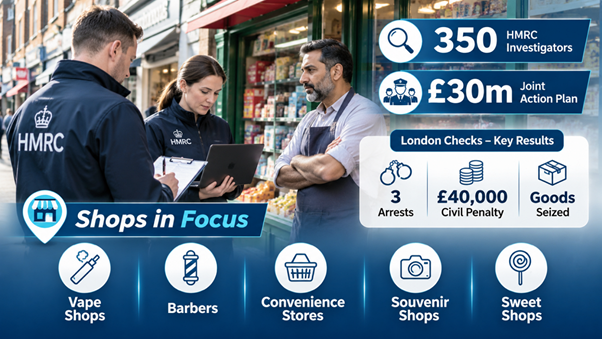
The campaign concentrates on those shops associated with criminal activity. They include vape shops, barbers, convenience shops, souvenir shops, and sweet shops.
HMRC recruits 350 criminal investigators to deal with tax avoidance from small firms. Half of the investigators will be busy with the crimes on the high streets. The separate £30 million initiative by the Home Office is aimed at cooperation between the police and other organizations.
At the end of June, HMRC conducted a joint operation at six souvenir shops in London. They confiscated till data for the tax check. As a result, there were three arrests, a £40,000 fine for employing people illegally, and goods were confiscated by Trading Standards.
Why Is HMRC Stepping Up Its Checks?
The UK tax gap for 2024–25 was £59.2 billion, or 6.4% of all tax due. Small firms made up 62% of that gap.
Across all types of taxpayers, 35% of the gap came from a lack of care, 16% from errors and 12% from evasion. This shows why sound records matter, even for honest firms.
HMRC is also targeting till fraud. This is when sales data is changed or hidden to pay less tax.
What Are the New Tax Regulations for Retailers to Know?
New rules on digital tills have been approved by the government as of 28 October 2026. Detailed information is expected to follow in the summer of 2027. These new till regulations have not been enacted yet.
As of 6 April 2027, Making Tax Digital for Income Tax will be required for all eligible sole traders and landlords if their income from self-employment and property was more than £30,000 in the year 2025-2026.
Starting from April 2028, companies that process card transactions for retail businesses are required to provide HMRC with data every month.
There are plans for a new correction duty to be imposed on tax returns with errors, effective from 1 April 2028, provided that the legislation passes.
What Happens If a Retailer Does Not Take Note of the HMRC Review?
In case there is tax owing, HMRC might ask for that tax together with the interest and penalties. Not responding to legal requests for information may attract penalties from HMRC.
The retailer must compare cash, card payments, banking, and till records. This must include VAT rate comparisons, wages, and prior tax returns. Retain evidence of refunds or cancellations. In case of any contact from HMRC, validate its authenticity.
How Can LANOP Help With HMRC High Street Checks?
LANOP Business & Tax Advisors will assist shops and smaller businesses in maintaining proper records. We’ll examine your cash and card sales. We’ll compare till figures with bank statements and detect mistakes in your VAT return.
Also, we’ll look at your payroll records and notify you whether Making Tax Digital is applicable to you. We’ll help you correct an old VAT return if necessary.
In case of an HMRC check, we’ll collect your documents and highlight any missing ones. Then we’ll provide a written response. With accurate documents and professional advice, you’ll be ready for an HMRC check.