
Business owners and investors should know a big share tax change is coming. Securities Transfer Tax is planned to replace Stamp Duty and SDRT in late 2027.
Right now this is only a plan, and it is not yet law. On 28 October 2026, the government confirmed the timetable for this tax change.
On 29 October, HMRC announced a key change to the £1,000 transfer exemption. Parliament held the first reading of the Finance Bill 2026–27 on 3 November. The text of the Bill was then made public on 4 November.
What Will Change Under the New Securities Transfer Tax?
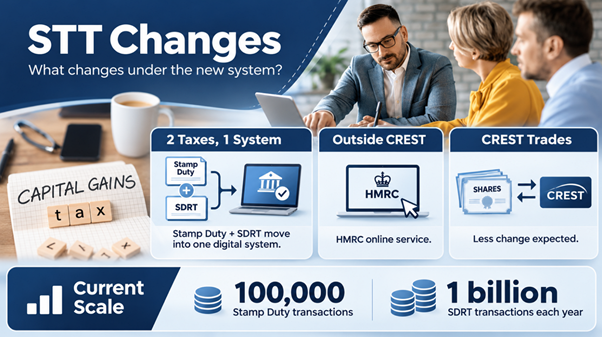
STT puts share transfer tax into one digital system run by HMRC. Buyers and sellers outside CREST will use a new HMRC online service.
CREST is the UK electronic share settlement system that many trades already use. For those trades, the shift to STT should feel smaller than for others.
Stamp Duty vs Securities Transfer Tax: Key Changes
| Key point | Current rules | Proposed STT rules |
| Tax system | Stamp Duty and SDRT | Single STT |
| Filing | Paper steps for certain transfers | Digital returns |
| Main rate | 0.5% | 0.5% |
| Higher rate | 1.5% on certain transfers | 1.5% |
| Small transfers | £1,000 relief in qualifying cases | Relief kept for qualifying non-electronic deals |
| Employee share purchases | Duties vary by transaction | Employer pays in certain cases |
The 1.5% rate covers some transfers linked to clearance services or depositary receipt issuers.
Why Did HMRC Keep the £1,000 Share Transfer Exemption?
The draft from 13 July 2026 proposed ending the relief for small transfers. Worries about extra work for employee share plans soon changed HMRC’s view on this.
HMRC confirmed on 29 October that qualifying non-electronic transfers up to £1,000 stay exempt. Splitting linked deals to claim the relief on a larger sale is not allowed.
Under the Bill employers must report and pay STT on some work share purchases. This payment alone will not create an extra Income Tax bill for staff.
What Are the New STT Filing Deadlines and Penalties?
Electronic deals will generally need a return and full payment within 14 days. Non-electronic deals will generally get a longer limit of 30 days to file.
Some company share transfers need an HMRC reference before the new owner is recorded. The reference comes after the tax is paid or an auto-tax-due statement is issued.
A company officer who ignores this rule faces a possible £300 penalty. Late payment of tax may also lead to interest being added to the bill.
If the final price is unclear, a fair estimate is allowed under the rules. Limited cases also allow later changes and delays in paying the tax.
How Should UK Companies Prepare for STT in Late 2027?
A Treasury order will fix the exact start date for STT in due course. Certain older deals under the current taxes will get a four-year transition.
Share buyers and private companies should check all planned share deals soon. Employers, brokers and registrars should keep accurate records of every transfer too. They should also follow HMRC news on digital filing as it develops.
Today’s Stamp Duty and SDRT rules stay in force until STT begins.
How Can LANOP Help Companies Prepare for Securities Transfer Tax?
LANOP Business and Tax Advisors helps business owners review share records and likely tax costs. We also plan with you for the new filing duties that STT brings.
Employers can ask us how STT may change their employee share plans. Our support for firms covers tax planning, bookkeeping, and clear financial records.
Starting early helps firms cut errors and avoid missed dates during the switch. Contact LANOP today to discuss your share transfer tax needs in more detail.