
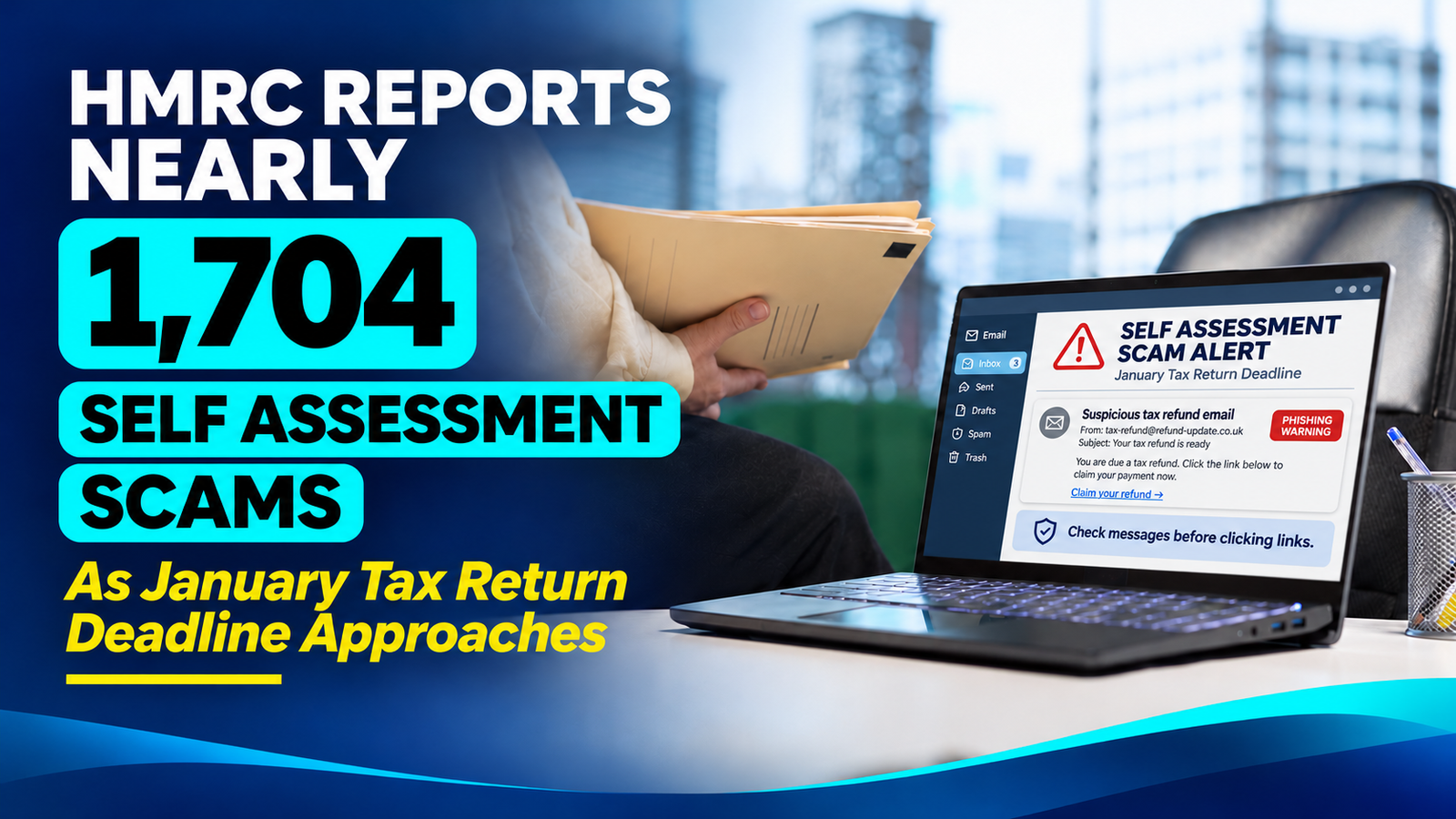
HM Revenue & Customs (HMRC) has warned UK taxpayers about fake tax messages ahead of the January deadline. On 17 November 2026, HMRC reported 1,704 Self Assessment scam reports in the 12 months to 31 October 2026. Online returns for 2025–26 are due by 31 January 2027.
Why Is HMRC Warning Self Assessment Taxpayers Now?
The warning affects Self Assessment filers, such as sole traders and landlords. Fraudsters target people who expect tax news. Fake refund offers can put bank and ID details at risk.
Across all tax areas, HMRC logged 95,340 suspected scam reports in the same period. Of these, 48,119 involved people posing as HMRC. The figures show reports, not confirmed victims.
What Happened in the August 2026 Fake Refund Scam?
In August 2026, one scam led to about 900 reports. The emails had a harmful attachment that led to a fake GOV.UK page. It said a refund was due and asked for ID and payment details. HMRC warned that fraudsters could use the data to access bank accounts or commit more fraud.
HMRC also found 1,024 cases of misuse of its brand. It removed 8,713 fake sites and shut down 221 scam-linked phone numbers in the year to 31 October 2026.
Why Are Genuine HMRC Letters Arriving Now?
Real HMRC letters are also due. From 9 November to 31 December 2026, HMRC may send Making Tax Digital for Income Tax letters to affected taxpayers. They explain how to view a Self Assessment bill. They do not ask for personal or bank details.
HMRC may also write about tax refund claims. Some review letters give 30 days to respond. Check the official list of real HMRC letters on GOV.UK before you act.
What Are the 30 December and 31 January Tax Deadlines?
The paper return deadline of 31 October 2026 has passed. Eligible people who want to pay tax through their PAYE code must file online by 30 December 2026. They must owe less than £3,000 and meet other HMRC rules.
For most online filers, the deadline is 11:59pm on 31 January 2027. Tax due and the first payment on account, if needed, fall due then too. Late filing or payment can bring penalties.
How Can You Spot and Report a Fake HMRC Message?
HMRC will not email, text or call to offer a refund. It will not seek personal or bank details by email or text. It will not leave voice messages that threaten arrest.
Use GOV.UK or the free HMRC app, not links in odd messages. Send scam emails to phishing@hmrc.gov.uk and texts to 60599. Send fake HMRC social account details to branddefence@hmrc.gov.uk. Report scam calls on GOV.UK. A quick check can help stop fraud.
How Can LANOP Help with Self Assessment and HMRC Notices?
LANOP Business & Tax Advisors supports sole traders, landlords and individuals who need to file a Self Assessment return. Our team can review your income, check your records, work out tax due and help you file the right return on time.
We can also explain the 30 December and 31 January dates, so you know which one applies to you. If you get a letter that seems to be from HMRC, we can help you check what it is about and point you to the right GOV.UK page or HMRC team. This can help you avoid errors, missed dates and needless stress while you keep control of your tax affairs.