

HMRC has introduced a new process for UK companies that failed to deduct withholding tax from interest payments made to overseas lenders. The process came into effect on 2 November 2026.
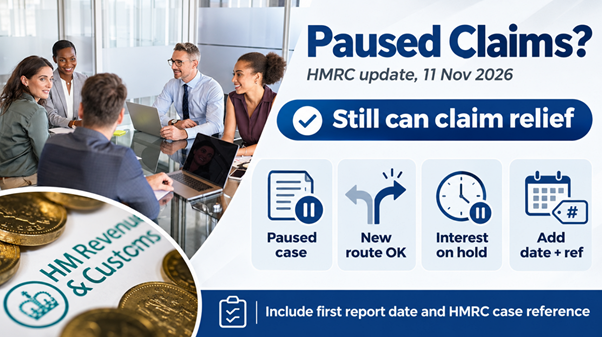
On 11 November 2026, HMRC also clarified how companies with paused cases can use the new claim process. They can apply for tax relief within the required time limit without affecting any special terms HMRC may offer later.
Why Has HMRC Changed Its Withholding Tax Process?
UK companies generally need to deduct 20% withholding tax from yearly interest payments made to overseas lenders. However, a tax treaty may allow a lower rate or remove the tax altogether. In most cases, the company must obtain HMRC approval before applying the reduced rate.
Previously, HMRC allowed some companies to deal with missed deductions by paying late payment interest. This approach has now ended for errors reported from 2 November 2026. The change also covers interest payments made in earlier years.
Companies must still report any tax they failed to deduct. They may also need to use the new claim process to request relief.
Can Companies With Paused HMRC Cases Still Claim Relief?
Yes. HMRC has confirmed this in its guidance published on 11 November 2026. Companies with cases already on hold can use the new claim route, provided they meet the relevant deadline. Making a claim will not affect their position if HMRC later offers special terms for settling these cases.
HMRC will review the claims but will not charge interest at this stage. It is still considering how to deal with the paused cases.
Companies should include the date they first reported the issue and their HMRC case reference. This will help HMRC identify the earlier report and link it to the new claim.
What Information and Documents Does HMRC Require?
Companies need to provide enough information for HMRC to check the loan, interest payments, and treaty conditions. The claim should include:
- Details of the loan and interest payments.
- The relevant UK tax treaty.
- Evidence of the overseas lender’s tax residence.
- Proof that the lender was entitled to receive the interest.
- A signature from an authorised company officer.
Companies must complete a separate form for each loan and lender. However, one form can include several interest payments and tax years linked to the same loan.
The completed form should be sent to HMRC by email or post. Companies should not submit it with their Corporation Tax return.
What Is the Deadline for Making a Four-Year Claim?
In most cases, companies have four years from the end of the tax year in which the tax arose to submit a claim.
For tax arising in 2022–23, the usual deadline is 5 April 2027. Some older cases that HMRC has placed on hold may follow different rules, so companies should check their position before relying on the standard deadline.
Missing the deadline or failing to report unpaid withholding tax can create further problems. HMRC may charge the outstanding tax, late payment interest, and penalties.
Even if a company receives tax relief, it may still have to pay interest. HMRC can also review an approved claim later. Incorrect claims or errors in CT61 returns may result in penalties.
The government also plans to increase the standard withholding tax rate from 20% to 24% on 6 April 2027. This is a separate measure announced in Budget 2026.
How Can LANOP Help With Missed Overseas Interest Tax?
Missing withholding tax on overseas interest payments can leave a company with an unexpected tax liability. It may also lead to interest charges, penalties and further checks from HMRC.
LANOP Business & Tax Advisors can help UK companies review past interest payments and understand whether tax treaty relief is available. Our team can examine loan agreements, payment records and the relevant treaty conditions.
We can also help collect the required evidence from overseas lenders and prepare claims using the correct details. If HMRC has already placed a case on hold, we can review the earlier report, check its current status and identify the deadline for making a claim.
Alongside dealing with past errors, we can review how your company handles future overseas interest payments. This includes checking whether HMRC approval is needed before applying a reduced withholding tax rate.
Speak to LANOP to review your company’s withholding tax position and understand the steps you may need to take.