
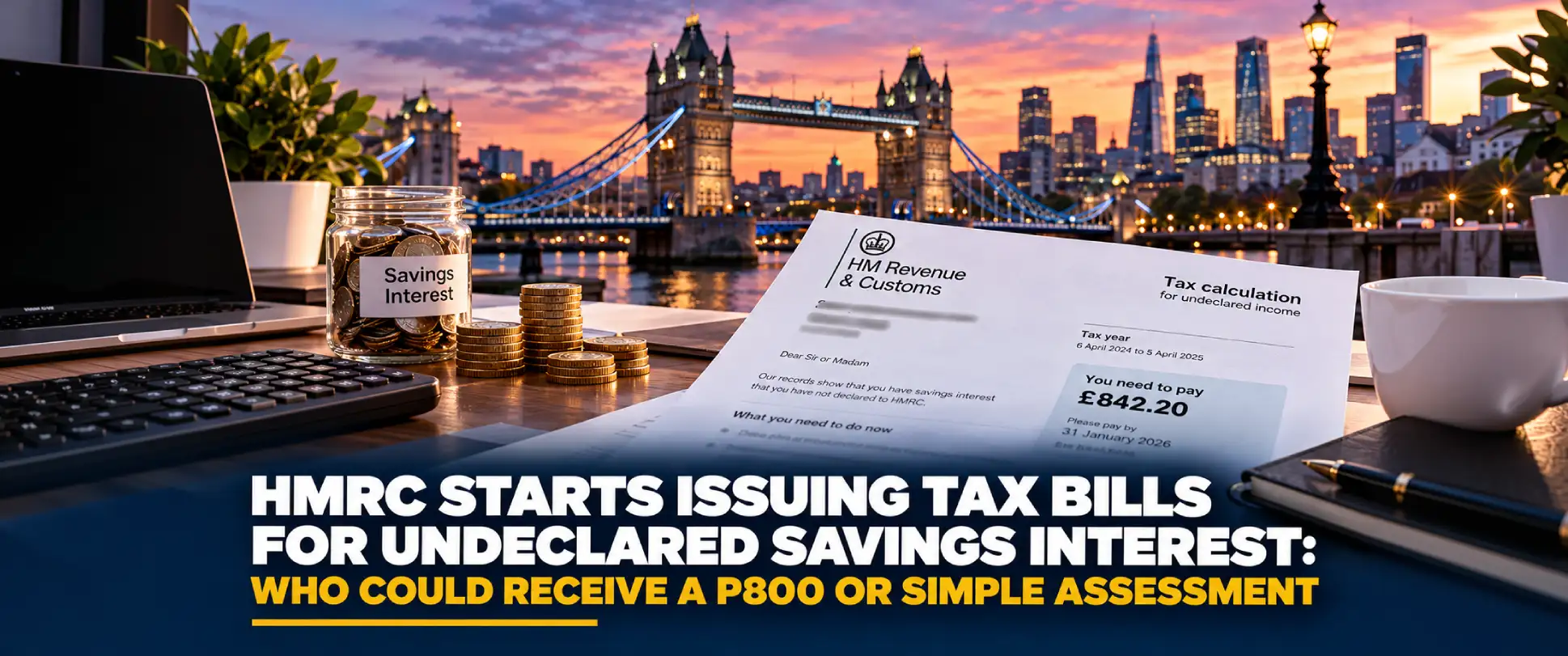
HM Revenue and Customs (HMRC) has started sending tax bills to people who owe tax on their savings interest. The notices cover interest earned between 6 April 2025 and 5 April 2026.
In its 15 October 2026 update, HMRC confirmed that affected taxpayers may get a P800 tax calculation or a Simple Assessment (PA302) notice.
Every year, banks and building societies send interest details to HMRC. HMRC uses that data to check whether anyone owes unpaid tax.
If you have several savings accounts, pay close attention. Even people who pay tax through their wages or pension could get a notice.
Who Could Receive an HMRC Savings Interest Tax Bill?
Whether you owe tax depends on your income and how much interest you earn. The Personal Savings Allowance decides how much interest you can earn before you pay tax.
The current limits are:
- Basic-rate taxpayers: £1,000 in tax-free savings interest.
- Higher-rate taxpayers: £500 in tax-free savings interest.
- Additional-rate taxpayers: No Personal Savings Allowance.
People on low incomes may also qualify for the starting rate for savings.
HMRC adds up the interest from all your savings accounts. If the total goes above your tax-free allowances, you may owe tax.
P800 vs Simple Assessment: What Is the Difference?
HMRC uses two types of notices to collect unpaid tax on savings interest.
P800 Tax Calculation
A P800 shows whether you paid the right amount of Income Tax. If you pay tax through PAYE, HMRC can usually recover what you owe by changing your tax code. That means HMRC takes the money from your future wages or pension payments.
Simple Assessment (PA302)
A Simple Assessment is a direct tax bill. HMRC sends one when it can’t collect the unpaid tax through PAYE, or when you owe more than £3,000.
The notice shows how HMRC worked out the figure, how much you need to pay, and when to pay it. If you have more than £10,000 in savings and investment income, you must complete a Self-Assessment tax return.
HMRC Confirms Important Payment Deadlines
If you get a Simple Assessment, check the date on your letter first.
For the 2025/26 tax year, HMRC has confirmed:
- Before 31 October 2026: Payment is due by 31 January 2027.
- On or after 31 October 2026: Payment is due within three months of the letter’s date.
Ignoring a valid notice won’t make the debt go away. If you miss the deadline, HMRC may take further action to recover the money. If you think your assessment is wrong, contact HMRC within 60 days of the date on the notice.
What If HMRC Sends a Second Tax Bill?
HMRC has warned that some people may get a second Simple Assessment. This can happen when HMRC receives more bank interest information after the first notice. The new notice shows the total tax you owe, including anything you’ve already paid. Take off your earlier payments before you pay the remaining balance.
What Should Taxpayers Do Now?
If you receive a P800 or PA302, follow these steps:
- Compare the interest figures with your bank statements.
- Check that HMRC included all your savings accounts.
- Review any changes to your PAYE tax code.
- Contact HMRC within 60 days if the assessment is wrong.
- Pay any confirmed tax before the deadline.
You should also check whether HMRC’s estimate of your current savings interest is right, and consider how your savings income fits into your wider tax planning. If HMRC’s figures don’t match your records and the issue escalates, you may also want advice on HMRC compliance checks.
How Can Lanop Help?
An unexpected tax bill can feel stressful, especially when you hold several savings accounts. Lanop’s tax advisors can help you check HMRC’s calculations, spot errors, and understand what you need to pay. If you’ve received a P800 or Simple Assessment notice, contact Lanop today for professional guidance on your next steps.