

HMRC has launched a new withholding tax claim process from 2 November 2026. It covers UK firms that paid interest to lenders abroad but failed to deduct the tax due. HMRC has also ended an old concession that let some firms settle these errors by paying late payment interest alone. The new route may cut unpaid tax or allow for repayment, but strict rules apply.
What Has Changed in HMRC’s Withholding Tax Rules?
UK firms must often deduct 20% tax from yearly interest paid to overseas lenders. A tax treaty may lower that rate or remove the UK charge. Unless an exemption applies, firms usually need HMRC approval before using a lower rate.
The old concession ended for disclosures received from 2 November 2026, even if the error happened years ago. Eligible payers can now make a formal treaty relief claim.
HMRC Withholding Tax 2026: Key Facts
| Key Point | Current HMRC Rule |
| Start date | 2 November 2026 |
| Usual tax rate | 20% on covered yearly interest |
| Old concession | Ended for new disclosures |
| Who claims? | The payer that failed to deduct tax |
| Claim limit | 4 years after the relevant tax year ends |
| Example deadline | 2023/24 claims due by 5 April 2028 |
| Submission | HMRC form, by email or post |
| Possible result | Eligible unpaid tax reduced or tax paid repaid |
Who Can Claim, and What About Overseas Investors?
The new route applies when a UK payer took off too little tax, or none. The overseas lender must be resident in a country with a relevant UK tax treaty, have the right to receive the interest, and meet the treaty rules.
If tax was already deducted from the lender’s payment, the lender must use the usual repayment route. This is not a refund scheme for every overseas investor.
What Proof Does HMRC Need?
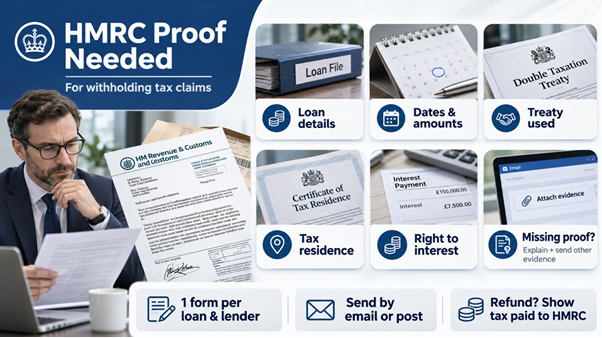
Firms must give loan details, interest dates and amounts, and the treaty used. They also need proof of the lender’s tax residence and right to the interest. If a certificate of residence or other proof is missing, the firm must explain why and send other evidence.
Use one form per loan and lender. A form can cover many payments, even across tax years. Firms can be sent by email or post. For a refund, the payer must also prove it paid the tax to HMRC.
What Happens to Paused Cases and Late Claims?
Some past cases were put on hold during HMRC’s review. Firms can claim for these cases if still within the deadline. HMRC is still deciding how to deal with some older cases. Those waiting on a paused case do not need to contact HMRC just for an update.
Can HMRC Still Charge Interest or Penalties?
Yes. Even if a claim succeeds, late payment of interest may still be due. HMRC can check claims after approval, recover excess relief and charge penalties for wrong claims or returns. Ignoring errors may leave firms owing to tax and interest.
Are Further Withholding Tax Changes Planned?
HMRC sought views from 13 July to 7 September 2026 on simpler treaty relief, including self-assessment. HM Treasury shared further tax reform options on 28 October 2026. These are proposals, not rules in force.
How Can Lanop Help with HMRC Withholding Tax Claims?
With HMRC’s new withholding tax claim process now in effect, UK businesses and overseas lenders must review past interest payments, check treaty relief eligibility and meet claim deadlines.
Lanop Business & Tax Advisors can help businesses review tax deductions, prepare supporting documents and submit eligible HMRC claims.
Our tax advisers also provide guidance on double taxation agreements and future cross-border payments to help businesses stay compliant and avoid costly errors. Contact LANOP today for expert advice.