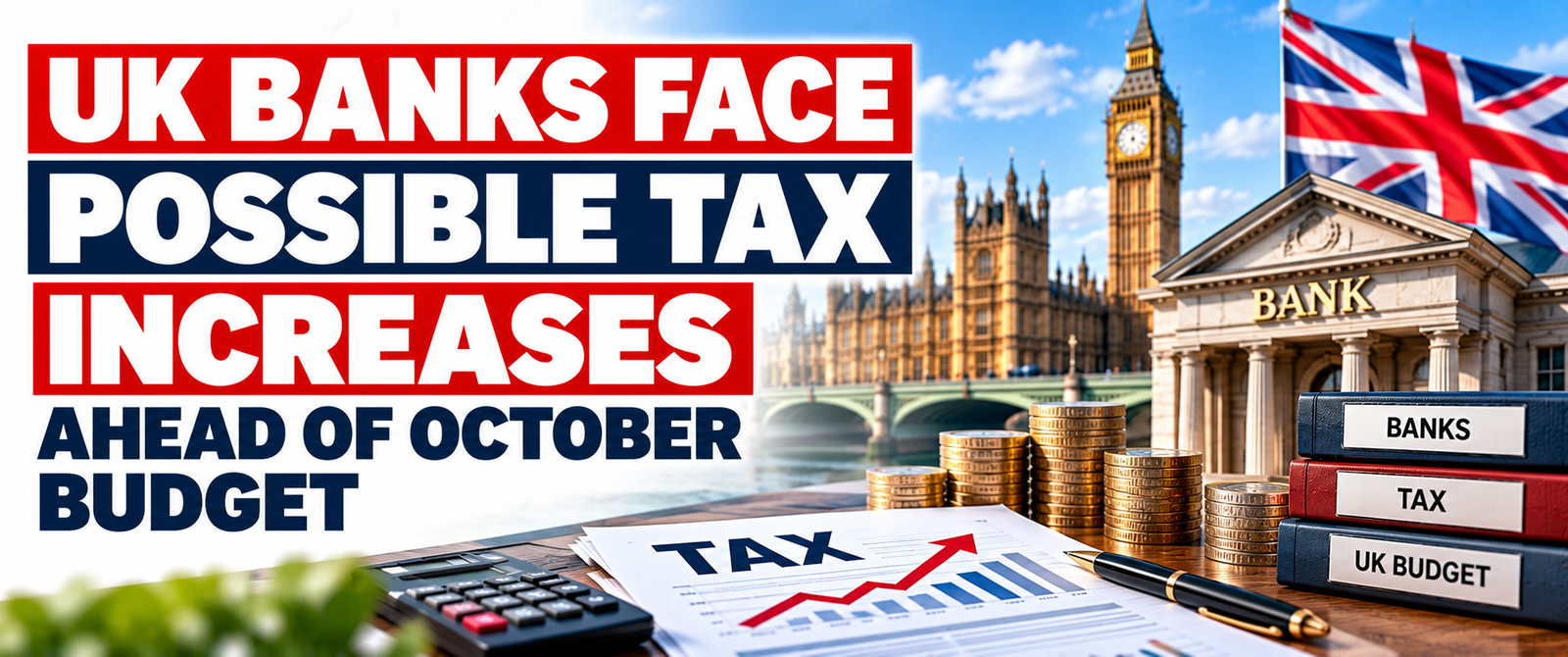
UK banks could be hit with higher taxes in the Autumn Budget on 28 October 2026. Chancellor John Healey is looking for ways to raise money while sticking to the government’s spending targets.
Healey spoke on Thursday at the International Monetary Fund (IMF) meetings in Bangkok. He didn’t rule out higher taxes on banks, and he called them important to the UK economy. But he gave no detail on what might change.
Trade unions want banks to pay more tax on their profits. Banking groups say that could hurt lending and investment.
Is the Chancellor Considering Higher Bank Taxes?
He hasn’t said no. Reuters reports that Healey described banks as a vital part of Britain’s economy and its future growth. He wouldn’t say whether the government plans to raise the bank surcharge or bring in other measures.
The pressure on him is clear. He has to manage public spending, bring down borrowing and meet fiscal targets. Taxing banks more could raise extra money without taxing households directly.
Nothing has been announced yet. The government’s position should become clearer when the Budget arrives on 28 October.
Why Are Higher Bank Taxes on the Table?
Banks currently pay corporation tax at the standard 25% rate. On top of that, they pay a 3% surcharge on qualifying profits above £100 million. The surcharge used to be 8%. It dropped to 3% in April 2023, when the main corporation tax rate went up.
The Trades Union Congress (TUC) thinks banks should pay more, because they made large profits while interest rates were high. Analysis reported on 9 October says the TUC puts the cost of that earlier cut at around £6 billion in lost revenue for the Treasury.
The union wants the cut reversed, or the surcharge raised even higher. It would like the extra money to help households with energy costs.
Keep in mind that these figures are estimates, and the proposed increases aren’t government policy.
Why Do Banks Push Back?
UK Finance says British banks already pay a lot of tax compared with lenders in other big financial services centres. It wants the government to keep the rules steady to protect investment, jobs and the UK’s standing as a financial centre.
Banks also warn that higher taxes could mean less money to lend, or higher charges for customers. So, the government has to weigh the need for more revenue against the risk to growth.
What Could This Mean for UK Businesses?
Any change would hit banks first, not ordinary businesses. Still, small and medium-sized enterprises (SMEs) could feel it indirectly. If lenders raise fees or tighten loan terms to cover higher costs, borrowing could get more expensive or harder to arrange.
If your business relies on bank finance, whether for day-to-day running or for growth, it may be worth looking at your borrowing plans. Nothing has been confirmed on business loan rates or lending rules, though.
What Should Businesses Do Before the Budget?
Wait for the 28 October announcement before you make big financial decisions. Acting on guesswork rarely pays off.
You can still get ready in the meantime. Look over your current loan terms, your cash flow forecasts, supported by accurate bookkeeping, and the funding you may need later. That way you’ll spot weak points early. And if the Budget does confirm changes, you won’t be caught out by higher finance costs or new lending terms.
How Can Lanop Help?
Lanop Business & Tax Advisors helps UK businesses with tax duties, cash flow and planning for financial change. With sound accounting and tax planning advice, you can check where you stand and get ready for whatever the Budget confirms. For now, higher bank taxes are a possibility. They aren’t announced policy.
Contact our team today to book a free consultation, discuss your tax position, review your financial plans and prepare for potential changes following the Autumn Budget.