
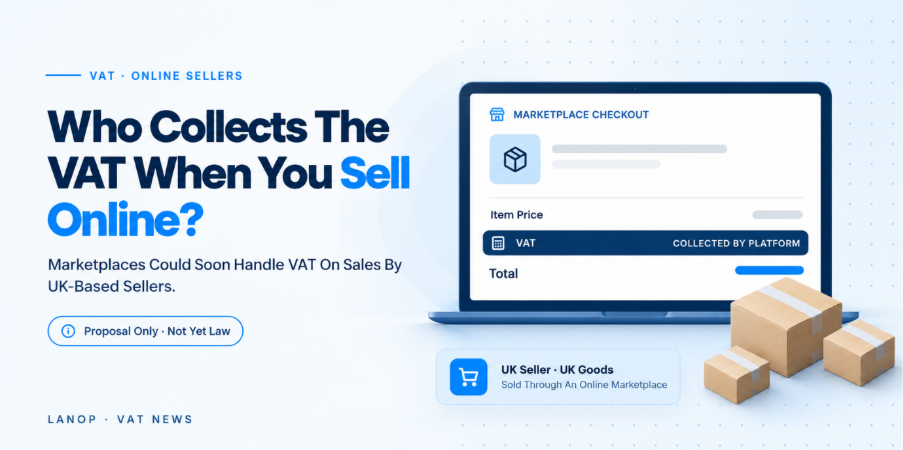
Online marketplaces could soon have to collect VAT on far more of the sales made through their sites.
The government is thinking about widening rules that already apply to some overseas sellers. Under the plan, marketplaces would also handle the VAT on sales by UK-based businesses, where the goods are in the UK at the time of sale.
Reports suggest the change may be announced in the Budget on 28 October 2026. But the Treasury hasn’t confirmed the final policy yet. So, for now, it’s still just a plan, not a change in the law.
Why the Government Is Taking Action
Since 2021, online marketplaces have had to deal with the VAT on some sales that overseas firms make to UK buyers. These rules came in to get more sellers paying the right tax. They also stopped overseas sellers from undercutting everyone else on price.
According to HMRC, these changes, along with scrapping Low Value Consignment Relief, have brought in more than £8 billion. And they still bring in around £1.8 billion a year.
| £8bn+ raised so far, per HMRC | £1.8bn still raised each year | Since 2021 marketplaces handle VAT on some overseas sales |
Even so, HMRC thinks tens of thousands of UK-based firms selling on these sites aren’t paying the VAT they owe. That lost tax could add up to hundreds of millions of pounds each year.
In the government’s view, this gives the sellers who don’t pay an unfair edge. It hurts online firms that play by the rules, and it hurts high street shops too.
FACT-CHECK NOTE
The planned VAT change is not law yet. The government ran a consultation on it from 23 June to 18 August 2026. We may get the final details in the Budget on 28 October 2026.
Who Could Be Affected
The plan is aimed at UK businesses that sell goods through online marketplaces. That could include sellers on big retail sites. It could also include restaurants, fast food outlets and takeaway kitchens that use food delivery apps.
The government’s consultation looked at:
- UK-based businesses selling goods to the public through marketplaces
- Sellers who are VAT-registered
- Businesses trading below the VAT registration threshold
- Sellers using the VAT Flat Rate Scheme
- Businesses selling second-hand goods
- Online retail and food delivery platforms
What about people who just sell their own things now and then, like old clothes or bits from around the house? They wouldn’t be covered, as long as they aren’t trading as a business.
How the Proposed System Would Work
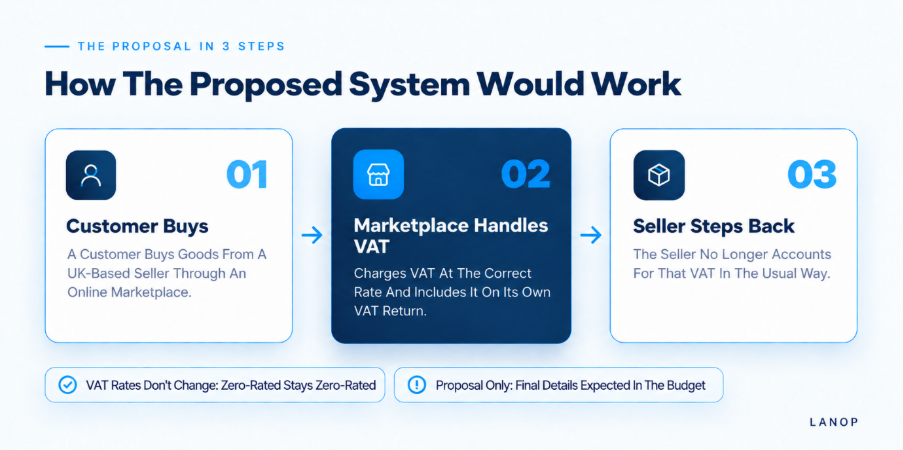
Where the rules apply, the marketplace would charge VAT at the right rate. It would then put that VAT on its own VAT return. The seller behind the sale would no longer deal with that VAT in the usual way.
VAT rates on goods would stay the same. So, if a product is zero-rated now, it would still be zero-rated.
The government has also looked at ways to soften the blow for smaller sellers. One idea is the minimum level of sales on each platform. Another is targeting VAT relief for firms below the VAT registration threshold. Nothing has been settled yet.
Second-hand sellers may need their own rules. Here’s why: charging VAT on the full selling price could cause trouble for firms that use the Second-hand Margin Scheme today.
What Sellers Risk by Ignoring It
No new duty has started yet. Still, sellers shouldn’t wait for the final news before they check their records.
If platforms start doing tougher checks, a few things could trip you up. Think wrong business details, patchy sales records or the wrong VAT status.
The change could also hit your prices and cash flow. That’s because marketplaces may take the VAT at the moment a sale goes through.
If you use the Flat Rate Scheme, take extra care. The plan could change how that scheme works with your marketplace sales.
What Sellers Should Do Now
If you sell online, it’s worth taking these steps:
- Check whether what you do counts as a business;
- Add up your taxable turnover across every place you sell;
- Make sure your marketplace details match what HMRC holds;
- Go over your vat registration and return details;
- Keep UK, overseas and second-hand sales apart;
- Work out how vat taken by the platform could affect your prices and cash flow; and
- Keep your invoices, stock records and marketplace reports complete.
How Lanop Can Help
HOW LANOP HELPS
Lanop can help online sellers look at their VAT position, taxable turnover and marketplace records. We can also show you how the planned rules might change your VAT reporting, pricing and cash flow.
The final policy is still on hold. But if you check where you stand now, you’ll have time to fix any gaps. You can get ready without it getting in the way of your day-to-day trading.