

UK wage growth slowed as job openings fell to their lowest level since 2021, new figures show. The Office for National Statistics (ONS) released its report on 17 November 2026. It shows slower pay gains and fewer roles, mainly at small firms.
Why Has UK Wage Growth Slowed to 3.5%?
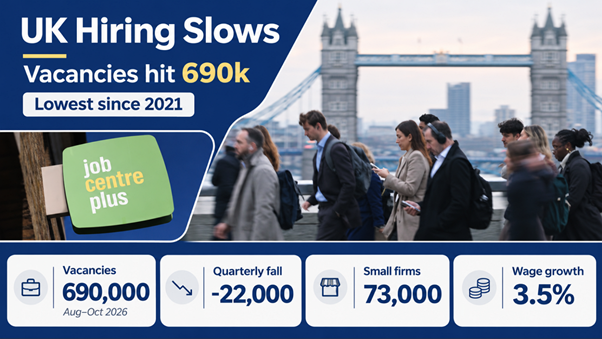
Regular pay, without bonuses, rose 3.5% in the three months to September 2026, down from 3.7%. With bonuses, pay growth fell from 3.8% to 3.6%, its lowest rate since 2020.
The fall came mainly from the public sector. Its pay growth eased to 5.4%, as past pay awards had less effect. Private sector pay growth held at 3.1%.
After inflation, regular pay rose only 0.4% using CPI and 0.2% using CPIH, which also covers housing costs. Workers saw only small gains in what their pay could buy.
Why Did UK Job Vacancies Fall to 690,000?
The UK had 690,000 job vacancies from August to October 2026, down 22,000 or 3% on the prior three months. This was the lowest total since early 2021.
Firms with one to nine staff saw the sharpest fall. Their vacancies fell by 22,000 to 73,000. Outside the pandemic, that was their lowest level since 2012.
The ONS said its survey feedback suggests that high staff costs and wider economic conditions may be holding back hiring at small firms.
Why Did UK Payroll Jobs Fall as Unemployment Dipped?
Early HMRC data shows 30.2 million people on payroll in October, down 34,000 in one month and 95,000 in a year. The figures may change.
The jobless rate fell to 4.6%. Yet the Claimant Count, which tracks people on certain job-seeking benefits, rose to 1.714 million. The ONS said changes in the people surveyed had partly shaped the fall in the jobless rate.
How Could the 4% Bank Rate Affect UK Firms?
The Bank of England raised its rate to 4% on 5 November due to high inflation risks linked to energy costs.
UK CPI inflation was 3.5% in September. The Bank expects it to reach about 5% by mid-2027. That is a forecast, not a result.
Firms that overlook pay trends and loan rates could plan to spend more than they can afford. The risk is less cash for wages, bills and debt.
What Should UK Employers Watch Next?
Firms should check staff costs and cash flow before they hire. New UK inflation data is due on 18 November, jobs data on 15 December, and the next Bank Rate decision on 17 December. No rate move is set.
How Can LANOP Help UK Firms Manage Payroll and Hiring Costs?
LANOP Business & Tax Advisors helps UK firms keep payroll on track as costs and hiring needs change. Its team can check wage records, payslips and tax reports sent to HMRC. It can also help firms plan for employer National Insurance, staff pensions and the cost of each new role.
With sound records and clear reports, owners can see how much cash is free before they hire or take on new debt. LANOP also offers bookkeeping and wider tax advice, so firms can link staff plans to their day-to-day finances. This gives owners a clear view of costs and helps them meet payroll rules while they plan.