Why Bookkeeping is More Than Just Number-Crunching for Your UK Business
Most people do not start a business because of bookkeeping, but it can make or break the business. Most business owners do not pay attention to it until it becomes an issue. Without the right monitoring, things can easily go astray. At Lanop, your reliable partner in business and tax management, we see this more often than you might think.
Bookkeeping is not merely about record-keeping or remaining in compliance with HMRC. It makes you more organised, identifies missed opportunities such as unclaimed VAT and know where your money is going.
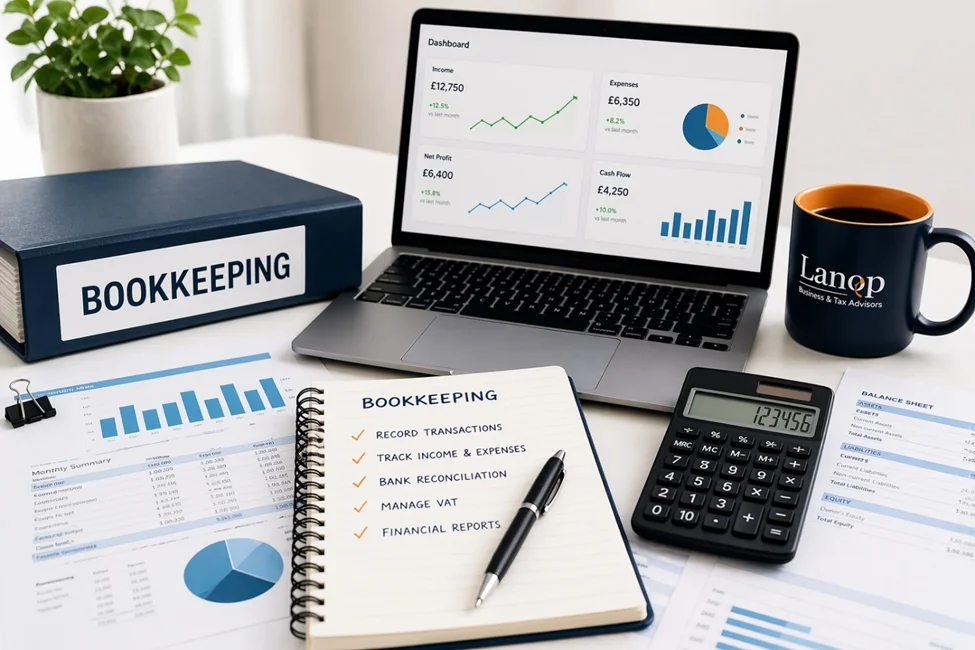
We will demonstrate in this blog why bookkeeping is not just number-crunching and how it can enable you to manage and grow your business with confidence.
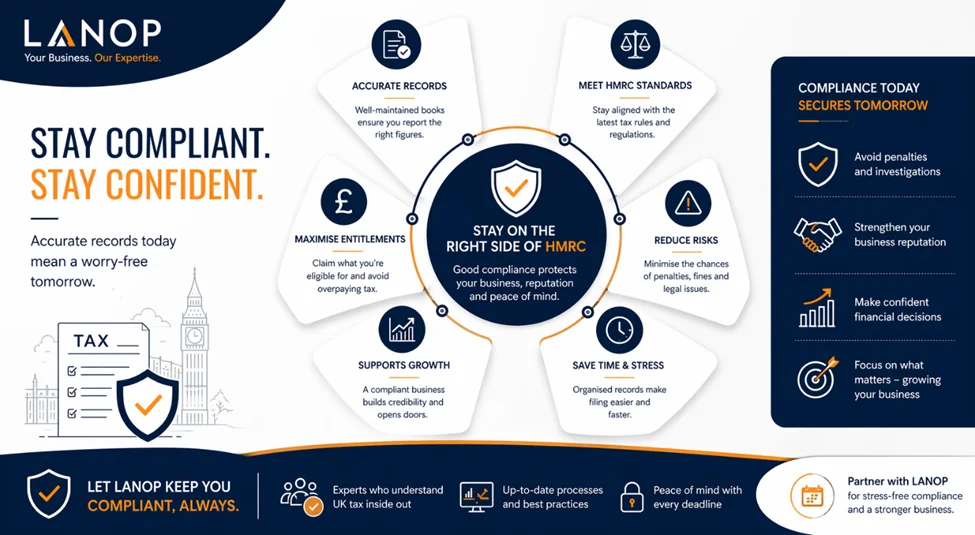
Staying on the Right Side of UK Tax Law
The UK tax system is detailed and changes often. Keeping clean financial records is one of the easiest ways to stay compliant and avoid fines.
HMRC requires businesses to keep records for at least six years from the end of the relevant tax year. Under Making Tax Digital, most VAT-registered businesses must keep digital records and file returns using approved software. From April 2026, this rule also covers sole traders and landlords earning above £50,000 under MTD for Income Tax Self Assessment.
Missing these requirements leads to penalties. They start at £100 and go up the longer the problem goes unsolved. Keeping your books up to date is the simplest way to avoid that.
Be Ready If HMRC Comes Asking
Clean records also protect you if HMRC ever questions your returns. When your books are tidy and current, you can respond quickly and confidently. There is nothing to worry about when the numbers are all there.
Making Better Financial Decisions
Good bookkeeping gives you the clarity to make smart choices about your business. When your records are accurate and current, you can see exactly how things are going at any point in time.
This matters more than most people realise. Whether you want to hire someone, buy new equipment, or cut back on costs, those choices should come from real numbers, not guesswork. Up-to-date books give you that solid base.
Financial reports like profit and loss statements, balance sheets, and cash flow summaries become useful tools when the data behind them is reliable. For business owners and managers who need financial insight to lead effectively, they help you spot trends, plan ahead, and react quickly when things change.
Knowing Your Numbers Changes Everything
Many business owners only look at their finances when something goes wrong. By then, it is often too late to fix things easily. Regular bookkeeping means you always have current information to hand. That puts you in a much better position to act early rather than react late.
Tracking How Your Business Is Really Performing
Bookkeeping gives you a steady way to measure your performance over time. Rather than relying on a rough sense of how things are going, you can track real figures that show the full picture.
Key measures like gross profit margin, net profit margin, and operating costs are easy to track when your records are well kept. These numbers tell you not just whether your business is making money, but whether it is getting more efficient over time.
Comparing your numbers month on month or year on year helps you spot patterns. Maybe your costs spike every summer. Maybe one part of your business always does better than another. You would never notice unless the numbers are right in front of you.
Benchmarking for Growth
Comparing your results against industry averages is a great way to see where you stand. Many industry bodies and trade groups publish financial benchmarks each year. Using your own books to check against those figures can show you both what is working and what needs attention. It gives you a real, practical starting point for growth.
Managing Cash Flow With Confidence
Cash flow is one of the most common reasons businesses run into trouble, even when they look profitable on paper. A business can earn well and still struggle to pay bills if money comes in too slowly or goes out too fast.
Bookkeeping helps you track exactly when money enters and leaves your accounts. Once you can see those patterns clearly, you can plan around them. You might set up better payment terms with suppliers or invoice clients sooner to close the gap between doing the work and getting paid.
Spotting Cash Flow Problems Early
One of the biggest wins from regular bookkeeping is catching cash flow issues before they become emergencies. If you can see three weeks ahead that a shortfall is likely, you have time to act.
You can speak to your bank, slow down spending, or chase outstanding invoices while there is still room to move. That kind of early warning is only possible when your books are current. Leave them for weeks at a time, and you lose that buffer entirely.
Finding Where Your Money Is Going
Many businesses spend more than they need to. Not because they are reckless, but simply because no one has looked closely at the numbers. Bookkeeping makes that kind of review easy.
When your costs are recorded and sorted clearly, it is simple to see which ones are essential and which have crept up without much reason. Subscriptions, supplier contracts, and overhead costs are all worth checking on a regular basis.
You might find that switching suppliers or dropping a service you barely use frees up real cash each month. These are not big, dramatic changes. They are small shifts that add up, and you can only see them when your books are in good shape.
Simplifying Tax Preparation
Tax season does not have to be stressful. For most business owners, the stress comes from trying to pull together a whole year of financial records at the last minute. When your books are kept up to date all year, tax prep becomes far more straightforward.
Tidy records mean your accountant can work quickly and accurately. You are less likely to miss a deadline or submit wrong figures. And the whole process takes far less time.
Claiming What You Are Entitled To
Good records also help you claim every business expense you are allowed. This includes office costs, travel, equipment, and professional subscriptions. All of these can reduce your taxable income.
If your records are messy or incomplete, those deductions are easy to miss. Our free tax and accounting guides can help you understand what you are entitled to claim, so you are never leaving money on the table.
Using Bookkeeping Software in 2026
Modern bookkeeping software has made financial management much easier for small and medium businesses. Cloud-based tools let you see your finances in real time, from any device, without waiting for a monthly update from your accountant.
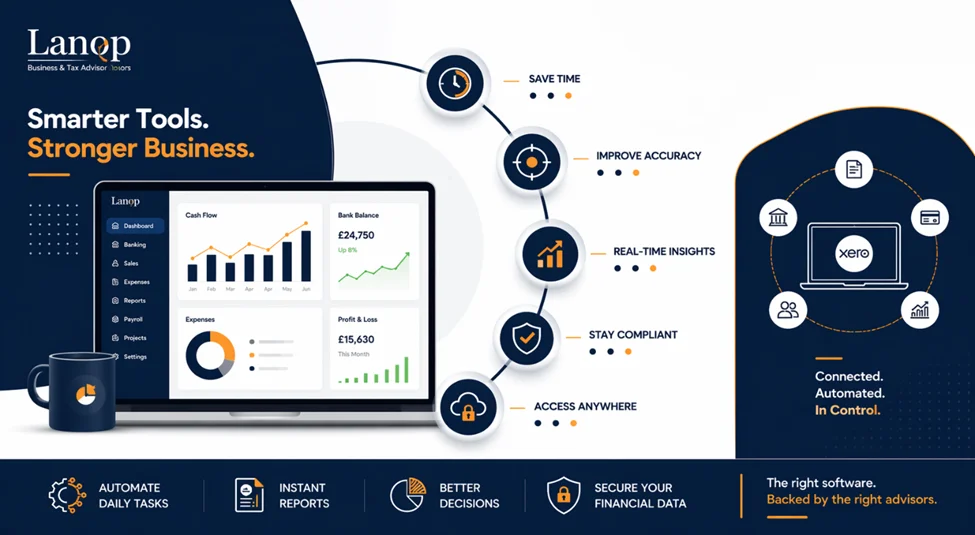
Most leading platforms now link directly with HMRC’s Making Tax Digital system. That removes a big chunk of admin. Your records stay compliant as long as you keep entering data on a regular basis.
What to Look for in a Bookkeeping Tool
When picking software, a few things are worth thinking about. Does it connect to your bank for automatic transaction feeds? Does it support MTD submissions? Is it simple enough that you will actually use it every week?
Popular options in the UK include Xero, QuickBooks, and FreeAgent. Each one suits different types of business. Many accountants have a preferred platform and can help you set it up from day one, which saves time and prevents early mistakes.
AI features are also becoming standard across these tools. Auto-categorisation, anomaly alerts, and cash flow forecasts are now included in most standard plans. They do not replace human judgement, but they do cut down the manual work involved in keeping your books clean and current.
When to Do It Yourself and When to Get Help
For very small businesses and sole traders with simple finances, doing your own bookkeeping is entirely possible, especially with good software. The key is to be consistent. Setting aside time each week to update your records is far easier than catching up at the end of the quarter.
As your business grows and your finances get more complex, working with a bookkeeper or accountant becomes more valuable. A professional can keep your records in order and flag opportunities or risks you might not spot on your own.
Signs You Need Professional Support
There are a few clear signals that it is time to get help. If you are often behind on your records, unsure how to sort transactions, or finding that bookkeeping eats into time that should go toward running your business, those are all good reasons to look for support.
Getting help early is almost always cheaper than trying to sort out months of messy records later. It is worth acting before things get out of hand.
Conclusion
Bookkeeping is not a mere compliance activity. It is among the most helpful tools that any business owner wants to be in control and decide with confidence.
Not all businesses whose revenues are the highest remain financially viable in the long run. They are the ones who are conscious of their figures, are good at using cash, and do what the data shows.
Good records provide you with a foundation. You can either maintain your books by yourself or hire a professional; however, the greatest thing is to begin and to remain consistent. By 2026, you should never feel like you need to decipher your finances with the right tools and a bit of discipline.
Need More Help?
All you have to do is to contact our team of dedicated staff and we will call you back so that we can assist you with your bookkeeping or discuss your financial needs. Our group of Chartered Accountants and Tax Advisors is based in Battersea, Harley Street, Putney, Southwest and Central London. We also work with companies in the UK and globally either physically or via zoom.
As professional advisor to Xero accounting and a trusted partner of the Wandsworth Borough, we can help with the bookkeeping, tax planning, or strategic financial planning of any level of your business.
Frequently Asked Questions
How often are the bookkeeping records of a small company in UK reviewed?
Most of the small businesses will be recording their transactions day to day, reconciling weekly and to maintain the records in compliance with HMRC, they will perform a VAT and bank check monthly.
Should I do bookkeeping or outsource?
DIY will operate at an initial level, but outsourcing will save time, reduce errors, and, very likely, yield tax benefits that will more than offset the cost.
What is meant by bookkeeping and accounting?
Bookkeeping is an account of what you do daily. Accounting uses those records to perform performance analysis, plan taxes, and create reports.
Can we have integrated bookkeeping, payroll, and inventory management?
Yes. Online software like Xero incorporates accounting, payroll and stock management; your whole financial data can be stored in one live system.
How are multi-currency or international transactions handled?
HMRC urges UK firms to report foreign transactions in sterling, taking into account fluctuations in exchange rates on VAT and revenues.
What would it normally cost to have bookkeeping done and when should I contract an accountant?
Basic bookkeeping starts at around £100 per month. Hire an accountant when you begin to grow or when you have to work with complex taxes, or when you have a long perspective.