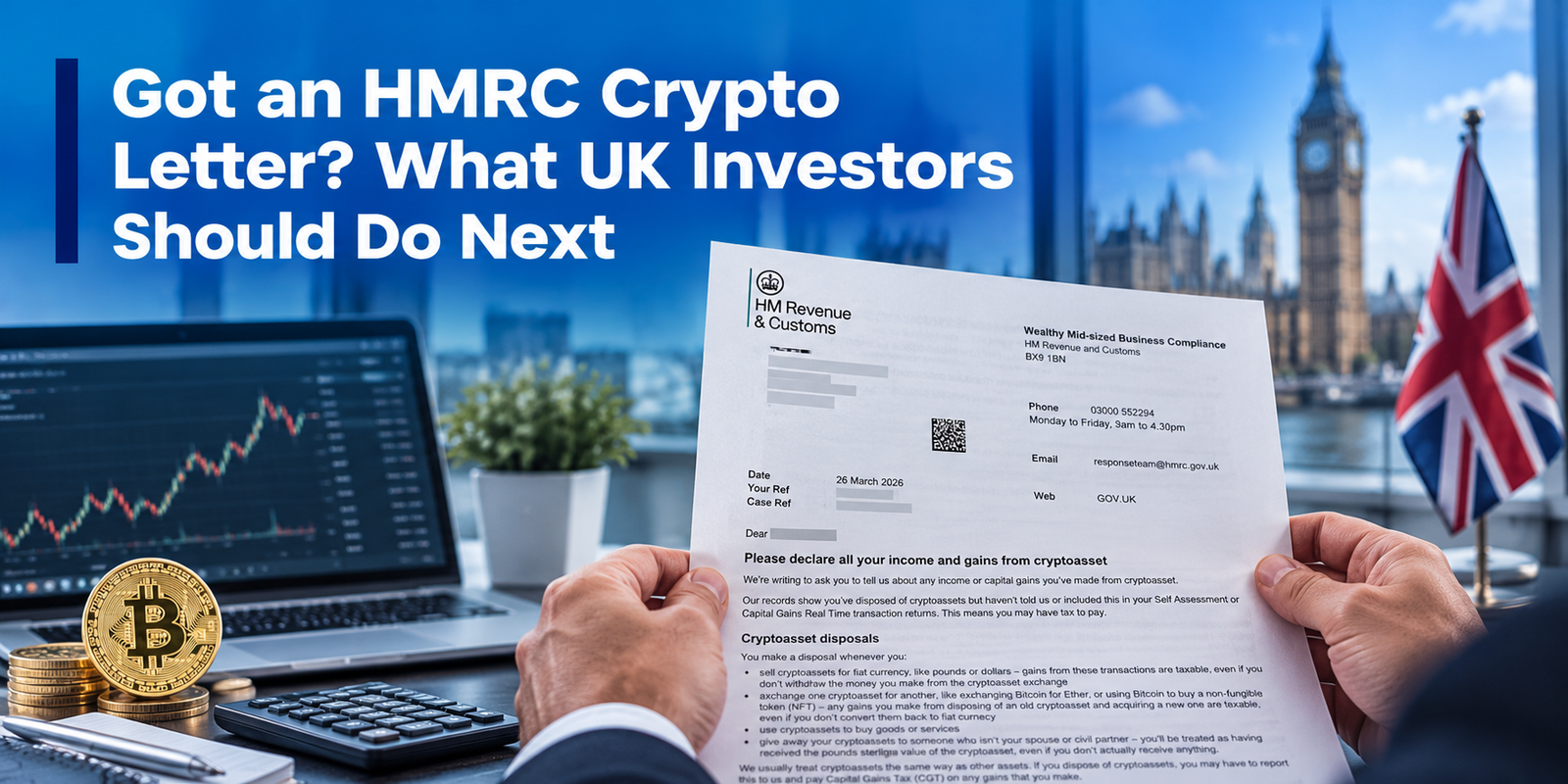
Lots of people in the UK now buy and sell crypto. It’s become part of everyday life. But many investors still aren’t sure how HMRC taxes their trades. They also don’t know when they need to report them.
These worries can grow fast when a letter from HMRC lands on your doormat.
Maybe you’ve traded on Coinbase, Binance or Kraken. Or maybe you’ve held crypto for years. Either way, an HMRC letter can leave you with questions. The first step is simple. Work out what HMRC is asking for.
Why HMRC Is Writing to Crypto Investors
HMRC may write to you when its records suggest your tax needs a closer look. Where does it get this data? It can come from crypto exchanges or other third parties. It can also come from gaps between what you told HMRC and what the data shows.
And HMRC has more data now than ever before. Since 1 January 2026, crypto firms covered by new reporting rules have been collecting details about their users. They also collect details about those users’ trades.
What a HMRC Crypto Nudge Letter Means
You’ll often hear these called “nudge letters”. They give you a gentle push to check your tax. The aim is to help you spot any income or gains you should have reported.
Here’s the key point. A nudge letter doesn’t mean HMRC has decided you owe tax. Still, don’t ignore it. Take time to go through your trades and the questions in the letter.
Nudge Letter or Formal Enquiry?
So what’s the difference? A nudge letter asks you to check your tax and fix it if needed.
A formal enquiry is a step further. Here, HMRC uses its legal powers to look into a tax return or another matter.
That’s why it’s worth checking what HMRC wants. Is it asking for a reply you choose to give? Is it asking for more information? Or is it asking you to act under a formal notice?
Your First Steps After Getting the HMRC Crypto Letter
Before you think about telling HMRC anything, get clear on what it wants. Here’s a simple checklist to follow:
- Read the letter closely. Note the tax years in it, the deadline to reply and any papers HMRC has asked for.
- Gather your records. That means your exchange histories, your wallet records and any tax returns you’ve sent before.
- Look at each trade and ask what it was. Was it a buy? A sale or swap? A move between your own wallets? Or a reward you received? This matters, because an exchange statement won’t show how UK tax rules apply.
- Get expert help if you need it. Does your case cover a few tax years, overseas trades or missing records? If so, an expert review can help you get it right before you reply.
How to Tell If Your Crypto Trades Are Taxable
Most people hold crypto as an investment. For them, Capital Gains Tax (CGT) usually comes into play when they sell or swap. But that’s not the whole story. Crypto you get through some activities can count as income instead.
What Counts as a Disposal
HMRC calls a taxable sale or swap a “disposal”. Its Cryptoassets Manual (CRYPTO22100) says disposals include:
- Selling crypto for money
- Swapping one coin for another
- Using tokens to pay for goods or services
- Giving crypto away in some cases
So, let’s say you swap Bitcoin for Ethereum. That can lead to a CGT bill, even if you never cash out. On the other hand, moving tokens between wallets you own is usually not a disposal.
How Pooling Rules Change Your Gain
You might think your gain is just the sale price minus what you paid. But it isn’t always that simple.
HMRC usually groups the same type of token into one “Section 104 pool”. There are also special rules for coins you buy back on the same day. The same goes for coins you buy back within 30 days.
If you trade a lot, these rules can change your final figure by a lot. HMRC’s guide at CRYPTO22200 explains how the pools work.
Staking Rewards and Other Income
Now let’s look at income. Crypto from staking, mining or some lending deals may be taxed as income.
What if your staking isn’t a trade? Then HMRC usually treats the rewards as ‘miscellaneous income’. It uses their value in pounds on the day you get them. The £1,000 trading and miscellaneous income allowance may apply, depending on your other income.
And there’s one more thing to watch. If you sell those rewards later, that can lead to a separate CGT bill too.
The Most Common Mistakes Investors Make
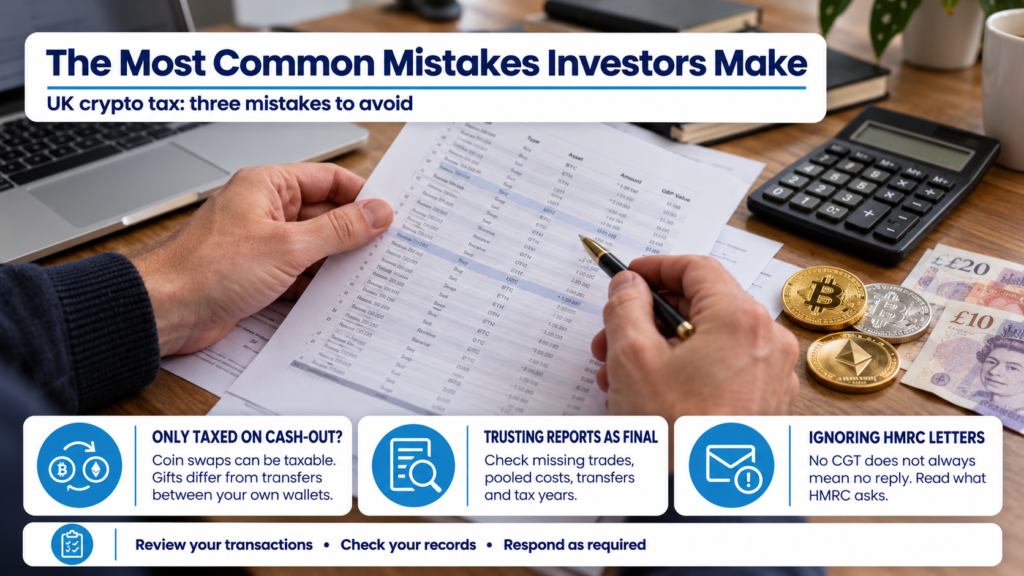
Here are the three mistakes we see most often:
- Thinking crypto is only taxed when you move pounds to your bank. That’s not how UK rules work. Swapping one coin for another can be taxed. And sending tokens to someone else is treated in a different way from moving them between your own wallets.
- Trusting exchange reports or crypto tax software figures as final. Reports from Coinbase, Binance, Kraken or other platforms can help sort your trades. But the results may need fixing for missing records, pooled costs, transfers or tax years.
- Ignoring HMRC because your figures show no CGT. Please don’t. Whether you need to reply depends on the letter itself. It also depends on your wider reporting position.
Can You Get a HMRC Crypto Letter Even If You Owe Nothing?
Yes, you can. HMRC may ask questions even when a full check shows no CGT is due. Here are the current figures to know:
- CGT tax-free allowance (the “annual exempt amount”) for 2025/26 and 2026/27: £3,000
- Main CGT rates: 18% and 24%, depending on your income and gains
- Reporting trigger: if you’re registered for Self Assessment, you generally need to report disposals where your total sale proceeds exceed £50,000, even if your gains are below £3,000
Keep in mind that reporting is a separate question from paying tax. If you file a Self Assessment return, you may still need to report your sales. Also, look at staking income on its own. The same goes for any open HMRC requests.
Self Assessment or the Cryptoasset Disclosure Service?
So which route should you take? It depends on a few things. These include the tax years involved, whether you’ve found unpaid tax and what you already have to report.
Reporting Through Self Assessment
If you need to file a return, your crypto gains and income may go on it. The return now has a section for cryptoasset capital gains. Taxable staking or mining rewards go under the relevant income section. Keep these dates in mind:
- 5 October 2026: deadline to tell HMRC if you needed to file for the first time for 2025/26. This has passed, so act promptly if you missed it
- 31 January 2027: online filing deadline for 2025/26
Already sent your return? You may be able to change it.
Using the Cryptoasset Disclosure Service
HMRC also runs a Cryptoasset Disclosure Service. It’s for people who’ve found unpaid crypto tax from earlier years. For the current or previous tax year, HMRC directs you to Self Assessment instead.
If you use it, you’ll work out the tax you owe. You’ll also add interest and any penalties. And you’ll give details of your trades, the exchanges you used and what you paid.
But a letter doesn’t mean this service is right for you. If HMRC has already been in touch, the type of contact matters.
You may need to reply to HMRC directly. Or you may need to file a current return, change an old one or make a separate disclosure. The chart below is a starting point, not a final decision.
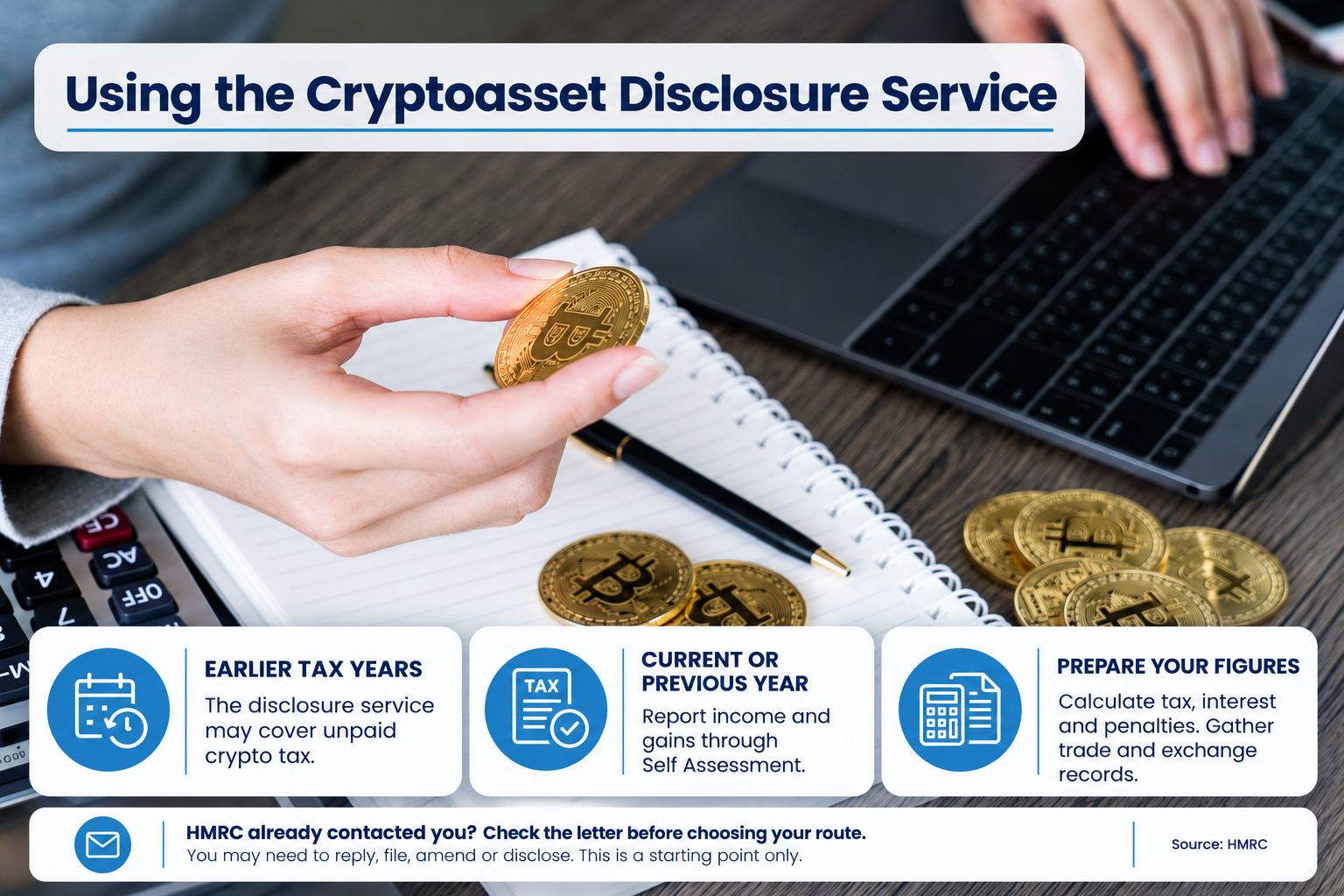
The right route depends on the tax year, any HMRC notice you’ve received and whether an earlier return can still be changed.
Documents HMRC May Ask For
HMRC may ask for proof to back up your figures. Here are some common records:
- Exchange transaction csv files
- Wallet histories
- Records of what you bought and sold
- Staking statements
- Proof of what you first paid
Did your crypto move across a few platforms? Then you may need to match up the records. This shows which moves were just transfers.
What if your original records are missing? Use other records you can trust, and explain any gaps. Just don’t present guesses as if they were real values.
Crypto Platform Reports vs a Proper UK Tax Calculation
Whether you use Coinbase, Binance, Kraken or Crypto.com, an exchange report only shows the activity that platform can track. It may miss trades on other exchanges, transactions through private wallets like MetaMask or Trust Wallet, or swaps made on decentralised platforms such as Uniswap. Rewards, fees and transfers may also appear in separate records, so one report may not give you the full picture.
A proper UK tax calculation brings all your transactions together. It checks what you bought, sold, swapped or earned and applies HMRC’s matching and pooling rules. That’s why relying on a single exchange report or an unchecked crypto tax software summary may not give you an accurate tax figure.
Bought Crypto While Living Abroad?
Where you lived can make a big difference to your tax.
First, you need to know your residence status for each tax year. This is based on the UK’s statutory residence test. Once you’re a UK resident, gains from overseas may be taxed here. That’s subject to the rules and reliefs that apply.
Here’s a common trap. Don’t assume your costs reset to market value when you moved here. What you first paid may still count.
And what if another country has already taxed the same trade? You may be able to claim relief. This could be under UK law or a tax treaty.
What Penalties Could Apply?
Penalties depend on a few things:
- The type of mistake
- How much tax was missed
- How you acted
- Whether HMRC prompted you to come forward
Take a common case. Say you failed to tell HMRC you owed tax, but it wasn’t deliberate. And say the usual onshore failure-to-notify rules apply, with disclosure more than 12 months after the tax was due. HMRC’s ranges are:
- 10% to 30% of the lost tax if you came forward on your own
- 20% to 30% of the lost tax if HMRC prompted you
Keep in mind that different rules apply to offshore matters. They also apply where someone acted on purpose.
If no tax was lost, this penalty may be nil. But that doesn’t cover late filing penalties or other issues. And interest usually applies where tax was paid late.
What’s New for Crypto Tax in 2026
The big change this year is the Cryptoasset Reporting Framework, or CARF for short.
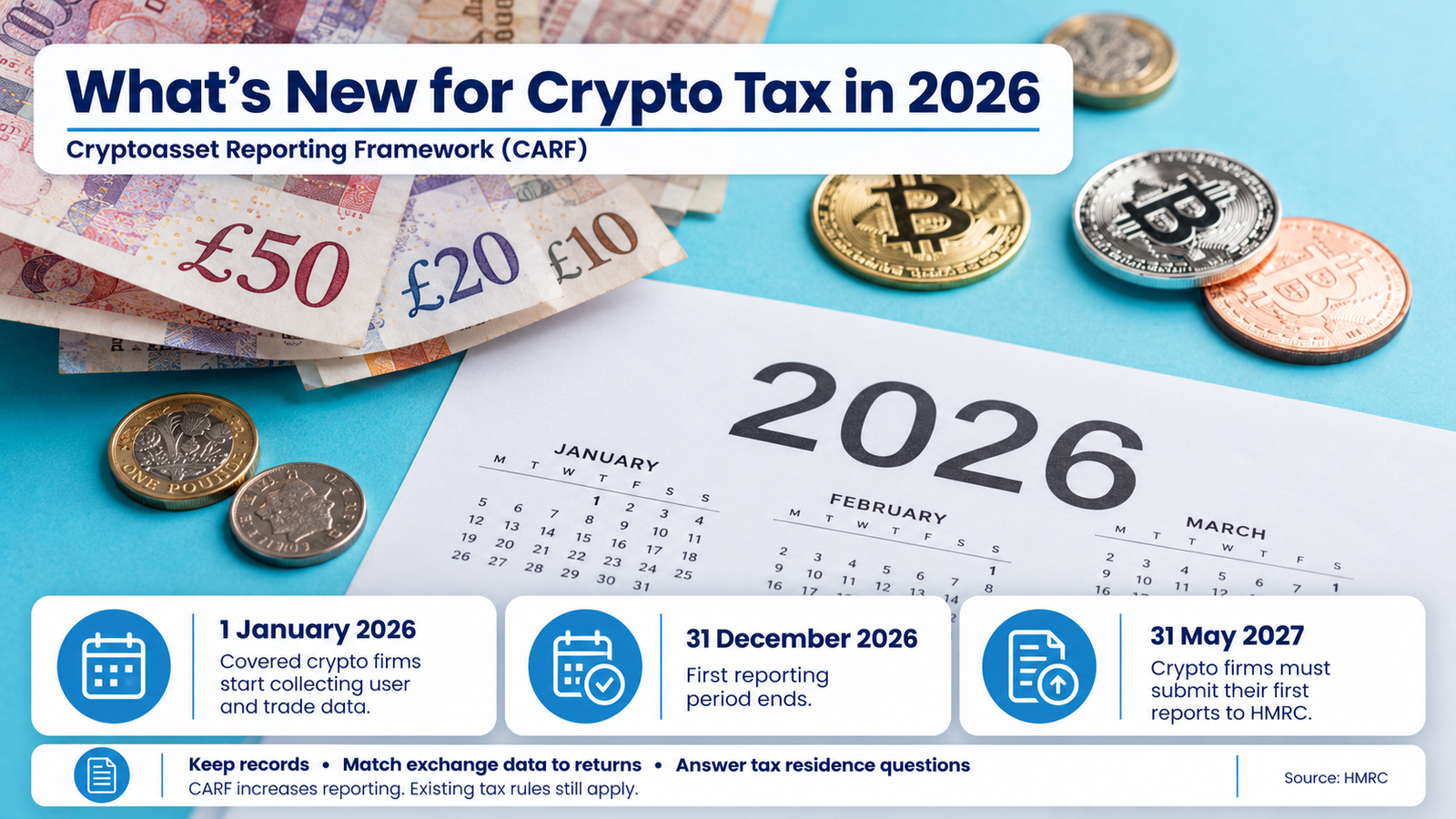
Since 1 January 2026, crypto firms covered by CARF must collect set details about users and trades. The first reporting period ends on 31 December 2026. The firms must send their reports to HMRC by 31 May 2027.
CARF gives HMRC far more information. But it doesn’t make every trade taxable. The same tax rules still apply. So what should you do?
- Make sure your exchange data matches your tax returns.
- Answer any residence questions your exchange sends you.
The calendar below pulls all the key dates into one place.
What Happens After You Reply
Your reply may not end HMRC’s review right away. Here’s what usually comes next:
- HMRC may check your figures. It may also ask for more proof, such as exchange records, wallet details or proof of where you lived.
- If you use the Crypto asset Disclosure Service, HMRC will either accept your offer or contact you.
- You normally need to pay within 30 days of sending your disclosure.
- Has your payment reference not arrived within 15 working days? HMRC asks you to get in touch.
Keep copies of everything you send. And if HMRC asks for more, answer the open points directly. Make sure your reply matches your first set of figures.
How LANOP Can Help
Replying to HMRC often takes more than working out your gains. You may need to look back at past tax years. You may have gaps in your records. And you’ll need to choose the right way to report.
At LANOP Business & Tax Advisors, we start by getting the facts straight. Then we make sure we understand what HMRC is worried about. From there, we can help you with:
- Preparing your CGT figures
- Reviewing your crypto income
- Looking at residence questions
Our aim is simple. We want your position to be clear and well backed up before anything is sent.
Frequently Asked Questions
Some crypto service providers must collect and share user and transaction details under CARF. This may include UK and overseas providers covered by the rules. But HMRC may not have your full trading history. Keep your own records across exchanges, decentralised platforms and wallets.
Yes. Swapping one coin for another can count as a sale for CGT. This applies even if no money ever reached your bank.
Yes. You can set allowable losses against your gains if you meet the rules. You normally need to claim within four years of the end of the tax year of the loss.
Software can help, but check its results first. Look for gaps and for mistakes with UK rules. HMRC may ask to see the trades behind the figures, along with your explanations.
Yes. A tax agent can handle letters, figures and disclosures for you. They just need the right HMRC authorisation in place first.
Final Thoughts
An HMRC crypto letter doesn’t mean you owe tax. But it does mean it’s time to take a closer look.
Review your trades. Check for any CGT or Income Tax. Then decide whether anything needs to be reported. A clear reply, backed by good records, can settle HMRC’s questions. It can also help you avoid extra trouble down the line.
Have you received an HMRC crypto letter? Or are you unsure about your crypto tax? LANOP Business & Tax Advisors can help. Get in touch today to talk through your situation and book an expert review of your crypto tax.