Setting Up a Company in Malta is easy if you have your papers ready. You proceed to the registration process to be followed with the Malta Business Registry (MBR). The share capital required for a private limited company is at least €1,164.69, and typically the private application is accepted by the MBR within a few working days.
Many founders select Malta because of its EU status, the fact that it is spoken by many natives, and the existence of a tax refund system. This guide breaks down this process in layman’s terms, along with the costs, paperwork, tax considerations, banking needs, and other ongoing duties.
Why are entrepreneurs attracted to Malta for their business?
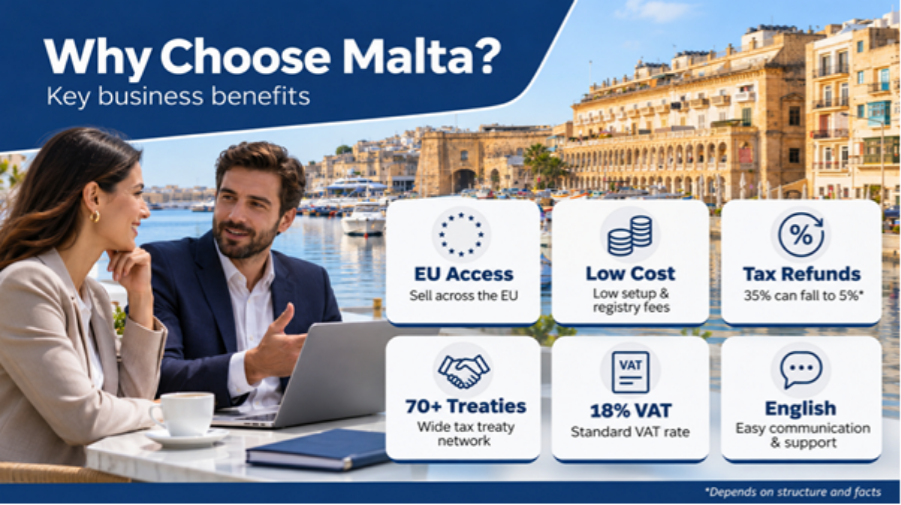
Malta is a country that is part of the European Union and consists of an island. It is part of the eurozone, and English is the official language of the country. It’s also the low entry cost and tax refunds that Founders like.
The following are the key benefits.
- Selling all over the EU single market is allowed: EU access is available for a single company from Malta.
- Low Registration Cost: Most startups registering maintain small share capital and registry fees.
- Trading profit tax rate: This tax rate may be as low as about 5% once tax refunds are taken into account.
- Treaty network: Around 70 double tax treaties have been signed by Malta with other countries.
- Main VAT rate: All supplies in Malta are subject to the main rate of VAT, which is 18%.
- Cooperation in English: Company forms and advisers work in English, making things easy.
Still, Malta does not suit everyone. Say that you only serve local clients in another country. You may then face tax risks there. We look at that risk later in this guide.
What Business Structure to Set Up in Malta?
Most of the founders prefer to opt for a private limited company because it is an easy company to establish. It helps to keep your own money safe, and you may even be the only owner. This table illustrates the relative sizes of the major company types.
| Type | Best for | Key points |
| Private Limited Company (Ltd) | Most small and mid-sized firms | Up to 50 shareholders and limited liability. |
| Public Limited Company (PLC) | Firms that sell shares to the public | Higher minimum share capital and at least two directors. |
| Partnership | Small teams that trust each other | Some partners may have personal liability for business debts. |
| Branch of a Foreign Company | Firms that already trade abroad | No need to form a new company. The parent company remains liable. |
A private limited company is the best fit for most UK and foreign founders. It can have up to 50 members, though it cannot sell shares publicly.
What Do You Need for a Malta Private Limited Company Setup?
The rules are short and clear, and these are the core points.
- Share capital: Minimum capital is €1,164.69 and at least 20% (€232.94) must be paid up front.
- Shareholders: One owner is enough to begin, and up to 50 shareholders are allowed. Owners can be people or firms, so you have plenty of choice.
- Directors: At least one director is needed, and a company can serve as one.
- Residency: No rule says directors must be Maltese, so foreign directors can be appointed.
- Company secretary: A company secretary is required and is often a person or a licensed firm.
- Registered office: You must also provide a registered office address in Malta for the company.
- Company name: The company name must be unique and must end in “limited” or “ltd”.
How to Set Up a Company in Malta: Step-by-Step
The process is easy to follow if your papers are in order before you file.
1. Choose your business structure
Pick the structure that suits your plan, which is often a private limited company. This choice protects the owners and is simple to understand for new founders.
2. Reserve your company name
Choose a name that no other Maltese company is using now. Some names need extra approval, for example, names with “bank” or “insurance” in them.
3. Prepare your company documents
Next, draft the Memorandum and Articles of Association for your new company. These documents state the name and office, along with the owners and directors. They also cover the share capital and the internal rules of the company.
4. Pay in the share capital
Share capital must be at least €1,164.69 for a private limited company. At least 20% needs to be paid in when the memorandum is signed.
5. File with the Malta Business Registry
Submit your papers through the MBR online portal to file the application. The MBR keeps the official company records in Malta and collects the fees. It also registers new firms as part of its work for the country.
6. Receive your Certificate of Registration
After the MBR accepts your filing, you receive a Certificate of Registration. A complete application is usually processed within a few working days of filing.
7. Complete tax and VAT registrations
Then register the company for income tax with the Maltese tax office. Advisers often take care of this registration on behalf of the company. VAT registration may also be needed if the company makes taxable sales. The standard VAT rate is 18%, so plan your prices with it in mind.
8. Open a business bank account
A Malta business bank account lets you take payments and keep clean books. Banks do their own checks, so approval is never a sure thing.
9. Set up accounting and compliance
Set up your books, payroll, and VAT records from the very first day. Doing this early makes tax returns and yearly tasks far easier to manage.
What Documents Do You Need to Register a Company in Malta?
Most providers ask for the papers below, and your adviser may ask for more.
- A passport copy for each owner and director of the company.
- Proof of address, like a recent bank letter or a utility bill.
- Details show where the money for the share capital comes from.
- The Memorandum and Articles of Association for the new company you are forming.
- Proof showing that the share capital has been paid into the company.
- Beneficial ownership details for the people who truly own the company overall.
- Certified copies of your papers if your provider asks to see them.
Prepare these early, as missing papers cause most of the delays you face.
How Long Does Malta Company Formation Take?
How fast you gather your papers sets the timeline for the whole process. The registry step is quick, while ID checks and missing files cause most delays.
| Stage | Typical Time |
| Registry Review After a Full Filing | A few working days |
| Whole Process, Including Checks and Drafting | Usually a few weeks |
| VAT and Payroll Registration | Starts after the company is set up |
| Bank Account Opening | Often takes longer than company registration |
Providers run their own checks, so the times quoted to you will vary. Ask your adviser to give you a firm timeline in writing early on.
What Does It Cost to Set Up a Company in Malta?
Setting up in Malta costs less than setting up in many EU countries. Your registry fees depend on share capital, and online filing is cheaper than paper.
| Cost Item | Notes |
| Registry Fee | Starts low for online filing and increases with higher share capital. |
| Paid-Up Share Capital | Minimum of €232.94, which remains in the company. |
| Adviser Fees | Vary by provider, from basic document drafting to full company setup packages. |
| Annual Return Fee | Increases with the company’s share capital. |
| Registered Office and Company Secretary | Fees vary by provider and are usually paid annually. |
Special licenses cost extra, so get a written quote before you pay anything. Fees can change, so check the fee table on the MBR website too.
How Is a Maltese Company Taxed?
A Maltese company pays 35% tax on its profit in the first instance. After a dividend is paid, the owner can claim a refund of that tax. This refund is what lowers the final tax bill for the owner.
| Income Type | Refund | Final Tax |
| Trading Profit | 6/7 of tax paid | About 5% |
| Passive Interest or Royalties | 5/7 of tax paid | About 10% |
| Profit with Foreign Tax Relief | 2/3 of tax paid | About 11.67% |
| Dividends from a Qualifying Holding | Full exemption or refund | Can be 0% |
The owner receives the refund, and the company does not get it. Different rules apply if the owner lives in Malta, so seek advice. Groups with yearly sales above €750 million also face global minimum tax rules. These rules form part of the wider 2026 shift toward fair tax.
What VAT Rules Apply to Maltese Companies?
VAT applies to many goods and services that are sold within Malta. The standard rate is 18%, while some items have a lower rate or none. Check whether your work needs VAT registration and which rate applies to you. VAT rules may also apply when you sell to buyers in other EU countries. What you sell and who buys it decides the right VAT treatment for you.
Should You Consider a Holding Company in Malta?
A holding company suits anyone who owns shares in other firms or businesses. Gains and dividends from a qualifying shareholding may carry no Maltese tax at all. Some owners run two companies, with one trading and the other holding shares. Strict tests apply, and real substance matters in holding plans as well. Any holding plan needs a clear business reason, so review it fully first.
Can UK Residents Set Up a Company in Malta?
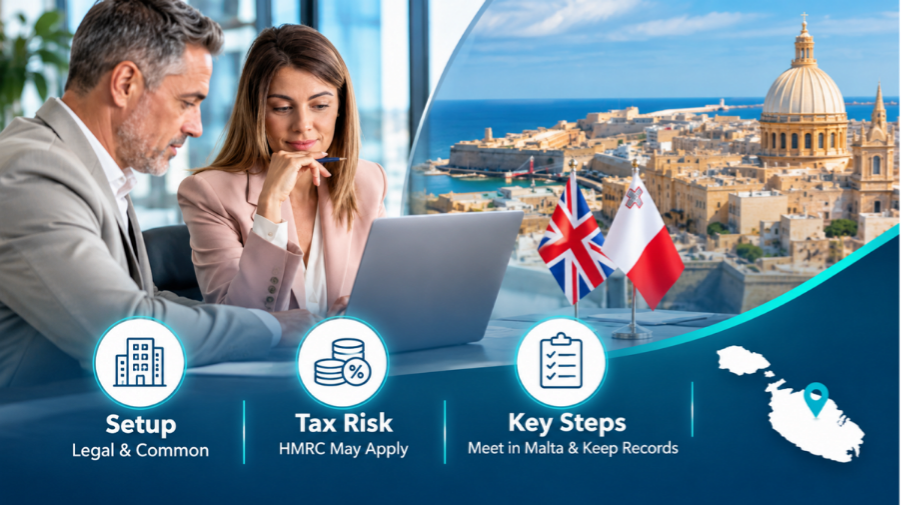
Yes, UK residents can set up a company in Malta without any trouble. The UK now sits outside the EU, so you count as a foreign owner. You also do not need to live in Malta to own a company there. Tax is the real issue, as HMRC may see the company as UK-based. That can happen if you run the company from within the UK itself. UK tax could then apply to the profit, along with UK foreign company rules. These steps can reduce that risk for you and for your company.
- Hold your key board meetings in Malta rather than at home in the UK.
- Keep clear written records that show where each company decision is made.
- Write down why Malta is the right base for the whole business.
- Get both UK and Malta tax advice before you file anything at all.
This is where our team can help. We look at both tax systems together, so there are no surprises.
What Do Malta Substance Requirements Mean in Practice?
Substance means that your company is real and is not just a mailbox. It matters most when you want to claim tax refunds in Malta. Advisers often look for these signs that real activity is taking place.
- At least one director who is living in Malta and sits on the board.
- A local company secretary who does real work and not just paper tasks.
- A Malta office or a serviced office for the company to use.
- Accounting records that are kept in Malta and not elsewhere in the world.
- A Malta bank or payment account that is held in the company name.
Malta law leaves little room for a figurehead director who only lends a name. Directors must truly manage the firm, and weak substance can cost you tax benefits.
What Do Malta Business Banks Ask For?
Banks check each new company with great care, and foreign owners face tougher checks. Expect a long form and plenty of questions from the bank along the way. Banks often ask for the items listed below from new company owners.
- A passport copy and address proof for each owner and each director.
- Your Certificate of Registration and the Articles of Association of the company.
- A short business plan that outlines what the company intends to do.
- Proof of where your money comes from, backed up by clear supporting documents.
- Details about the clients and payments you expect to receive in the future.
A clear plan and tidy papers will help speed up the whole process. Begin the bank process early, since it is often slower than company setup.
What Does Annual Compliance Include?
Your work does not stop once you register, as each year has set tasks.
- Annual return: File it within 42 days of your company’s anniversary every single year.
- Audited accounts: Yearly accounts must be audited and filed with the Registry every year.
- Tax returns: Company tax returns must be sent in before the due date each year.
- VAT returns: File VAT returns on time if your company is registered for VAT.
- Change notices: Tell the Registry whenever your directors or company addresses change in any way.
Fines follow late filing, though a calendar and a good adviser stop most problems.
What Mistakes Should You Avoid?
Poor preparation causes most delays, not the rules that Malta has in place. Try to steer clear of these common slips when you plan your setup.
- Choosing a company name without first checking whether the name is still available.
- Using ownership papers that are unclear about who owns the company in the end.
- Paying the wrong amount of share capital at the time of formation.
- Ignoring the beneficial ownership rules that apply to all types of Maltese companies.
- Assuming a Maltese company ends your UK tax duties in every case.
- Opening a bank account when you have no clear business plan ready.
- Leaving books and VAT records alone until the very end of the year.
- Creating a holding company before you check the substance and tax rules.
FAQs About Setting Up a Company in Malta
Yes. Foreign people and firms can set up a Maltese company. They must show ID and pass due diligence checks. They may also need extra references or certified papers.
A private limited company needs share capital of at least €1,164.69. At least 20% must be paid in when the company is formed.
The MBR usually registers a full application within a few working days. Delays can happen if papers are missing. A complex ownership setup can slow things down too.
Malta suits UK firms that serve European buyers. Before you register, check UK tax and UK VAT. Look at banking too, and at where the company is managed and controlled.
Yes, you need one to run the company and to show the share capital payment. Approval depends on the bank’s own checks.
The top rate is 35%. In many cases, shareholders can claim a refund after a dividend. This can cut the final rate on qualifying trading income.
The law does not always require one, but we strongly suggest it. An accountant helps with tax sign-up, VAT, and books. They also help with annual returns and cross-border plans.
Final Thoughts
A Malta company can give UK and foreign founders a real path into the EU market. Get the structure right and keep your papers clean. Plan for tax, banking, and yearly tasks too. Then the process is quite straightforward.
LANOP can guide you through the rules, so you do not have to face them alone. We will talk through your goals and build your setup plan. We will also handle your Malta registration, tax, and accounting needs. Contact LANOP today for clear and simple help with setting up your business in Malta.